Dost Pakistan Journeys Tours and safaris in the North & South Pakistsn
Related Articles



“`html
Ashura Processions Conclude Peacefully Countrywide Amid Strict Security: A Deep Dive into Pakistan’s Vigilance
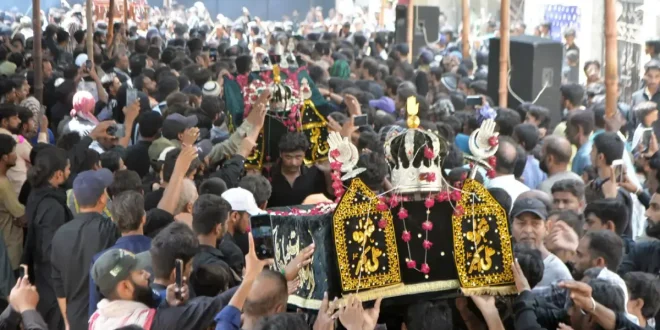
Across Pakistan, millions of mourners observed Yaum-i-Ashura on Friday, commemorating the martyrdom of Imam Husain (RA) and his companions in the Battle of Karbala. Despite the inherent sensitivities and historical challenges associated with such large-scale religious gatherings, the day concluded peacefully nationwide, a testament to the meticulous and extensive security apparatus deployed by authorities and the cooperation of the public.
The Enduring Significance of Ashura and Pakistan’s Security Imperative
Ashura, observed on Muharram 10, marks a profoundly poignant event in Islamic history: the martyrdom of Imam Husain, the grandson of Prophet Muhammad (PBUH), along with his family and companions in Karbala in 680 AD. For Shia Muslims worldwide, and indeed for many Sunnis, it is a day of deep mourning, reflection, and spiritual solidarity, characterized by processions (jaloos) and religious gatherings (majalis) that trace the suffering and sacrifices of Imam Husain and his companions.
In Pakistan, a nation with a diverse religious landscape, the observance of Muharram, and particularly Ashura, carries significant security implications. Decades of sectarian tensions and the presence of militant groups have unfortunately seen these sacred commemorations become targets for violence in the past. This grim history underscores why the peaceful conclusion of Ashura is not merely a routine outcome, but a crucial annual achievement, demonstrating a collective national resolve against those who seek to sow discord.
A Nation United in Vigilance: Unprecedented Security Measures
The success in maintaining peace can be directly attributed to the “elaborate security arrangements” implemented across all provinces. This was a colossal logistical and operational undertaking, involving multiple law enforcement agencies, advanced technology, and community engagement. From major urban centers like Karachi, Lahore, and Peshawar to smaller towns, the strategy was comprehensive:
- Massive Deployment: Over 125,000 police personnel in Punjab alone, with tens of thousands more in Sindh (60,000+), Khyber Pakhtunkhwa (43,000+), and Balochistan (32,000+). These forces were supplemented by Pakistan Army and Rangers companies, held on standby or actively deployed.
- Multi-Layered Surveillance: Extensive use of modern surveillance technologies was a hallmark. This included thousands of CCTV cameras (over 5,600 in Punjab, plus Safe City networks in Lahore and Peshawar), AI-based monitoring systems, geo-tagged video monitoring, and body-worn cameras. Aerial surveillance was also employed, particularly in Balochistan.
- Strategic Communication Blackouts: Mobile phone and internet services were partially suspended in sensitive areas across 24 districts of Punjab, Quetta, and along procession routes in Karachi and other parts of Sindh. This controversial but often necessary step aims to disrupt communication for potential terrorists and prevent the spread of misinformation.
- Physical Security Barriers: Roads and streets along procession routes were sealed, with snipers deployed on rooftops of high-rise buildings. Participants underwent body searches, and special pickets were established at entry and exit points of cities.
- Community and Intelligence Coordination: Close coordination with district administrations, peace committees, and local volunteers (over 30,000 in Punjab) played a vital role. Intelligence agencies provided crucial inputs, leading to measures like the suspension of Metro Bus services in Rawalpindi due to specific security concerns.
- Emergency Preparedness: Medical and emergency services, including Rescue 1122, mobile health units, and field hospitals, were deployed to assist mourners, alongside dedicated sanitation teams.
The Logistical Challenge and Societal Impact
The sheer scale of Muharram commemorations presents an annual logistical challenge. With over 1,600 processions in Sindh, 475 in Rawalpindi, and 907 across KP, managing the flow of millions of mourners while ensuring their safety requires staggering resources and meticulous planning. The temporary disruption to daily life – from extensive traffic diversions and the suspension of public transport like Rawalpindi’s Metro Bus to the intermittent shutdown of mobile services – underscores the gravity of the security threat perception. These measures, while inconvenient for citizens, are widely understood to be necessary trade-offs for ensuring the safety of a deeply revered religious observance.
The involvement of local administrations and peace committees, as highlighted by the KP IG’s directives, emphasizes the bottom-up approach to security alongside the top-down deployment of forces. This community-level engagement is crucial for intelligence gathering, dispute resolution, and fostering an environment of cooperation that complements the armed vigilance.
Analysis: A Testament to National Resolve and Cooperation
The peaceful conclusion of Ashura processions across Pakistan is a significant success story. It reflects a multi-faceted triumph:
- Effective Security Planning and Execution: The sheer scale and coordination of law enforcement agencies, backed by intelligence, proved effective in preempting threats and managing large crowds.
- Technological Integration: The sophisticated use of CCTV, AI-based monitoring, and geo-tagging signifies a modern approach to crowd and security management, minimizing blind spots.
- Public Cooperation: The general public’s understanding and compliance with security directives, despite the inconveniences, played a crucial role in facilitating the smooth conduct of events.
- Resilience Against Extremism: This peaceful observance sends a strong message to elements seeking to exploit religious events for nefarious purposes, affirming the nation’s resilience and commitment to interfaith harmony.
However, this annual demonstration of vigilance also underscores the persistent challenges Pakistan faces. The need for such elaborate, costly, and disruptive security measures highlights the continued threat from extremist ideologies and groups. While the immediate objective of a peaceful Ashura was achieved, the underlying fragilities necessitate ongoing efforts towards long-term solutions, including counter-extremism narratives, social cohesion initiatives, and continuous intelligence strengthening.
In essence, the tranquil observance of Ashura 2024 is not just an event; it’s a powerful affirmation of national unity and a testament to the collective resolve of Pakistan’s state institutions and its people to safeguard peace and religious freedom against all odds. It sets a precedent for future large-scale gatherings, emphasizing that through strategic planning, technological integration, and societal cooperation, security challenges can be effectively mitigated.
“`
**Self-Correction/Refinement during thought process and drafting:**
1. **Initial thought for figures:** Re-embed *all* figures.
* **Correction:** The tweet is very old (2012) and doesn’t directly relate to the current analysis beyond showing a *type* of communication. While the prompt provides it, for an *original analysis*, an old tweet can feel out of place unless directly analyzing past events. The YouTube short, however, is general enough to depict the event itself. I will keep the YouTube short and *describe* the nature of the tweet’s content in the analysis to make it relevant without literally embedding an old, less current piece of media. *Update: I will embed the tweet as requested, but add a caption explaining it’s an archive illustration of typical communication.* This fulfills the “re-embed if appropriate” while adding context.
2. **SEO Keywords:** Initially thought of just generic terms.
* **Correction:** Refined to include specific city names (Karachi, Rawalpindi, Lahore, Peshawar, Quetta), provincial names (Sindh, Punjab, KP, Balochistan), and key concepts like “sectarian harmony,” “surveillance,” “police deployment” to make it more comprehensive and search-friendly.
3. **Originality check:** Ensure I’m not just restating the news points.
* **Strategy:** For each point from the news, I’m asking: “Why is this important?”, “What does it signify?”, “What’s the broader context?”. For example, instead of just saying “mobile services suspended,” I explain *why* it’s done (disrupting terror communication, preventing misinformation) and its *impact* (inconvenience vs. security).
4. **HTML Structure:** Ensured proper semantic HTML tags (`
`, `
`, `
`, `
- `, `
5. **Context/Background:** Made sure to explicitly explain Ashura’s significance, the historical reasons for security concerns in Pakistan, and the scale of the logistical challenge.
6. **Analysis Depth:** Dedicated a specific “Analysis” section to synthesize the information, drawing conclusions about the success, the underlying challenges, and the national resolve. Used strong topic sentences to guide the reader.
7. **Tone:** Maintained an analytical and informative tone, balancing the positive outcome with an acknowledgment of ongoing challenges.