Dost Pakistan Journeys Tours and safaris in the North & South Pakistsn
Related Articles


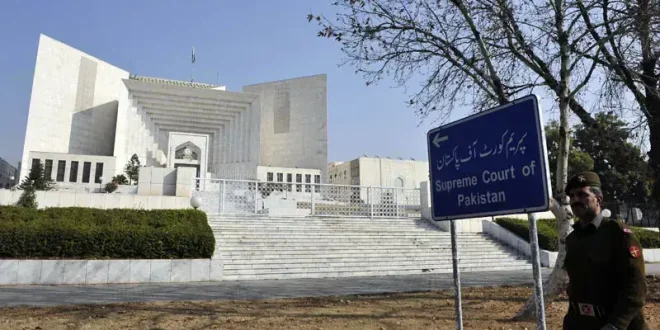
Pakistan Supreme Court Upholds Justice Over Technicalities: A Landmark Ruling
In a pivotal decision set to resonate throughout Pakistan’s judicial system, the Supreme Court has unequivocally declared that the fundamental purpose of procedural law is to facilitate justice, not to obstruct it. This ruling, delivered by a two-member bench comprising Justice Jamal Khan Mandokhail and Justice Salahuddin Panwhar, underscores a critical shift towards prioritizing substantive justice over rigid adherence to technicalities, a common impediment in the nation’s legal landscape.

The News: A Voice for Accuracy in Testimony
The Supreme Court’s pronouncement came in the context of a criminal appeal filed by Nayab Umrani, sister of the late women’s rights activist Sanam Umrani, who was tragically murdered in Jacobabad, Sindh, on May 31, 2018. The core of Nayab Umrani’s appeal revolved around critical inaccuracies in her recorded testimony as a prosecution witness in her sister’s murder trial. Both the trial court and the Sindh High Court had previously dismissed her applications to rectify these discrepancies, prompting her to seek recourse from the apex court.
The Supreme Court, after carefully reviewing the video recording of Umrani’s statement, identified notable differences between her verbal testimony and the written record, specifically highlighting an incorrectly recorded incident date (May 30 instead of May 31, 2018). Consequently, the bench issued a clear directive to the trial court: re-examine the video statement against the written one in the presence of all parties, make necessary corrections via a memorandum as per Section 360(2) of the CrPC, and then conclude the trial within 30 days. This directive emphasizes that any discrepancy, omission, or inaccuracy must be rectified to ensure the true version of events is on record, providing an opportunity for re-arguments based on the corrected testimony.
Background: The Battle Between Procedure and Principle
The case of Sanam Umrani is a poignant reminder of the challenges faced by human rights defenders and their families seeking justice in Pakistan. Her murder in 2018 sent shockwaves through the activist community, and the subsequent legal proceedings have been closely watched. Nayab Umrani’s struggle to ensure the accuracy of her testimony highlights a perennial tension within legal systems globally, and particularly in Pakistan: the balance between strict procedural compliance and the overarching goal of delivering justice.
Understanding Procedural Law and Article 10-A
Procedural laws, such as the Code of Criminal Procedure (CrPC) in Pakistan, are designed to ensure fairness, order, and consistency in legal proceedings. Section 360 of the CrPC, specifically invoked in this case, outlines the process for recording witness statements, including the crucial step of reading the testimony back to the witness for verification and correction. It also provides a mechanism for a witness to object to inaccuracies, mandating the judge to record a “memorandum” detailing the objection and incorporating the correct version.
However, the application of these procedures often becomes a double-edged sword. While intended to safeguard rights, overly technical interpretations by lower courts can inadvertently become barriers to justice, leading to delays or even miscarriages. This issue directly contravenes Article 10-A of the Constitution of Pakistan, which guarantees the fundamental right to a fair trial and due process. The Supreme Court’s ruling explicitly linked the correct application of CrPC provisions to securing this fundamental constitutional right, stating that judges must not adopt a “purely technical approach that frustrates the ends of justice; rather, the procedure must be employed as an instrument to promote justice, as intended by the legislature.”
The Challenge of Digital Testimony
The modern legal landscape increasingly incorporates technological advancements, such as recording testimony via video link, as seen in Nayab Umrani’s case where she testified from Islamabad to a trial court in Hyderabad. While these innovations enhance accessibility and efficiency, they also introduce new complexities, particularly in ensuring the accurate transcription of verbal testimony into written records. The Supreme Court’s intervention underscores the necessity of robust mechanisms to verify and correct such digital evidence to prevent any potential miscarriages of justice stemming from transcription errors.
Impact on Pakistan: Towards a More Just System
This Supreme Court decision holds significant implications for Pakistan’s justice system, promising several positive shifts:
- Empowering Witnesses: The ruling significantly strengthens the position of witnesses, granting them a more effective avenue to challenge inaccuracies in their recorded statements. This can prevent crucial evidence from being distorted due to clerical errors or oversight, thereby enhancing the reliability and integrity of trial proceedings.
- Judicial Mindset Shift: It sends a clear message to lower courts to adopt a more purposive, rather than a purely literal, interpretation of procedural law. This encourages judges to act as vigilant custodians of justice, ensuring that legal processes serve their intended goal: the discovery of truth and the delivery of equitable outcomes, aligning with the “spirit of the law.”
- Strengthening Fair Trial Rights: By firmly rooting the correct application of procedural rules in Article 10-A, the Supreme Court reinforces the constitutional guarantee of a fair trial. This is particularly vital in a country where judicial delays and procedural irregularities can often undermine public trust in the legal system, enhancing accountability and transparency.
- Addressing Systemic Inefficiencies: While not a panacea, the ruling nudges the system towards greater accountability in evidence recording, especially with increasingly common digital forms of testimony. It highlights the need for continuous vigilance, ensuring that technological convenience does not compromise evidentiary accuracy or the rights of parties involved.
- Combating Impunity: In high-profile cases, especially those involving activists or human rights defenders like Sanam Umrani, transparent and fair proceedings are paramount. This judgment helps ensure that justice for victims is not derailed by procedural slip-ups, thereby contributing to the broader fight against impunity and upholding human rights.
Analysis: The Spirit of Justice Prevails
The Supreme Court’s ruling is a powerful affirmation of the principle that justice is not merely a ritualistic adherence to rules but a substantive quest for truth and fairness. It eloquently settles the age-old debate between the “spirit” and the “letter” of the law, firmly advocating for the former. This decision sets a crucial precedent: when procedural safeguards, such as Section 360 CrPC, are in place to ensure accuracy and fairness, they must be diligently applied and interpreted in a manner that promotes justice, rather than hindering it.
The failure of lower courts to properly address Nayab Umrani’s valid concerns about her testimony underscored a systemic vulnerability—one where procedural technicalities could inadvertently silence a witness and potentially derail a murder trial. The Supreme Court’s intervention serves as a vital check and balance, reminding the judiciary of its primary responsibility: to ensure that human suffering finds a voice through the legal process.
By ordering a thorough re-examination and correction of the testimony, the court has not only provided a path forward for the Umrani family but also articulated a broader philosophical stance on judicial conduct. While this ruling marks a significant step, the broader challenges facing Pakistan’s justice system—including case backlogs, resource constraints, and the need for continuous judicial training—remain. However, by clearly articulating that procedural law exists to “give voice to human suffering and not to silence it,” the Supreme Court has laid down a fundamental principle that should guide all future judicial actions, fostering greater public confidence and ensuring that justice, in its truest sense, is indeed served.