Dost Pakistan Journeys Tours and safaris in the North & South Pakistsn
Related Articles
Beyond the Barbs: Unpacking the Fragile Dance Towards an Iran-US Deal
A High-Stakes Negotiation Amidst Geopolitical Volatility and Economic Pressures
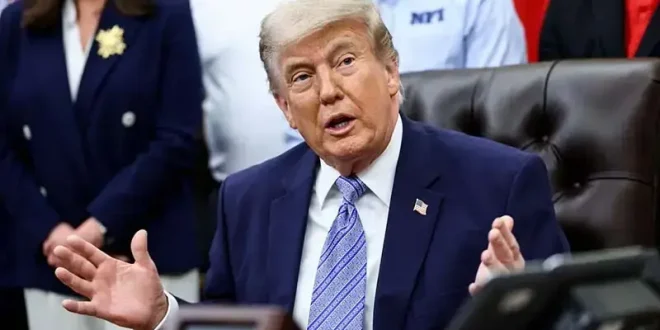
The global community watches with bated breath as Washington and Tehran navigate a high-stakes diplomatic tightrope, even as both sides trade accusations and maintain a skeptical distance. Recent reports indicate US President Donald Trump is deliberating a potential agreement with Iran, yet Tehran quickly countered, asserting that “nothing final” has been decided. This delicate situation, marked by conflicting demands and underlying distrust, underscores the immense challenges in de-escalating a prolonged regional conflict.
A Glimmer of Hope Amidst Diplomatic Contradictions
Recent days have seen a flurry of activity and statements regarding a possible breakthrough in the US-Iran standoff. President Trump publicly outlined key demands for any deal, insisting that Iran must never develop nuclear weapons and ensure the vital Strait of Hormuz shipping lane remains open without tolls. He also mentioned a mutual lifting of blockades and coordination on Iran’s enriched uranium.
However, Iran’s response was swift and pointed. Tehran rejected Trump’s assertive language, stating the Islamic Republic “said goodbye to the language of ‘must’ 47 years ago.” Iranian officials also directly contradicted several of Trump’s assertions, particularly regarding the demand for an immediate release of $12 billion in frozen Iranian assets—a point Trump claimed was not part of the current phase of negotiations. Furthermore, Iran dismissed the notion of destroying its nuclear material as “fundamentally baseless” and denied any ongoing nuclear talks.
Adding to the complexity, optimistic remarks from US officials, including Vance’s assertion of “a lot of progress,” were tempered by renewed accusations of truce violations in the Strait of Hormuz. Iran even claimed to have destroyed a US aircraft, a claim vehemently denied by the US Central Command. In the backdrop of this intense dialogue, Iranian President Masoud Pezeshkian acknowledged the diplomatic efforts of nations like Pakistan and Malaysia, highlighting Iran’s commitment to diplomacy despite the external pressures.
A Legacy of Mistrust and Strategic Imperatives
The current diplomatic dance is deeply rooted in decades of animosity and strategic competition between the United States and Iran. Relations dramatically deteriorated following President Trump’s 2018 withdrawal from the Joint Comprehensive Plan of Action (JCPOA), commonly known as the Iran nuclear deal. This move, which reimposed stringent economic sanctions on Iran, severely crippled its economy and fueled Tehran’s distrust of American commitments.
At the heart of US concerns is Iran’s nuclear program and the persistent worry that it could eventually lead to the development of nuclear weapons. Iran, for its part, has consistently maintained its nuclear activities are solely for peaceful purposes. The Strait of Hormuz, a narrow waterway through which a significant portion of the world’s oil supply passes, has been a recurring flashpoint, with both sides engaging in military maneuvers and accusations of maritime aggression. The frozen Iranian assets, a direct consequence of international sanctions, represent a crucial economic lifeline for Tehran and a key bargaining chip in any negotiation.
Global Repercussions: Stability, Economy, and Non-Proliferation
The outcome of these US-Iran negotiations carries profound implications far beyond Washington and Tehran:
- Global Stability: A successful de-escalation would significantly reduce tensions in the volatile Middle East, mitigating the risk of broader regional conflicts that could draw in other powers.
- Economic Impact: The security of shipping in the Strait of Hormuz directly affects global oil prices and supply chains. An agreement could stabilize energy markets, while renewed hostilities would send shockwaves through the world economy. The potential release of frozen Iranian assets also has economic implications for global financial systems.
- Nuclear Non-Proliferation: Resolving concerns about Iran’s nuclear program is vital for international non-proliferation efforts. A verifiable agreement would set a precedent and prevent a dangerous arms race in the region.
- Precedent for Diplomacy: The success or failure of these talks will serve as a critical case study for future international conflict resolution, demonstrating the viability (or limitations) of diplomacy in overcoming deep-seated geopolitical rivalries.
Pakistan’s Role: A Bridge for Peace in a Fractured Region
Pakistan’s active mediation efforts, acknowledged by Iranian President Pezeshkian, underscore its significant role as a regional peace broker. For Pakistan, a stable and peaceful relationship between the US and Iran offers several benefits:
- Regional Security: Reduced tensions on its western border with Iran contribute directly to Pakistan’s national security, allowing it to focus on domestic challenges and economic development.
- Economic Opportunities: Easing of sanctions could pave the way for long-delayed projects, such as the Iran-Pakistan gas pipeline, offering Pakistan much-needed energy resources. Stable oil prices resulting from a secure Strait of Hormuz also benefit Pakistan’s import-dependent economy.
- Diplomatic Stature: Successfully facilitating dialogue between two major global players enhances Pakistan’s diplomatic standing and reinforces its image as a responsible and constructive player in international affairs.
Analysis: The Art of the Deal and the Weight of History
The current situation exemplifies a classic negotiation strategy: both sides asserting maximum leverage while simultaneously engaging in dialogue. Trump’s public outlining of demands, while potentially aimed at domestic audiences, also serves as a strong opening position. Iran’s defiant rejection of the “language of ‘must'” and its counter-demands for frozen assets are equally strategic, signaling that it will not negotiate from a position of perceived weakness.
The “mixture of truth and lies” observation by Fars highlights the battle for narrative control, a common feature in high-stakes diplomacy. Each side seeks to shape public perception and rally internal support. Iran’s parliament speaker, Mohammad Bagher Ghalibaf, encapsulated Tehran’s deep skepticism with his statement, “We place no trust in guarantees or words; only actions matter,” a sentiment undoubtedly forged by the US withdrawal from the JCPOA.
The simultaneous military posturing—accusations of truce violations and conflicting reports of aircraft incidents—serves as a stark reminder of the fragile nature of this diplomatic opening. These actions indicate that while talks are ongoing, neither side is willing to fully lower its guard, demonstrating the intertwined nature of diplomacy and deterrence in complex geopolitical scenarios.
Ultimately, any lasting agreement will require significant compromises from both Washington and Tehran. The immediate release of frozen assets remains a tangible and urgent economic priority for Iran, while verifiable assurances on nuclear non-proliferation and unimpeded maritime passage are non-negotiable security interests for the US and its allies. The mere continuation of dialogue, even fraught with contradictions and mistrust, offers a narrow pathway towards de-escalation. However, the path ahead remains treacherous, laden with historical baggage and the ever-present risk of miscalculation.