 Dost Pakistan Journeys Tours and safaris in the North & South Pakistsn
Tragedy on Broad Peak: Analyzing the Perils and Resilience in High-Altitude Mountaineering
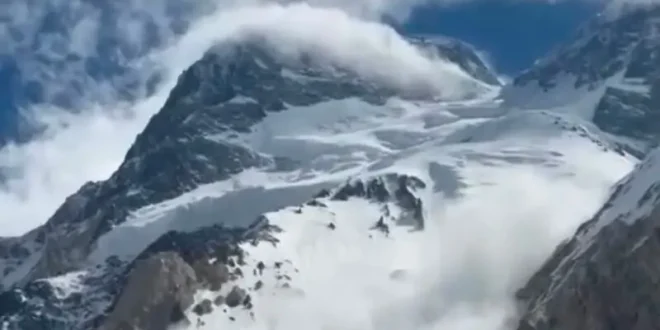
The formidable Karakoram range, a magnet for the world’s most elite mountaineers, has once again underscored its unforgiving nature. A recent avalanche on Broad Peak has cast a somber shadow over the climbing community, leading to a desperate search and rescue operation for seven missing climbers, including the renowned Nirmal Purja, after three bodies were tragically recovered.
The News: A Desperate Search in the Death Zone
On Saturday, search efforts resumed for seven climbers who disappeared following a massive avalanche on Broad Peak, one of the world’s 14 “eight-thousanders,” situated in Pakistan’s Gilgit-Baltistan region. This followed a temporary suspension on Friday due to treacherous weather conditions.
The harrowing incident saw a 10-member international team struck by an avalanche while ascending at approximately 6,600 meters (21,650 feet) on Thursday. Tracking devices indicated the climbers were swept hundreds of meters down the mountainside. The bodies of Oman’s Nadhira Ahmed Abdullah Al Harthy, Nepal’s Pur Bahadur Gurung, and American Mallory Geis were recovered on Friday and airlifted to Skardu, confirming the fears of a major tragedy.
Among the seven still missing are five Nepali climbers—Kili Pemba Sherpa, Nima Sherpa, Nawang Thindu Sherpa, Gyalu Sherpa, and the celebrated Nirmal Purja, often known as “Nimsdai.” Pakistan’s Sohail Sakhi and China’s Wang Zhong also remain unaccounted for. The rescue mission, a testament to global solidarity, involves a multi-pronged approach. A civil rescue team led by Pakistani mountaineer Sarbaz Khan is conducting ground operations, supported by Nepali climbers from other expeditions at basecamp. The Pakistan Army has deployed helicopters, and drone footage has been critical in identifying potential locations, even spotting additional climbers at 6,000 meters. The arrival of esteemed Nepali mountaineer Mingma David Sherpa in Pakistan further underscores the international commitment to finding the missing, particularly his close colleague, Purja.
Despite the immense challenges posed by the high-altitude terrain, extreme weather, and constant risk of further avalanches, the unwavering dedication of the rescue teams continues, battling against the clock and the elements.
Background: The Allure and Brutality of the Karakoram
Broad Peak: A Stepping Stone to Giants
Broad Peak, standing at 8,047 meters (26,400 feet), is the 12th highest mountain in the world. Nestled in the Karakoram range, it lies close to K2, the second-highest and arguably the most dangerous peak globally. While often considered less technically demanding than K2, Broad Peak presents its own formidable challenges, including exposed ridges, vast icefalls, and unpredictable weather, making any ascent a serious undertaking.
The Perils of High-Altitude Mountaineering
Mountaineering above 6,000 meters, particularly into the “death zone” above 8,000 meters, involves inherent and extreme risks. Thin atmospheric pressure starves the body of oxygen, leading to Acute Mountain Sickness (AMS), HACE (High-Altitude Cerebral Edema), and HAPE (High-Altitude Pulmonary Edema). Sub-zero temperatures, gale-force winds, and sudden storms can cause frostbite and hypothermia rapidly. However, avalanches, like the one on Broad Peak, remain one of the most indiscriminate and terrifying threats. Triggered by factors such as new snowfall, changes in temperature, or even the climbers’ own weight, they can sweep away entire teams in an instant, burying them under tons of snow and ice.
Nirmal Purja: A Global Icon
The involvement of Nirmal Purja in this tragic incident adds a significant layer to the narrative. “Nimsdai,” a former Gurkha and Special Boat Service (SBS) operator, achieved global fame for his “Project Possible,” where he summited all 14 of the world’s 8,000-meter peaks in a record-breaking six months and six days in 2019. He was also part of the historic first winter ascent of K2. His extraordinary feats and reputation as a strategic, resilient, and highly skilled mountaineer make his disappearance particularly shocking and amplify the intensity of the search efforts. His presence underscores that even the most experienced climbers are at the mercy of the mountains.
Impact on Pakistan: A Crucial Hub for Adventure Tourism
Pakistan’s northern regions, particularly Gilgit-Baltistan, are home to an unparalleled concentration of some of the world’s highest and most challenging peaks. This makes the country a vital destination for high-altitude mountaineering and adventure tourism, attracting climbers, trekkers, and explorers from across the globe. Broad Peak, K2, Nanga Parbat, and the Gasherbrums are major draws, contributing significantly to the local economy.
Expeditions generate substantial revenue through climbing permits, hiring local guides, porters, and logistics services, and supporting hotels and transportation networks in towns like Skardu and Gilgit. The local communities, often living in remote areas, rely heavily on this seasonal income. Tragedies like the Broad Peak avalanche, while devastating, often bring to light the extraordinary efforts Pakistan makes in supporting and rescuing these international endeavors. The involvement of the Alpine Club of Pakistan, local administration, and crucially, the Pakistan Army’s Aviation Corps, highlights the nation’s commitment to facilitating these dangerous pursuits and responding effectively to emergencies.
These incidents also serve as a stark reminder of the limitations and challenges Pakistan faces in high-altitude rescue, which often requires specialized equipment and expertise. While the courage of local mountaineers like Sarbaz Khan and the rapid deployment of military assets are commendable, the scale and complexity of such operations push the boundaries of even the most capable rescue services.
Analysis: Resilience, Technology, and the Enduring Lure of the Heights
The Broad Peak avalanche tragedy is a poignant reminder of the inherent and unpredictable dangers that define high-altitude mountaineering. Even with meticulous planning, advanced gear, and legendary experience like Nirmal Purja’s, the mountains can deliver a brutal blow. This event will undoubtedly prompt a deeper reflection within the climbing community on risk assessment, team composition, and contingency planning.
Technology’s Evolving Role
The news highlights the increasing reliance on technology in both expedition safety and rescue operations. Tracking devices provided crucial data on the climbers’ last known positions and the force of the avalanche, indicating they were “thrown hundreds of meters.” Drones are becoming indispensable tools for reconnaissance in treacherous terrain, identifying potential sites and even other climbers at extreme altitudes without exposing human rescuers to undue risk. While technology cannot prevent natural disasters, it significantly enhances situational awareness and optimizes rescue efforts, potentially saving precious time.
The Unwavering Spirit of Rescue
Amidst the despair, the spirit of human resilience and solidarity shines through. The immediate response from the local administration, the Alpine Club of Pakistan, and the heroic efforts of ground teams led by Sarbaz Khan, alongside army helicopters, underscore a profound commitment to saving lives. The rapid arrival of Mingma David Sherpa from Nepal to aid in the search for his colleague Nimsdai exemplifies the tight-knit, compassionate global mountaineering community, where bonds forged on challenging peaks transcend national borders.
The Enduring Lure
Despite the grave risks, the allure of the world’s highest peaks remains undiminished. For many, mountaineering is not just a sport but a profound journey of self-discovery, pushing physical and mental limits in environments of unparalleled beauty and challenge. Tragedies like this are a sobering cost, yet they rarely deter the next generation of climbers seeking to test their mettle against nature’s raw power. The mountains continue to be a canvas for both extraordinary human achievement and heartbreaking loss.
As the search continues on Broad Peak, the world watches with bated breath, hoping for a miracle while honoring the immense courage of those who venture into these majestic, yet perilous, landscapes. This incident serves as a stark testament to the mountains’ power and the enduring, yet fragile, human spirit of exploration.
