Dost Pakistan Journeys Tours and safaris in the North & South Pakistsn
Related Articles


“`html
AJK Crisis Deepens: Failed Talks, Impending Strike Threaten Elections
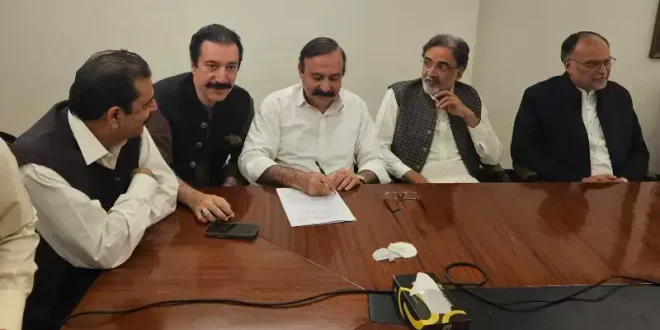
MUZAFFARABAD – Hopes for a swift resolution to the growing political tensions in Azad Jammu and Kashmir (AJK) have been dashed following the unsuccessful conclusion of marathon talks between a high-level federal delegation and the Jammu Kashmir Joint Awami Action Committee (JAAC). After over nine hours of intense negotiations, the JAAC announced its decision to proceed with a planned general strike on June 9, amplifying concerns about political stability in the region just weeks before crucial general elections.
What Happened: Deadlock Over Representation
The extensive dialogue, aimed at de-escalating the situation and addressing the JAAC’s comprehensive charter of demands, failed to achieve a breakthrough. While discussions reportedly covered 37 out of 38 points, the core contentious issue — the abolition of 12 legislative assembly seats reserved for Pakistan-based refugees from India-held Kashmir — remained an insurmountable stumbling block. JAAC leaders affirmed their readiness for future engagement but reiterated their commitment to the strike.
Representing the federal government were prominent figures from major Pakistani political parties, including the PML-N and PPP, alongside AJK’s leadership. Despite the federal delegation’s insistence that the “negotiations have absolutely not failed” and will continue, with another round expected after an all-parties conference, the immediate outcome signals a deepening of the crisis.
Background: Understanding the AJK Political Landscape
Azad Jammu and Kashmir (AJK) functions as a self-governing administrative territory under Pakistan, possessing its own parliament, prime minister, and president. However, its political and administrative structures are deeply intertwined with Islamabad. The Jammu Kashmir Joint Awami Action Committee (JAAC) has emerged as a significant grassroots movement, articulating a range of demands reflecting local aspirations for better governance, economic justice, and changes to the political structure. Their “charter of demands” reflects a broader sentiment for reform and often, a desire for greater local control over resources and policy.
The 12 “refugee seats” at the heart of the current dispute are a unique feature of the AJK Legislative Assembly. These seats are specifically allocated to represent Kashmiri refugees who migrated from India-held Kashmir and are currently residing in various parts of Pakistan. While historically intended to provide a voice for these displaced communities, the JAAC and other local stakeholders increasingly view them as an anachronism that distorts local representation and can be manipulated by Pakistan’s political parties for electoral gain. This perspective is reinforced by the revelation that the PML-N’s AJK chapter, for instance, strongly opposes their abolition due to its electoral strength in these constituencies, particularly in Punjab, highlighting the intricate interplay of AJK and Pakistani national politics.
Why It Matters: A Looming Crisis for AJK’s Future
The failure of these high-stakes talks carries significant implications for Azad Jammu and Kashmir, particularly with general elections anticipated in late July. A prolonged period of agitation and political instability could severely complicate the electoral process, potentially leading to delays or even questions about the legitimacy of the upcoming polls. The integrity of democratic transitions relies on a stable political environment, which the current impasse directly threatens.
Moreover, the dispute over refugee seats is more than a mere administrative detail; it touches upon fundamental questions of democratic representation and regional autonomy within AJK. The JAAC’s insistence on their abolition reflects a broader sentiment for more direct and localized representation, challenging historical arrangements that some perceive as external influence. This makes the issue a flashpoint for popular sentiment and could fuel further unrest if not addressed satisfactorily.
Impact on Pakistan: Federal Scrutiny and Political Challenges
The federal government’s direct involvement, through a delegation comprising senior cabinet members from both the ruling PML-N and coalition partner PPP, underscores the significance Islamabad attaches to the AJK situation. The inability to broker a deal reflects a challenging dynamic in managing relations with AJK’s popular movements and ensuring stability in a strategically important region. For the federal government, a failure to swiftly resolve the crisis could lead to perceptions of ineffective governance and an inability to manage internal political dissent, even in an administered territory.
Furthermore, the differing stances of Pakistani political parties on the refugee seats — with the PML-N keen to retain them due to electoral benefits and the PPP appearing less invested — reveal how AJK’s internal politics are often influenced and complicated by Pakistan’s broader political landscape. This internal divergence within the federal delegation itself might have contributed to the deadlock. A prolonged crisis would not only divert federal resources but also cast a shadow over Pakistan’s image regarding its handling of its administered territories.
Analysis: The Crossroads of Representation and Stability
The current situation in AJK is a classic case of a political impasse where deeply entrenched interests clash with popular demands for reform. The “breach of trust” mentioned by JAAC leaders suggests a history of unfulfilled promises, exacerbating current tensions and making genuine dialogue harder. By maintaining its strike call, the JAAC is exercising its leverage, demonstrating the breadth of its support, and signaling its unwavering resolve to see its demands met.
From the federal government’s perspective, the decision to continue talks and convene an all-parties conference is a strategy to buy time, diffuse immediate tensions, and seek broader consensus. However, this approach risks being perceived as procrastination if concrete steps towards resolving the core issue are not visible. The approaching elections serve as a critical deadline, pushing both sides towards a resolution. The challenge for the government lies in finding a compromise that acknowledges the popular sentiment behind the JAAC’s demands while navigating the existing political structures and the interests of various stakeholders, including the refugee communities themselves.
Ultimately, the AJK crisis highlights the complex and often delicate balance required in governance, particularly in territories with unique historical and political contexts. The outcome of this standoff will not only shape the future of political representation in AJK but also test the federal government’s capacity to manage internal dissent and ensure democratic stability in a crucial region.
“`