Dost Pakistan Journeys Tours and safaris in the North & South Pakistsn
Related Articles



“`html
Tragedy at Sea: Unpacking the Somali Pirate Attack and Pakistan’s Maritime Security Challenge
The recent announcement by Pakistan’s Prime Minister’s Office (PMO) detailing efforts to repatriate the remains of three Pakistani sailors — Rafiullah Khan, Syed Kashif Umer, and Mahmood Ahmed Ansari — killed during a rescue operation off the coast of Somalia, casts a somber light on the enduring threat of maritime piracy. Their deaths, occurring during the recovery of the Palau-flagged oil tanker MT Honour 25, underscore the perilous realities faced by seafarers and the complex challenges of ensuring maritime security in vital global shipping lanes.
Key Takeaways:
- Three Pakistani sailors died during a rescue operation for the hijacked MT Honour 25.
- The incident highlights the resurgence of Somali piracy and its grave human cost.
- Pakistan’s government has announced significant relief packages for the deceased families.
- The five-month delay in resolution raises questions about hostage negotiation tactics and international response efficacy.
The Cost of Piracy: A Rescue Marred by Loss
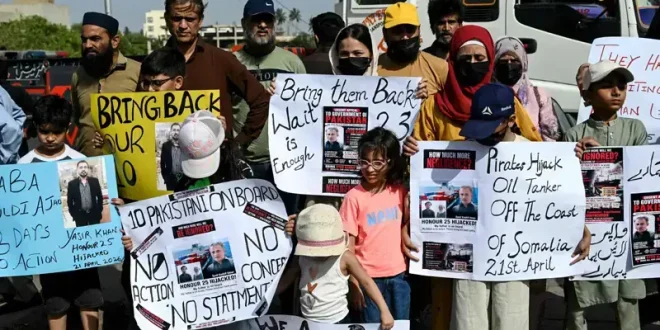
The successful recovery of the MT Honour 25 by Somalia’s Puntland maritime police force, while commendable, came at a tragic price. For five months, 19 crew members, including 10 Pakistanis, seven Indonesians, an Indian, and a Sri Lankan, endured captivity after their vessel was seized on April 21, approximately 30 nautical miles off Somalia’s semi-autonomous Puntland region. The crew’s desperate appeals, reporting dwindling supplies of food, water, and medicine, painted a stark picture of their deteriorating conditions.
The Foreign Office’s confirmation of three Pakistani fatalities and three injuries during the operation, alongside reports of two other crew members (one Indian, one Myanmar national) also perishing, underscores the inherent dangers of such rescue missions. Prime Minister Shehbaz Sharif’s swift directives for the repatriation of the deceased, with their remains currently in Addis Ababa awaiting transfer to Karachi, and the announcement of a substantial relief package of Rs12.5 million for each deceased family, including free housing and education for their children, demonstrate the government’s commitment to supporting its affected citizens. Deputy Prime Minister and Foreign Minister Ishaq Dar’s confirmation of four Pakistani crew members’ safe retrieval further highlights the multi-faceted efforts involved in addressing such crises.
The Resurgence of Somali Piracy: A Persistent Global Threat
This incident is not an isolated event but rather a grim reminder of the re-emergence of Somali piracy, a phenomenon that peaked between 2008 and 2012 before a concerted international naval effort largely suppressed it. The lull, however, proved temporary. Factors contributing to its resurgence include:
- Reduced International Naval Presence: The scaling back of anti-piracy patrols by international navies, following the perceived decline in attacks, has created a vacuum.
- Instability in Somalia: Ongoing political instability, economic hardship, and a lack of effective governance ashore continue to push individuals towards illicit activities like piracy.
- Illegal Fishing: The perceived encroachment of foreign fishing trawlers depleting local fish stocks fuels resentment and provides a pretext for piracy, with local fishermen sometimes turning to banditry.
- Climate Change Impact: Droughts and other climate-related challenges in the Horn of Africa exacerbate poverty, making piracy an attractive, albeit dangerous, economic alternative.
The targeting of vessels like the MT Honour 25, an oil tanker, signifies pirates’ continued focus on high-value targets, capable of yielding substantial ransoms, reported to be around $3 million in this case.
Pakistan’s Maritime Vulnerabilities and Geopolitical Stakes
For Pakistan, a nation strategically located along crucial global shipping routes, the security of its seafarers and maritime trade is paramount. As a country heavily reliant on sea-based commerce for its economy, the instability in the Gulf of Aden and the broader Indian Ocean region directly impacts its national interests. Pakistani sailors are vital contributors to the global shipping industry, making their safety a matter of national concern and international responsibility.
The government’s active engagement through the Foreign Office and its diplomatic missions, as seen in the “sustained efforts” to retrieve the four safe crew members via the embassy in Djibouti, underscores the diplomatic and logistical complexities involved. This incident also highlights Pakistan’s broader role in international maritime security efforts, often deploying its naval assets to participate in anti-piracy task forces and exercises.
Analysis: A Deeper Look at Response and Responsibility
While the PMO’s prompt response post-rescue and the announced relief package are crucial for the affected families, the protracted five-month period with “no progress” in negotiations or ransom payment raises critical questions. Was the rescue operation a last resort after all diplomatic and negotiation avenues were exhausted? What were the challenges that prevented an earlier, peaceful resolution, especially given the declining health of the crew members?
This case serves as a stark reminder of several key areas:
- The Human Element: Beyond geopolitical considerations and economic losses, piracy inflicts immense psychological and physical trauma on seafarers and their families. The appeals from the MT Honour 25 crew are a testament to this human cost.
- International Cooperation: The success in combating piracy between 2008-2012 was largely due to unprecedented international cooperation. The resurgence underscores the need for renewed and sustained collaborative efforts among navies, intelligence agencies, and coastal states.
- Seafarer Protection: There is a compelling need for enhanced measures to protect seafarers, particularly those from developing nations who often work on vessels with varying security standards. This includes better intelligence sharing, improved onboard security, and clear protocols for hostage situations.
- Policy and Prevention: Addressing the root causes of piracy on land, through economic development and stability in Somalia, remains a long-term solution. Short-term, robust maritime patrols and effective legal frameworks for prosecuting pirates are essential deterrents.
Conclusion: Navigating Future Challenges
The tragedy surrounding the MT Honour 25 and the loss of precious lives underscores the persistent and evolving threat of Somali piracy. While Pakistan’s immediate focus is rightly on repatriating its fallen sons and supporting their families, this incident demands a broader introspection into maritime security strategies. It calls for enhanced vigilance, renewed international collaboration, and robust measures to protect the livelihoods and lives of seafarers who navigate the world’s oceans, often at great personal risk.
As global trade continues to rely heavily on sea lanes, the lessons from the MT Honour 25 must prompt a renewed commitment from all stakeholders – governments, shipping companies, and international bodies – to ensure that the open seas remain safe for all.
“`