Dost Pakistan Journeys Tours and safaris in the North & South Pakistsn
Related Articles
“`html
Tharparkar’s Triumph: Bilawal Challenges ‘System Failure’ Narrative, Offers a Blueprint for Pakistan’s Progress
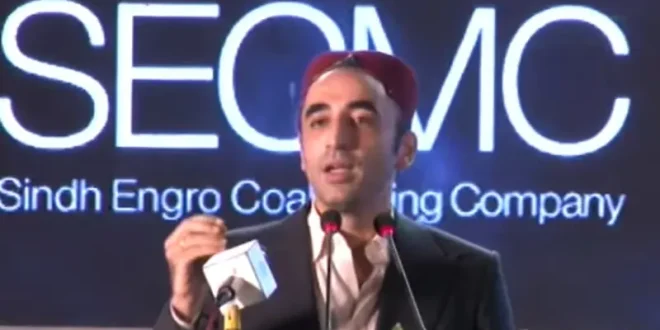
In a bold declaration from the heart of Tharparkar, Pakistan Peoples Party (PPP) Chairman Bilawal Bhutto-Zardari recently spearheaded a powerful narrative shift, asserting that the remarkable transformation of the traditionally impoverished district stands as irrefutable proof against the pervasive claim that Pakistan’s state system has collapsed. Speaking at the inauguration of Phase III of the Thar Coal Project’s Block II, Bhutto-Zardari positioned Tharparkar’s journey as an “archetype of success” for the 1973 Constitution and, critically, the 18th Amendment, offering it as a potent retort to those advocating for systemic overhaul or the creation of new provinces.
The News: Tharparkar as a Beacon of Success
Addressing an audience celebrating significant milestones in the Thar Coal Project, Bilawal Bhutto-Zardari forcefully rejected notions of a failing national system. He argued that Tharparkar’s unprecedented development, once a symbol of neglect, now exemplifies the efficacy of existing constitutional frameworks. In a pointed challenge to critics, he suggested that if Islamabad is perceived as dysfunctional, it should be “handed over to the people of Tharparkar” to be fixed, implicitly contrasting the federal capital’s governance with Sindh’s achievements.
The PPP chairman highlighted the tangible benefits emanating from the Thar Coal Project and broader regional development. He noted that Thar now contributes a crucial 14% of the national grid’s electricity, notably at the cheapest rates. This local energy generation is projected to save Pakistan an impressive $1.6 billion in foreign reserves annually, significantly easing the nation’s import burden. Furthermore, the project has spurred substantial local employment, with 94% of its workforce hailing from Sindh, and 60% directly from the Tharparkar district.
Sindh Chief Minister Murad Ali Shah provided further details, announcing that Phase III would boost the Thar coal mine’s production capacity from 7.6 million tonnes to 11.2 million tonnes annually, achieved through 100% self-financing. This expansion will enable additional power plants, like Lucky Electric’s 660-megawatt facility, to operate on Thar coal, pushing total generation from Thar to 1,980 megawatts. Shah projected annual savings of approximately Rs15 billion in electricity generation costs and an additional $220 million in foreign exchange for Pakistan. Crucially, the completion of Phase III also paves the way for the launch of “Thar Rail,” which promises to make Thar coal accessible across the country, enhancing national energy security.
Amidst these developmental pronouncements, Bilawal also took a swipe at unnamed political opponents in Karachi, accusing a party of “political orphans” of engaging in “politics of hate, division and Zionism,” vowing to thwart their agenda.
Background: A Region Transformed, A Constitution Tested
To fully grasp the significance of Bilawal’s statements, it’s essential to understand the historical context and the enabling environment:
- Tharparkar’s Legacy: For decades, Tharparkar was synonymous with extreme poverty, chronic drought, malnutrition, and a dire lack of infrastructure. Its transformation from a neglected desert region to an energy hub is a testament to sustained efforts and strategic vision.
- Thar Coal Reserves: Beneath the sands of Thar lie some of the world’s largest lignite coal reserves, estimated at 175 billion tonnes. For years, skepticism surrounded the viability of extracting and utilizing this “black gold.” The Thar Coal Project, initiated by the Sindh government with crucial public-private partnerships, has defied these doubts.
- The 18th Amendment (2010): This landmark constitutional amendment significantly devolved powers from the federal government to the provinces. Crucially, it empowered provinces with greater autonomy over their natural resources, including mineral exploration and energy generation. Without the 18th Amendment, such a large-scale provincial initiative like the Thar Coal Project would have been far more challenging, if not impossible, to execute independently.
- Public-Private Partnership (PPP) Model: The success of projects like Thar Coal Block II exemplifies the effectiveness of the PPP model in Pakistan. By leveraging private sector investment, expertise, and efficiency alongside government support and regulatory frameworks, large-scale infrastructure projects can overcome financial constraints often faced by public sector entities.
- Pakistan’s Energy Crisis: Pakistan has long grappled with an acute energy crisis, characterized by power outages, high electricity costs, and a heavy reliance on expensive imported fossil fuels, contributing significantly to its balance of payments issues and circular debt. Developing indigenous energy sources like Thar coal is vital for national energy security and economic stability.
- “System Failure” Narrative: The claim that Pakistan’s “system has failed” resonates with many frustrated citizens and is often propagated by political parties critical of governance. Bilawal’s counter-narrative directly confronts this widespread sentiment, seeking to restore faith in the constitutional framework.
Impact on Pakistan: A Multifaceted Ripple Effect
The achievements in Tharparkar, as articulated by Bilawal Bhutto-Zardari and Murad Ali Shah, carry profound implications for Pakistan:
- Enhanced Energy Security and Economic Resilience: By tapping into massive indigenous coal reserves, Pakistan reduces its dependence on costly imported fuels, saving billions in foreign exchange. This move directly addresses a critical component of the nation’s economic vulnerabilities and fortifies its energy independence.
- Regional Development and Poverty Alleviation: The project has sparked a socio-economic revolution in Tharparkar. Beyond power generation, it has led to significant improvements in infrastructure, health, education, and access to clean water. The creation of thousands of local jobs directly combats poverty and empowers communities, setting a precedent for holistic development in other marginalized regions.
- Validation of Decentralized Governance: Tharparkar’s success story strongly validates the spirit and letter of the 18th Amendment. It demonstrates how provincial autonomy, when combined with strategic vision and effective execution, can unlock regional potential and drive national progress.
- Blueprint for Public-Private Partnerships: The Thar Coal Project stands as a shining example of a successful PPP model in Pakistan’s mining and energy sectors. Its triumph can encourage similar collaborations in other large-scale development projects across the country, attracting further investment and fostering economic growth.
- Challenges the “System Failure” Dogma: By showcasing tangible success within the existing constitutional framework, the PPP effectively challenges the notion that Pakistan’s system is inherently broken. It argues that effective governance, strategic planning, and political will can yield significant results even in the face of widespread skepticism.
Analysis: A Political Statement, A Development Model, and Future Considerations
Bilawal Bhutto-Zardari’s speech is more than just an inauguration address; it’s a carefully crafted political statement and a potential blueprint for Pakistan’s future development:
A Strategic Political Counter-Narrative
Bilawal’s forceful rejection of the “system has failed” narrative is a calculated move to reposition the PPP as a party of governance and problem-solving. By highlighting Tharparkar’s success under PPP rule and the 18th Amendment (a key PPP achievement), he aims to assert the party’s legacy and competence. This narrative directly counters the widespread disillusionment with the state and various calls for radical change or new administrative divisions. By contrasting Tharparkar’s success with the perceived inefficiencies of Islamabad, he strategically places the onus on federal governance and advocates for the proven efficacy of provincial autonomy.
Tharparkar as a Development Model
The transformation of Tharparkar offers valuable lessons for other resource-rich but underdeveloped regions of Pakistan, particularly Balochistan, which holds immense mineral wealth. The combination of provincial autonomy, strategic investment in local resources, and effective public-private partnerships can indeed unlock significant potential. The emphasis on local employment and holistic development—beyond just resource extraction—is crucial for ensuring equitable growth and sustained prosperity.
Challenges and Future Considerations
While the Thar Coal Project is a triumph for energy security and regional development, it is not without its complexities. Globally, there is a growing push towards renewable energy sources and away from fossil fuels due to climate change concerns. Pakistan, as a signatory to international climate agreements, will eventually need to balance its immediate energy needs with its long-term environmental commitments. The “Thar Rail” project, while enhancing coal accessibility, also signifies a deepening reliance on this fossil fuel for the foreseeable future.
Furthermore, replicating Tharparkar’s success across Pakistan faces challenges. The political will, financial backing, and consistent long-term planning demonstrated in Sindh may not be easily mirrored elsewhere, especially in areas plagued by security issues, political instability, or entrenched corruption. Bilawal’s challenge to “hand Islamabad over to Tharparkar” serves as a powerful rhetorical device, but the systemic reforms required to address governance deficiencies at the federal level are far more intricate than a simple change of custodians.
Conclusion
Bilawal Bhutto-Zardari’s declaration from Tharparkar marks a significant moment in Pakistan’s ongoing political and development discourse. By presenting Tharparkar as a tangible example of what can be achieved within the existing constitutional framework, he offers a message of hope and a credible counter-argument to the pervasive sense of national decline. The success of the Thar Coal Project, rooted in strategic vision, the empowerment of the 18th Amendment, and robust public-private partnerships, stands as a testament to the potential within Pakistan to overcome its challenges and build a more prosperous future. It’s a powerful reminder that while the system may have its flaws, its effective implementation and utilization of local resources can indeed pave the way for remarkable progress.
“`