Dost Pakistan Journeys Tours and safaris in the North & South Pakistsn
Related Articles

“`html
Makkah Pact Deepens: Pakistan, Turkiye, Saudi Arabia Forge Rapid Deployment Alliance
An analysis of the significant agreement for collective defense and its implications for regional security.
The News: A New Era of Collective Defense
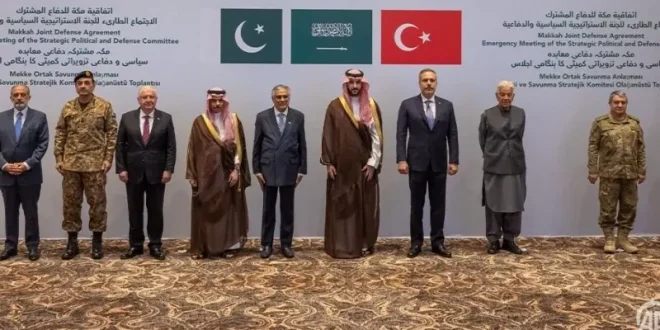
In a significant development for regional security, Pakistan, Turkiye, and Saudi Arabia have formally agreed to a framework for the rapid deployment of military forces and capabilities within the Kingdom of Saudi Arabia. This decision emerged from an emergency meeting of the Strategic Political and Defence Committee (SPDC) of the Makkah Joint Defence Agreement in Riyadh. The alliance aims to bolster collective defense commitments and enhance military integration against emerging threats, signaling a tangible move from theoretical pact to practical implementation.
The urgency of the agreement is underscored by ongoing Houthi attacks targeting Saudi cities, civilian infrastructure, and critical economic facilities, including attempted strikes on the holy cities of Makkah and Madina. While the official statement from Pakistan’s Foreign Office did not explicitly name the Houthi threat, the context of recent escalations in the Yemen conflict makes the alliance’s focus clear. Furthermore, the SPDC meeting saw the appointment of Pakistan’s Lieutenant General (Retd) Nauman Mahmood as the first Secretary General of the Makkah Alliance, indicating a structured and long-term commitment.
Background: The Makkah Pact and a Volatile Region
The Makkah Defence Pact, signed in August 2021, was conceived as a robust framework for mutual defense, stipulating that an attack on one signatory would be considered an attack on all. This principle underpins the current agreement, which now moves beyond rhetoric to actionable military cooperation. The alliance brings together three significant Muslim-majority nations, each with considerable military capabilities and strategic interests in the broader Middle East and Islamic world.
At the heart of the current impetus is the protracted and devastating civil war in Yemen. Since 2014, the Iran-backed Houthi rebels have been locked in conflict with the internationally recognized Yemeni government, supported by a Saudi-led coalition. The conflict has frequently spilled over Saudi borders, with the Houthis regularly launching ballistic missiles and drones at targets within Saudi Arabia. These attacks represent a direct challenge to Saudi sovereignty and regional stability, prompting Riyadh to seek stronger security alliances.
For Saudi Arabia, strengthening the Makkah Pact offers a multi-layered benefit: enhanced defense capabilities, a deterrent against future aggression, and a clear signal of regional unity against perceived threats. Turkiye, a rising regional power with aspirations for greater influence in the Islamic world, finds an opportunity to deepen its strategic partnerships. Pakistan, with its strong military and long-standing strategic ties to Saudi Arabia, plays a pivotal role, leveraging its defense expertise and historical solidarity.
Impact on Pakistan: A Balancing Act of Alliance and Diplomacy
Pakistan’s participation in the Makkah Alliance carries significant weight, stemming from deep-rooted historical, religious, and economic ties with Saudi Arabia. Islamabad has consistently affirmed its “unconditional” commitment to the Kingdom’s security and territorial integrity. This commitment has often translated into military cooperation, including training and advisory roles, and maintaining a military presence in the region, as acknowledged by Pakistan’s Defence Minister, Khawaja Asif, who noted Pakistani and Turkish forces currently play a “supportive role,” including reconnaissance, rather than direct combat operations in Yemen.
Economically, Pakistan relies heavily on remittances from its expatriate community in Saudi Arabia and benefits from Saudi investments and financial support, especially during economic crises. Maintaining robust relations with Riyadh is therefore a strategic imperative. The formalization of rapid force deployment mechanisms, and the appointment of a Pakistani general as Secretary General, further solidifies Pakistan’s institutional standing within this crucial regional security architecture.
However, this deeper alignment also presents a delicate diplomatic challenge for Pakistan. While strengthening ties with Saudi Arabia, Pakistan also maintains complex relations with Iran, a regional rival to Saudi Arabia and a key supporter of the Houthi movement. Islamabad has traditionally sought to balance these relationships, often positioning itself as a mediator. The explicit deepening of a collective defense pact against an implicitly Iran-backed threat could potentially strain this balancing act, requiring astute diplomatic navigation to avoid being drawn further into regional power rivalries.
Analysis: Strategic Intent and Regional Dynamics
The decision to move towards practical implementation of the Makkah Pact marks a significant escalation in regional security cooperation. It transforms the alliance from a declaratory statement into an operational framework, indicating a serious intent to counter threats collectively. The focus on “rapid deployment” suggests a proactive approach to deterrence and response, aiming to shorten reaction times in crisis scenarios.
From a strategic perspective, this alliance aims to project strength and unity in the face of persistent challenges. By demonstrating a credible collective defense capability, the three nations hope to deter future Houthi attacks and send a clear message to any state or non-state actor contemplating aggression against Saudi Arabia. The emphasis on “military integration” implies a longer-term vision for interoperability, shared intelligence, and coordinated planning, which could evolve into a more cohesive military bloc.
However, the alliance also faces inherent challenges. The success of military integration across three distinct national armies will require significant coordination, standardization of procedures, and consistent political will. Furthermore, the geopolitical landscape of the Middle East is notoriously complex, with shifting alliances and competing interests. While the immediate focus is on Houthi threats, the broader implications for regional power dynamics, particularly concerning Iran, will be closely watched. This pact reinforces a particular alignment within the Islamic world, potentially shaping future geopolitical configurations.
The Makkah Pact’s evolution into an operational defense mechanism reflects a growing understanding among key regional players that collective security is paramount in a volatile environment. Its long-term efficacy will depend on sustained commitment, effective implementation, and the ability of its members to navigate the intricate web of regional rivalries and international diplomacy while upholding their stated commitment to mutual defense and stability.
“`