Dost Pakistan Journeys Tours and safaris in the North & South Pakistsn
Related Articles

“`html
Unwavering Diplomacy: Pakistan’s Pivotal Role in De-escalating US-Iran Tensions and Fostering Regional Stability
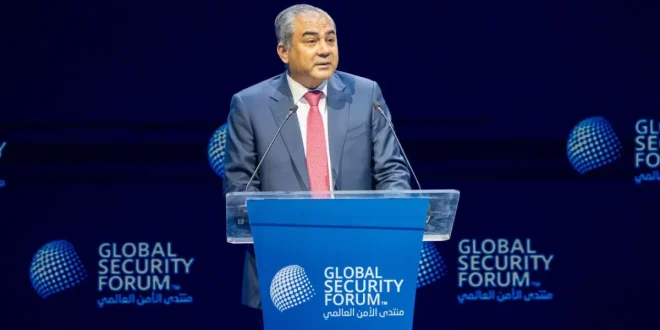
In a period marked by profound geopolitical shifts and escalating regional conflicts, Pakistan has emerged as a steadfast proponent of dialogue and peace. Speaking at the 8th Global Security Forum in Doha, Qatar, Interior Minister Mohsin Naqvi underscored Pakistan’s relentless diplomatic efforts to mediate between the United States and Iran, affirming that Islamabad “never gave up” on its pursuit of de-escalation.
Naqvi’s remarks at the prestigious forum, which convenes high-ranking officials from over 100 nations under the theme “The Future of Alliances,” painted a picture of a nation committed to navigating complex international crises through persistent engagement and trust-building. His address not only highlighted Pakistan’s direct involvement in preventing a wider regional conflagration but also reiterated its broader vision for collective security and cooperation.
The Volatile Crucible: US-Iran Conflict and Middle East Instability
The conflict involving the United States and Iran, ignited by US-Israeli strikes on Iran in February and met with retaliatory attacks, plunged an already fragile Middle East into severe peril. The ripple effects of this direct confrontation threatened to destabilize global energy markets, disrupt vital trade routes like the Strait of Hormuz – a critical chokepoint for a significant portion of the world’s oil supply – and exacerbate existing humanitarian crises. The region, already grappling with multifaceted challenges including the ongoing conflict involving Houthi rebels and Saudi Arabia, stood on the brink of a larger, more devastating war.
For Pakistan, a frontline state sharing a border with Iran and deeply intertwined with the broader Islamic world, the escalation of tensions between two major global and regional powers presented an existential threat. The potential for a wider conflict to spill over, disrupt economic lifelines, and empower extremist elements underscored the urgent need for a diplomatic solution. It was against this backdrop that Pakistan strategically positioned itself as a neutral arbiter, choosing “the path of peace” when others might have been pressured to “choose sides.”
Pakistan’s Persistent Pursuit of Peace: A Testament to Trust and Patience
Interior Minister Naqvi’s account of Pakistan’s mediation efforts reveals a concerted, high-stakes diplomatic campaign. His repeated trips to Iran, often accompanied by Chief of Defence Forces (CDF) Field Marshal Syed Asim Munir, signaled a whole-of-government approach to the crisis. Naqvi emphasized the critical role of CDF Munir, whose involvement added significant gravitas and strategic depth to Pakistan’s diplomatic overtures.
The culmination of these painstaking efforts was the signing of the 14-point Islamabad Memorandum of Understanding (MoU) between Iran and the US on June 18, with Pakistan acting as a vital guarantor. This framework agreement, designed to de-escalate hostilities, was swiftly followed by the Lake Lucerne Summit in Switzerland, co-organized by Pakistan and Qatar. Naqvi’s vivid recollection of Qatar’s Prime Minister Mohammed bin Abdulrahman Al Thani and CDF Munir working for “more than 16 hours without a single break,” away from cameras and public announcements, highlights the intense, sincere, and often unheralded dedication required for high-stakes diplomacy.
Pakistan’s strategy was built on three core tenets, articulated by Naqvi: never closing the door to dialogue, recognizing trust as the most important key, and understanding that peace requires sincere efforts from everyone. This approach stands in stark contrast to the often confrontational nature of international relations, demonstrating a commitment to fostering understanding even amidst deep-seated mistrust.
Strategic Implications: Elevating Pakistan’s Global Standing
Pakistan’s proactive role in mediating the US-Iran conflict carries significant strategic implications, bolstering its regional and international standing:
- Enhanced Diplomatic Capital: By successfully facilitating dialogue between two estranged powers, Pakistan has showcased its capability as a credible and neutral mediator. This enhances its diplomatic capital, allowing it to play a more influential role in future regional and global crises.
- Regional Stability as a National Interest: Islamabad’s consistent advocacy for peace in the Gulf is not merely altruistic; it is deeply rooted in its national interest. Regional stability directly impacts Pakistan’s energy security, trade routes, and the welfare of its expatriate community in Gulf states, whose remittances are vital to its economy.
- Countering Negative Perceptions: For a nation often battling negative perceptions related to security challenges and extremism, its role as a peace broker offers a powerful counter-narrative, projecting an image of a responsible and constructive international actor.
- Strengthening Alliances: The successful collaboration with Qatar in mediation efforts strengthens bilateral ties and underscores the potential for cooperative security frameworks among regional partners.
The Makkah Alliance: A New Paradigm for Defence?
In his address, Naqvi also brought attention to the Makkah Joint Defence Agreement, signed in August by Pakistan, Saudi Arabia, and Turkey. This pact, which formed the Makkah Defence Alliance, stipulates that an attack against one signatory is considered an attack against all. Naqvi explicitly framed this alliance as a “pact for defence, not for war,” emphasizing Pakistan’s commitment to collective security without aggressive intent. This move signals Pakistan’s effort to create a robust regional security architecture that potentially balances existing power dynamics and reinforces its position as a key player in the broader Islamic world.
Furthermore, Naqvi’s articulation of Pakistan’s enduring struggle against terrorism – a “common enemy” – and its contributions to UN peacekeeping missions, reinforces its credentials as a nation committed to global peace and security. These statements project Pakistan as a responsible international actor, capable of both addressing internal security challenges and contributing to global stability.
The Road Ahead: Fragile Peace and Enduring Commitment
Despite the initial successes in de-escalation, the path to lasting peace between the US and Iran remains fraught with challenges. Naqvi himself acknowledged the lack of recent progress in negotiations, with Iran’s proposal to reopen the Strait of Hormuz having been rejected by the US. The ongoing tensions with Houthi rebels further complicate the regional security landscape. These developments underscore the fragility of peace and the immense effort required to transform interim truces into enduring stability.
Yet, Pakistan’s message remains clear and consistent: “We do not want credit for stopping wars. We want a future where wars do not start.” This powerful statement encapsulates a vision of preventative diplomacy, where dialogue and cooperation preempt conflict rather than merely mitigating its aftermath. As the world navigates an increasingly complex geopolitical environment, Pakistan’s unwavering commitment to these principles offers a valuable lesson in the enduring power of diplomacy and the critical importance of never giving up on the pursuit of peace.
“`