 Dost Pakistan Journeys Tours and safaris in the North & South Pakistsn
Related Articles


AJK Protests: State Reasserts Control in Rawalakot Amidst Crackdown Fears
Summary: Activists from the proscribed Joint Awami Action Committee (JAAC) in Azad Jammu and Kashmir’s (AJK) Poonch district abruptly dispersed their sit-ins in Rawalakot, citing fears of a major security operation. This development followed a concerted effort by authorities, which included backchannel communications, a substantial flag march, and the blocking of identity documents for key JAAC members, signaling a firm stance by the state against prolonged civil unrest.
What Transpired: A Stand-off’s Abrupt End
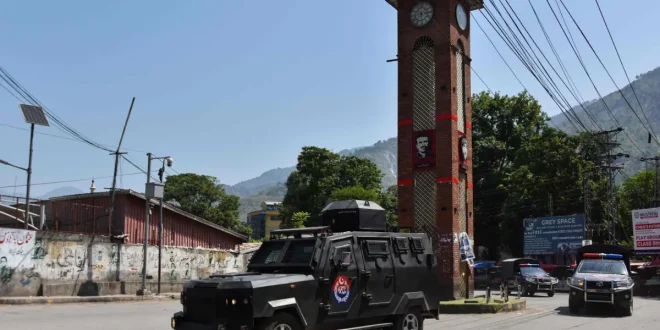
The eastern outskirts of Rawalakot, a key location for the Joint Awami Action Committee’s (JAAC) demonstrations, witnessed an unexpected quiet return shortly after midnight. Protesters, who had gathered from various districts of AJK, suddenly abandoned their sit-in sites, leading officials to declare an unconditional retreat in the face of state authority. This rapid dispersal came amidst credible intelligence suggesting an imminent and decisive security operation, featuring a formidable contingent of Rangers, Federal Constabulary, and AJK/Islamabad police personnel.
Prior to the dispersal, authorities had significantly escalated their pressure tactics. A dedicated force of approximately 1,000 security personnel was assembled, supported by a flag march showcasing armored vehicles. Crucially, backchannel negotiations were initiated with JAAC leaders, including the prominent Umar Nazir Kashmiri, conveying stark warnings regarding personal safety and the consequences of continued defiance. The administration also took steps to block the Computerised National Identity Cards (CNICs) and passports of 31 core JAAC members, a potent measure aimed at crippling their movement and financial access. This combination of visible force and strategic pressure ultimately compelled the protesters to disperse, marking a swift end to the immediate period of civil unrest in the region.
The Roots of Discontent: Understanding JAAC’s Grievances
The recent standoff in AJK is not an isolated incident but rather the culmination of deep-seated grievances championed by the Joint Awami Action Committee (JAAC). Central to their demands is the contentious issue of the 12 reserved seats in the AJK Legislative Assembly. These seats are specifically allocated for refugees from Indian-occupied Jammu and Kashmir who settled in mainland Pakistan after 1947. JAAC contends that this provision dilutes the political representation of local AJK residents and challenges the region’s distinct political identity and autonomy.
Beyond this specific point of contention, JAAC’s broader agenda encompasses concerns over economic hardship, including high electricity tariffs, rising flour prices, and perceived governmental corruption. The AJK government responded firmly to these protests, declaring JAAC a proscribed organization, accusing it of “terrorism,” and acting in a manner “prejudicial to peace and security.” This proscription initiated a widespread crackdown, resulting in numerous arrests of leaders and activists, and even prompting sedition proceedings. Tensions had already escalated into violence in Rawalakot, tragically claiming lives among both civilians and law enforcement personnel, underscoring the volatile nature of these disputes. Islamabad’s subsequent dispatch of federal paramilitary forces to reinforce AJK’s police further highlighted the severity of the situation and the central government’s concern for stability in the strategically vital region.
Why This Matters: A Test of State Authority and Regional Stability
The dispersal of JAAC protests in Poonch district carries significant implications, serving as a critical moment for both state authority and the broader socio-political landscape of Azad Jammu and Kashmir. Firstly, it underscores the state’s unwavering resolve to enforce its writ and maintain law and order, particularly in the face of movements it deems a threat to peace and security. The deployment of a substantial security apparatus and the punitive measures against JAAC members send a clear message that prolonged civil disobedience, especially when involving violence, will not be tolerated.
Secondly, the underlying demands, particularly concerning the 12 refugee seats, touch upon fundamental questions of representation, identity, and political fairness within AJK. While the immediate protest has ended, these constitutional and political debates are far from resolved. Their persistence could continue to fuel public discontent and challenge the legitimacy of existing governance structures. The stability of AJK is also intrinsically linked to Pakistan’s broader security interests, given its sensitive location along the Line of Control (LoC). Any prolonged unrest or destabilization in AJK has the potential for wider repercussions, both domestically and internationally, affecting Pakistan’s diplomatic standing and its narrative on the Kashmir issue.
Broader Repercussions for Pakistan
The events unfolding in Azad Jammu and Kashmir resonate deeply within Pakistan, impacting its internal security, political dynamics, and international perception. The deployment of federal forces, including Rangers and Federal Constabulary, represents a significant investment of resources and a direct intervention from Islamabad, highlighting the close yet complex relationship between the central government and the autonomous region. This intervention underscores Pakistan’s vested interest in maintaining stability in AJK, not just for governance but also for its strategic implications on the Kashmir dispute narrative.
Economically, the prolonged strikes and security operations impose a burden, disrupting trade and daily life in a region already facing development challenges. Politically, how Pakistan manages dissent in AJK is under scrutiny, both from its own citizens and the international community. Accusations of heavy-handedness could potentially undermine Pakistan’s stance on self-determination for Kashmiris. Furthermore, the sensitive demand to abolish refugee seats potentially strains relations with Kashmiri refugee communities settled in Pakistan, complicating a humanitarian issue with political overtones. While Defence Minister Khawaja Asif’s suggestion for the people of AJK to decide on the refugee seats signals an attempt to shift the debate towards a democratic resolution, the immediate state response focused on control rather than dialogue, leaving the long-term resolution of these complex issues in question.
Analysis: A Tactical Retreat, Not a Resolution
The abrupt dispersal of the JAAC protests in Rawalakot appears to be a tactical retreat by activists, compelled by the overwhelming show of force and the state’s unequivocal commitment to “no compromise on the writ of the state.” While the immediate crisis of the sit-ins has been averted, it would be premature to view this as a comprehensive resolution of the underlying grievances. The authorities’ multi-pronged strategy – combining arrests, backchannel warnings, a massive flag march, and economic sanctions through CNIC/passport blocking – was designed to demonstrate superior power and dismantle the organizational capacity of JAAC.
However, force alone seldom addresses the root causes of civil unrest. The demands related to the 12 refugee seats, economic equity, and governance reforms continue to simmer beneath the surface. By proscribing JAAC and taking a hardline stance, the administration has, for now, quashed overt protest. Yet, this approach risks alienating segments of the population who identify with JAAC’s demands, potentially driving dissent underground or fostering deeper resentment. The emphasis on “surrender” rather than “dialogue” suggests a missed opportunity for constructive engagement, which could have led to more sustainable peace. For lasting stability in AJK, a balanced approach that combines robust law enforcement with genuine efforts to address public concerns, particularly through transparent and participatory political processes, will be essential. The current calm in Rawalakot may be just a temporary pause in a much longer struggle for representation and justice in Azad Kashmir.

