 Dost Pakistan Journeys Tours and safaris in the North & South Pakistsn
Related Articles

“`html
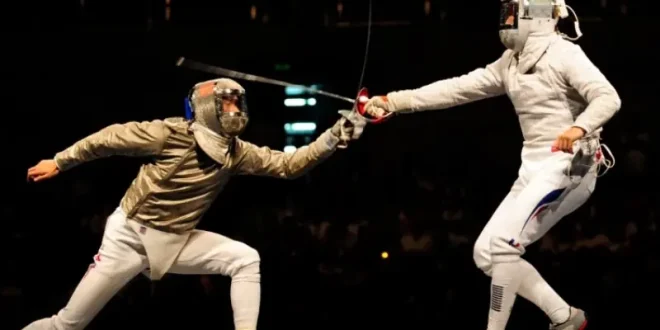
Pakistan’s Fencing Snub: Geopolitics Overshadows Sport in India
In a move that underscores the persistent geopolitical friction between two South Asian rivals, Pakistan has opted not to send its team to the upcoming Asian Senior Fencing Championships. Despite an invitation from the Indian organizers and a clear stance from India’s Sports Ministry allowing participation in multilateral events, Pakistan’s absence at the continental competition scheduled from June 19 in New Delhi speaks volumes about the troubled state of India-Pakistan relations, even in the seemingly neutral arena of sports.
What Happened
The Fencing Association of India (FAI), hosting the Asian Senior Fencing Championships for the first time, extended an invitation to Pakistan, alongside other nations across Asia and Oceania. Over 30 countries are expected to participate in the event, which will see hundreds of fencers and officials gather in New Delhi. However, the deadline for entries passed without Pakistan confirming its participation. This decision comes despite the Indian Sports Ministry’s explicit reiteration last month that while a blanket ban on bilateral sporting ties with Pakistan remains in force (imposed last year), athletes from across the border would not be prevented from attending multilateral events hosted in India. Pakistan’s choice to abstain highlights a deliberate policy decision rather than an logistical oversight.
Background: A Legacy of Strained Sporting Ties
The relationship between India and Pakistan has historically been fraught with political tensions, frequently spilling over into cultural and sporting exchanges. Cricket, the most popular sport in both nations, serves as a prime example, with bilateral series often suspended for extended periods due to diplomatic chill. The Indian government’s “blanket ban” on bilateral sporting engagements, reiterated just weeks before this fencing championship, is a direct consequence of escalating cross-border tensions. However, allowing participation in multilateral events was seen as a pragmatic approach, enabling Indian cities to host international tournaments without explicitly normalizing bilateral sporting contacts with Pakistan. This nuanced policy aimed to separate international sporting commitments from contentious direct engagements. Pakistan’s decision, therefore, bypasses this diplomatic opening, choosing to interpret the situation more broadly.
Why It Matters: Beyond the Fencing Strip
This incident is more than just about a few fencers missing a competition. It serves as a potent barometer for the broader state of India-Pakistan relations. Sports, often hailed as a tool for peace and diplomacy, has the potential to foster understanding and build bridges. Pakistan’s refusal to participate, despite the host nation’s explicit permission for multilateral involvement, signals a deep-seated reluctance to engage even at a non-political, sporting level. For India, it’s a missed opportunity to showcase its hospitality and ability to host international events inclusive of all regional players. For the wider international sporting community, it’s a stark reminder that in some regions, politics can still heavily influence athletic participation, even for continental championships.
Impact on Pakistan: Athletes Bear the Brunt
The most immediate and significant impact of this decision falls squarely on Pakistan’s fencers. These athletes will miss a crucial opportunity for international exposure, competitive experience, and a chance to test their skills against top Asian competitors. For a sport like fencing, which relies heavily on international circuits for development and ranking points, absence from such a significant continental event can severely hinder individual careers and the national team’s progress. It reflects a difficult choice by Pakistan’s sporting authorities and government, prioritizing a political message over the direct welfare and development of its athletes. Such decisions can discourage aspiring fencers and impact the sport’s growth within the country, further isolating Pakistani athletes from the global stage.
Analysis: Geopolitical Stand-off Continues
Pakistan’s decision, despite India’s relaxed stance on multilateral participation, is undoubtedly a politically charged one. It signals a continued unwillingness to engage with India even on neutral platforms, indicating that the prevailing geopolitical climate is too tense for any form of reconciliation or sports diplomacy. This move could be interpreted as Pakistan’s way of protesting India’s broader policies or simply a refusal to grant any perceived legitimacy to Indian-hosted events in the current adversarial environment. It highlights the enduring lack of trust and the deep-seated ideological differences that continue to define the relationship between the two nuclear-armed neighbours. This incident sadly reinforces the perception that, for now, the prospect of sports acting as a genuine catalyst for peace or normalization between India and Pakistan remains a distant dream, with national politics consistently overshadowing athletic aspirations and regional sporting cooperation.
“`
