Dost Pakistan Journeys Tours and safaris in the North & South Pakistsn
Related Articles


Ewing Hall Standoff: Heritage vs. Dues in Lahore’s Historic Heart
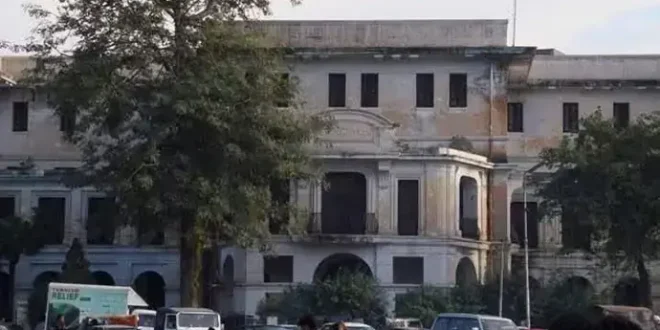
Lahore, Pakistan – A tense dispute is unfolding around Ewing Hall, a century-old architectural gem in Lahore, pitting government authorities against the esteemed Forman Christian College University (FCCU). While the Lahore Heritage Areas Revival Board (LHAR) assures the public of the building’s preservation, the controversy highlights a complex interplay of historical legacy, property rights, significant financial claims, and the enduring shadows of past nationalization policies.
What’s Happening Now?
The Lahore Heritage Areas Revival Board (LHAR) has stepped forward to quell public apprehension, specifically denying reports of an impending demolition of the historical Ewing Hall near Neela Gumbad. This reassurance comes amidst a wave of protests and concerns from FCCU alumni and activists who fear that the government’s repossession of the property could jeopardize a vital piece of Lahore’s cultural and educational heritage. LHAR insists its primary objective is the building’s preservation and restoration, not its destruction, aligning with its mandate and that of the Walled City of Lahore Authority (WCLA).
However, the official narrative stands in stark contrast to FCCU’s perspective. LHAR asserts that the building’s lease, granted to FC College in 1915 for student accommodation, expired years ago and that a substantial sum of Rs107 million in rent remains outstanding since 2015. They emphasize that the matter underwent due legal process, including a show-cause notice and subsequent hearings, culminating in an order on April 27, 2026, which formally resumed the land in favor of the government.
FCCU, on the other hand, strongly disputes these claims. The university questions the legitimacy of demanding rent for the period between 1975 and 2003, when the institution was nationalized and under government control. It further refutes the allegation that Ewing Hall has been vacant and unused since 2015, explaining that structural integrity concerns, exacerbated by the COVID-19 pandemic, led to its temporary vacating. FCCU highlights a recent Rs5 million structural assessment completed in March 2026 and ongoing discussions with WCLA for facade renovation, underscoring its active intent to restore the hall for hostel use.
A Glimpse into the Past: Background of the Dispute
The roots of the Ewing Hall controversy stretch deep into Pakistan’s history, reflecting the evolution of its educational sector and the complexities arising from significant governmental policy shifts. Ewing Hall itself is more than just a structure; it is an intrinsic part of Forman Christian College’s long and distinguished journey, an institution founded in 1864 that has shaped generations of leaders and scholars.
A critical period in this saga is the nationalization of private educational institutions, including FC College, between 1975 and 2003. This policy move brought many privately managed schools and colleges under state control. When FCCU was eventually denationalized and returned to its private management, the intricate process of handing back properties, disentangling financial liabilities, and clarifying ownership rights appears to have left unresolved issues. The current demand for rent during this specific nationalized period directly stems from these historical policy shifts, adding a unique dimension to what might otherwise be a straightforward lease dispute.
The government’s stance, articulated by the Punjab government and LHAR, leans on the legal premise of an expired lease and outstanding financial dues. However, FCCU views the situation through the lens of its unique historical trajectory, contending that the nationalization period should mitigate certain financial obligations. The involvement of both the LHAR and WCLA further highlights the building’s undeniable historical and architectural significance, elevating the dispute beyond a mere property transaction to a matter of public and cultural concern.
Why This Matters: More Than Just a Building
The unfolding drama surrounding Ewing Hall transcends a simple administrative or contractual disagreement. Its resolution holds significant implications for several critical aspects of Pakistani society:
- Heritage Preservation and Urban Identity: Ewing Hall, a magnificent century-old edifice, is a tangible link to Lahore’s rich colonial past and an integral part of its architectural landscape. Its fate will serve as a litmus test for Pakistan’s commitment to safeguarding its rapidly diminishing historical assets. How it’s treated—whether through demolition (denied by LHAR but feared by many) or careful, authentic restoration—will reflect on the nation’s respect for its own urban identity and historical fabric.
- Educational Legacy and Institutional Autonomy: Forman Christian College University is a cornerstone of Pakistan’s educational landscape, renowned for its academic excellence and its vital role in fostering interfaith harmony through its diverse student body, including strong ties to minority communities. A contentious repossession could be perceived as undermining institutional autonomy, creating instability, and setting a worrying precedent for other educational bodies that often operate on long-term lease agreements.
- Rule of Law vs. Historical Context: The dispute presents a challenge in applying contemporary legal frameworks to situations deeply impacted by complex historical events like nationalization. The interpretation of “fairness” by courts and authorities, considering both strict contractual terms and the unique historical circumstances, will be crucial. The outcome could significantly influence how similar historical land and property disputes are handled across the country.
- Minority Community Concerns: LHAR’s explicit acknowledgment of “minority communities who hold this institution close to their hearts” underscores the sensitive nature of the issue. Actions impacting an institution like FCCU can resonate deeply within these communities, making a resolution based on dialogue, equity, and mutual respect vital for maintaining social cohesion and trust.
Impact on Pakistan: A Broader Perspective
The resolution of the Ewing Hall controversy carries potential ripple effects across various sectors in Pakistan, extending beyond the immediate parties involved:
- Cultural Identity and Tourism: Lahore, often celebrated as the cultural heart of Pakistan, relies heavily on its historical buildings and sites to attract tourists and maintain its unique identity. The preservation and thoughtful management of heritage assets like Ewing Hall are crucial for sustaining cultural tourism and projecting a positive image of Pakistan’s rich history to the world. Any perceived neglect or destruction could tarnish this image.
- Investment Climate and Property Rights: Clarity, transparency, and fairness in property disputes, particularly when government bodies are involved, are fundamental for fostering investor confidence. Uncertainty or actions perceived as arbitrary can deter both local and international investment, potentially impacting economic growth and development. Investors look for predictable and equitable legal environments.
- Social Cohesion and Public Trust: How the government navigates such a sensitive issue, especially one involving a highly respected educational institution with deep community ties, can significantly impact public trust in state institutions. A transparent, just, and conciliatory approach that prioritizes dialogue over confrontation is essential for strengthening social harmony and confidence in governance.
- Educational Sector Stability: The dispute raises broader questions about the long-term security of assets for educational institutions, particularly those with deep historical roots or institutions that experienced periods of nationalization. This uncertainty can hinder strategic planning, fundraising efforts, and overall stability within the critical education sector, potentially impacting future generations of students.
Analysis: Unpacking the Competing Narratives
The Ewing Hall saga is a compelling illustration of conflicting narratives, each grounded in its own set of facts and justifications. The government, primarily through LHAR and the Board of Revenue, presents a narrative of an expired lease, persistent unpaid dues, and a meticulously followed legal process. Their denial of demolition plans is a strategic move to address public outcry and position themselves as responsible custodians of heritage.
However, FCCU’s counter-narrative introduces crucial historical and contextual complexities that challenge the government’s seemingly straightforward legalistic approach. Their refusal to pay rent during the nationalization period (1975-2003) is a powerful argument, asserting that a government-controlled entity cannot owe rent to the government itself for its own property. This directly questions the fairness of applying standard lease terms to a period under extraordinary circumstances.
Furthermore, FCCU’s robust refutation of the “unused since 2015” claim, complete with details of structural assessments, a hostel guardian, and ongoing discussions with WCLA for renovation, directly undermines the government’s justification for repossession based on idleness. This suggests a significant disconnect between the governmental authorities’ perception of the building’s status and FCCU’s proactive engagement with its future.
The core tension in this dispute lies in the clash between a rigid, bureaucratic interpretation of land lease agreements and the profound historical, emotional, and educational significance of Ewing Hall. While LHAR emphasizes a legal order as a definitive conclusion, FCCU’s call for a “cooperative approach” and dialogue indicates a desire for a mutually agreeable solution that respects the institution’s legacy and the building’s intended purpose. The fact that FCCU was already engaged with WCLA, another heritage-mandated government body, for renovations prior to the repossession order further highlights a potential lack of coordinated communication within government departments.
For a fair and sustainable resolution, all parties must move beyond entrenched positions. A solution that genuinely preserves Ewing Hall’s architectural integrity and historical significance, while addressing legitimate financial claims and acknowledging the unique historical context of FCCU’s nationalization, will be a critical test of Pakistan’s ability to navigate its complex past and ensure a cohesive future for its invaluable heritage and educational institutions.