 Dost Pakistan Journeys Tours and safaris in the North & South Pakistsn
Related Articles


“`html
Pakistan’s FY2027 Budget: A Strategic Blend of Reforms and Relief
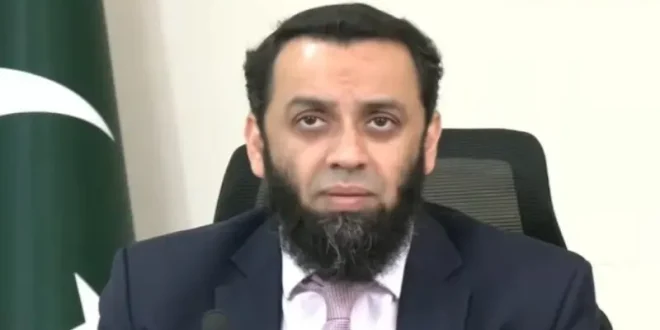
The announcement of Pakistan’s federal budget for the fiscal year 2027 has been met with typical government optimism, with Information Minister Attaullah Tarar and State Minister for Finance Bilal Azhar Kayani hailing it as “positive and relief-oriented.” This official narrative, delivered at a media briefing, frames the budget as a culmination of concerted efforts to steer the nation away from economic distress and onto a path of sustainable growth. However, a deeper look reveals a complex tapestry of ambitious reforms, targeted relief, and a robust defense of the government’s economic stewardship, all set against a backdrop of persistent challenges.
The News
Information Minister Attaullah Tarar, alongside State Minister for Finance Bilal Azhar Kayani, presented the federal budget for FY2027 as a beacon of positivity and relief for various segments of Pakistani society. They vocally dismissed what they termed “criticism for the sake of criticising,” highlighting the government’s commitment to delivering economic stability. Central to their argument were claims of extensive reforms within the Federal Board of Revenue (FBR), aimed at broadening the tax base, enhancing transparency, and curbing corruption. Specific measures cited included the implementation of “faceless systems” for customs clearance, merit-based hiring, and advanced IT systems to monitor and collect taxes from previously under-taxed sectors like sugar, tobacco, beverages, and cement. These efforts, they stated, led to significant revenue recovery, including Rs60 billion from sugar mills alone and addressing a Rs200 billion leak in the tobacco industry. On the relief front, the ministers pointed to tax adjustments for the salaried class (1% tax for those earning Rs50,000-Rs100,000, reductions for higher slabs), tax relief for smaller home buyers, abolition of advance tax and super tax for exporters, and the removal of the ‘pink tax’. The budget, they asserted, was a “home-grown plan” crafted to ensure relief for the public and put the country on a trajectory of “development and harmony.”
Background: Navigating Economic Headwinds
Pakistan’s economy has been a subject of recurrent instability, often teetering on the edge of a balance of payments crisis and reliant on external assistance. The information minister’s remarks about Pakistan being “on the brink of default” resonate with the precarious situation the country faced, particularly in recent years. A default implies the inability to meet debt obligations, leading to a catastrophic loss of international confidence, currency devaluation, and a severe disruption of trade and investment. Such scenarios typically force Pakistan to seek lifelines from international lenders like the International Monetary Fund (IMF), which impose strict conditionalities focused on fiscal discipline, structural reforms, and tax base broadening.
A perennial challenge for Pakistan has been its remarkably low tax-to-GDP ratio, indicative of a narrow tax base and widespread tax evasion. The FBR, the nation’s primary revenue collection agency, has long been plagued by issues of inefficiency, corruption, lack of digitization, and a heavy reliance on indirect taxation, which disproportionately burdens the poor. Efforts to reform the FBR have often faced political resistance from powerful vested interests and the informal economy. Therefore, the government’s emphasis on FBR reforms – including merit-based hiring, IT systems, and direct enforcement in industries like sugar and tobacco – addresses a critical, long-standing structural weakness. The PML-N’s narrative, as articulated by the ministers, positions itself as the savior, drawing a stark contrast with past administrations and attributing current stabilization efforts to the vision of Nawaz Sharif and the diligent work of Prime Minister Shehbaz Sharif.
Impact on Pakistan: A Path Towards Fiscal Prudence and Public Engagement
The proposed FY2027 budget, if successfully implemented, could have several significant impacts on Pakistan’s economic and social landscape.
- Fiscal Stability and Confidence: The claimed Rs800 billion recovered through FBR enforcement in the past year, independent of IMF programs, signals a potential strengthening of domestic revenue generation. This could reduce reliance on external borrowing, improve the country’s fiscal health, and potentially enhance investor confidence in Pakistan’s economic management. A more transparent and efficient tax system might attract both domestic and foreign investment.
- Public Sentiment and Equity: The “relief-oriented” measures for the salaried class, small homeowners, and the abolition of the ‘pink tax’ (often associated with taxes on feminine hygiene products or other items perceived to disproportionately affect women) could positively impact public sentiment. By easing the tax burden on specific vulnerable or middle-income groups, the government aims to demonstrate responsiveness to public needs. The intent to broaden the tax net, specifically targeting previously untaxed or under-taxed profitable sectors, also suggests a move towards greater tax equity, ensuring that those who benefit most from the economy contribute their fair share.
- Industrial Growth and Exports: Abolishing the advance tax and super tax for exporters is a strategic move to boost Pakistan’s critical export sector. Exporters often face liquidity challenges due to upfront tax payments, and these measures could provide much-needed relief, fostering competitiveness and potentially increasing foreign exchange earnings. Incentives for small electric vehicles and bikes, coupled with barriers for luxury e-vehicles, indicate a push towards sustainable transport and a more localized, accessible EV market.
- Governance and Transparency: The “faceless system” at ports and merit-based FBR hiring are crucial steps towards reducing corruption and improving the efficiency of public institutions. By minimizing human interaction in tax assessment and customs clearance, the budget seeks to create a more transparent and predictable regulatory environment, benefiting businesses and reducing opportunities for illicit practices. The establishment of new tribunals for tax dispute litigation further reinforces the commitment to robust governance.
Analysis: Balancing Ambition with Reality
The FY2027 budget represents a critical attempt by the Pakistani government to walk a tightrope: simultaneously pursuing aggressive fiscal consolidation through FBR reforms while offering targeted relief to key segments of the population. This balancing act is fraught with both opportunity and risk.
Sustainability and Independence of Reforms
While the government proudly asserts its “home-grown plan” and independence from IMF conditionalities for its tax enforcement successes, it’s worth noting that many of these FBR reforms align closely with the structural adjustments typically advocated by the IMF. The challenge will be to ensure these reforms are sustainable beyond the immediate political horizon and deeply embedded into the institutional fabric, rather than being mere temporary fixes driven by political will. The real test lies in the long-term commitment to a digitized, transparent, and merit-based FBR, resilient to political pressures and bureaucratic inertia.
Addressing the Criticisms
The information minister’s preemptive dismissal of “criticism for the sake of criticising” is a common political tactic. However, legitimate concerns may arise regarding the budget’s practical implications. For instance, while some sectors receive relief, others, like small traders and shopkeepers, face a new fixed tax scheme and higher minimum tax rates for wholesalers and retailers. The impact of these measures on small businesses and their capacity to absorb additional burdens will need careful monitoring. Similarly, taxing social media earnings, while logical in principle for broadening the tax base, presents significant implementation challenges in terms of identification, assessment, and collection. The three-year freeze on provincial transfers, while intended to reallocate resources for security and federal priorities, could also spark federal-provincial tensions over resource distribution and autonomy.
Political Economy and Implementation
The narrative of economic revival, attributing past failures to unnamed officials and current successes to the PML-N leadership, serves a clear political purpose. It aims to bolster the government’s image and perhaps lay groundwork for future electoral mandates. The commendation of the Chief of Defence Forces and Chief of the Army Staff in an economic briefing also subtly underscores the complex civil-military dynamics influencing policy-making in Pakistan.
Ultimately, the success of the FY2027 budget hinges on its meticulous implementation. The ambitious targets for tax collection, the efficacy of the new IT systems, the resistance from entrenched interests, and the government’s ability to maintain public trust will all be crucial factors. While the proposed measures offer a glimmer of hope for a more stable and equitable economic future, the path ahead for Pakistan remains challenging, demanding unwavering political will, transparent governance, and consistent effort to translate budgetary promises into tangible improvements for its citizens.
“`

