Dost Pakistan Journeys Tours and safaris in the North & South Pakistsn
Related Articles



HEALTH: UNCOVERING WHY BABIES DIE
The silent tragedy of child mortality, particularly in economically challenged regions, has long plagued global health efforts. While the sheer numbers are staggering, the underlying “why” often remains shrouded in mystery, hindering effective interventions. However, a pioneering initiative in the bustling metropolis of Karachi, Pakistan, is leveraging an innovative forensic technique to shed unprecedented light on this critical public health issue. This method, Minimally Invasive Tissue Sampling (MITS), is not only providing definitive answers to grieving families but is also set to revolutionize how governments and health agencies tackle preventable child deaths.
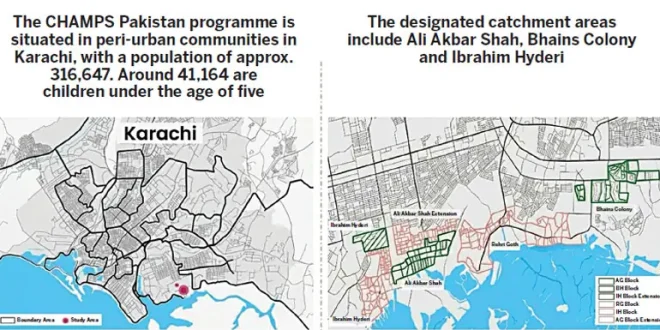
In the densely populated, often overlooked communities of Ali Akbar Shah, Ibrahim Hyderi, and Bhains Colony in Karachi, a specialized team from Aga Khan University (AKU) is deploying what appears to be an ordinary minivan. Inside, however, lies a mobile medical unit equipped for MITS, a procedure meticulously designed to ascertain the exact cause of death in stillbirths and children under five. This groundbreaking approach offers a level of diagnostic precision previously unattainable in these areas, moving beyond speculative causes to concrete, actionable data.
Understanding the CHAMPS Program and MITS Technique
The global effort to accurately determine why children die in high-mortality settings gained significant momentum with the launch of the Child Health and Mortality Prevention Surveillance (CHAMPS) program in 2015. Spearheaded by the Gates Foundation and coordinated by the University of Texas Southwestern Medical Center, CHAMPS aims to compile a comprehensive understanding of biological causes of death. This involves integrating clinical records, advanced laboratory testing, verbal autopsies (interviews with caregivers), and, crucially, MITS where family consent is obtained.
MITS is a post-mortem diagnostic method that sidesteps the need for a full, invasive autopsy. Instead, tiny samples of tissue and fluid are extracted from vital organs—such as the brain, heart, lungs, and kidneys—using fine needles, often no larger than a pen’s tip. For stillbirths, the placenta is also collected. These samples are then subjected to rigorous analysis, including polymerase chain reactions (PCRs) and chromatography, to identify specific pathogens, infectious diseases, and other underlying conditions. This meticulous process allows researchers to achieve an astounding 98-100% accuracy rate in pinpointing the cause of death, a significant leap from traditional methods that often yield inconclusive results.
A key to MITS’s success is the subsequent review by a multi-disciplinary panel of experts, including professors, government representatives, and specialists. This panel meticulously deliberates on the findings, systematically eliminating possibilities to arrive at the precise cause. Often, visible symptoms might have been treated, but a silent, underlying condition remained undetected, ultimately proving fatal. The goal is to furnish health authorities with irrefutable, evidence-based insights to inform and strengthen public health policies.
One of the most significant challenges for the CHAMPS program, particularly in Pakistan, has been overcoming cultural and religious sensitivities. In a Muslim-majority country where post-mortem examinations are traditionally viewed as disrespectful to the deceased, securing consent for MITS required extensive community engagement. This involved obtaining at least 28 fatwas (religious edicts), engaging in countless meetings and debates with local leaders, and building deep trust within the communities. Initially, refusal rates were as high as 60-70%, but persistent effort and transparent communication eventually fostered acceptance, allowing this vital research to proceed.
Impact on Pakistan’s Child Health Landscape
Pakistan presents a unique set of challenges for child mortality surveillance. Many child deaths, especially stillbirths and infant mortalities, occur at home and are rarely logged with hospitals. Burials often take place rapidly, within hours, making the window for intervention extremely narrow. To address this, the CHAMPS team in Karachi developed an extensive community surveillance network. This network comprises a diverse array of local figures, from religious leaders who conduct burial rites to shopkeepers, coffin makers, informal healthcare providers, ambulance drivers, and even nightwatchmen. These individuals serve as crucial informants, alerting the CHAMPS team to deaths around the clock, enabling them to approach families for consent.
The insights generated by MITS are already proving invaluable. For instance, the tragic case of Rafiya, a newborn who died 12 days after birth, highlights the diagnostic power of the technique. While initial suspicions pointed to kidney damage, MITS revealed acute gastroenteritis caused by prelacteal feeding—specifically, the traditional green tea (qehva) given to the newborn. This practice, along with others like giving honey or unpasteurized goat milk, compromises a baby’s health by introducing infections, a common issue identified by experts like Dr. Vinod Kumar from The Indus Hospital.
MITS has also unveiled critical information about the specific pathogens prevalent in Pakistan’s neonatal sepsis cases. Unlike the Group B Streptococcus often seen in Western neonatal units, Pakistani doctors grapple with organisms such as Klebsiella pneumoniae, Acinetobacter, Staphylococcus aureus, and E. coli. A troubling finding is the high incidence of hospital-acquired, drug-resistant superbugs like Acinetobacter baumannii and Pseudomonas aeruginosa, thriving in overcrowded hospital wards with low nurse-to-patient ratios, underscoring urgent needs for improved infection control.
The initial data further delineates causes of death based on location. Home deaths frequently linked to preventable issues such as measles (indicating a lack of routine immunization) and fatal respiratory infections like Streptococcus pneumoniae, which claimed lives before children could reach medical facilities. Among the consented MITS cases, stillbirths accounted for 31%, infants under one year for 63%, and children aged one to five for 6%. This precise demographic breakdown, coupled with identified pathogens, empowers health officials to develop targeted vaccination campaigns, improve community health education, and enhance access to primary healthcare.
Analysis: Towards an Evidence-Based Public Health Future
The application of Minimally Invasive Tissue Sampling (MITS) within the CHAMPS program represents a profound shift in global public health, particularly in regions burdened by high child mortality. By moving beyond anecdotal accounts and limited clinical records, MITS provides an unprecedented level of diagnostic certainty, transforming our understanding of why children die. This accuracy is not merely an academic achievement; it is a critical tool for informed policy-making and effective public health interventions.
The findings from Karachi’s coastal neighborhoods, while currently localized, offer a microcosm of challenges faced across many developing nations. They underscore several key areas for immediate action:
- Strengthening Infection Control: The prevalence of hospital-acquired, drug-resistant infections highlights an urgent need for improved hygiene, better nurse-to-patient ratios, and robust infection prevention protocols within healthcare facilities.
- Maternal and Child Health Education: Practices like prelacteal feeding, identified as a cause of infant mortality, necessitate targeted public health campaigns to educate expectant mothers and families on safe infant feeding practices and the importance of exclusive breastfeeding.
- Immunization Gaps: The detection of measles as a leading cause of death in home settings points to critical shortfalls in routine immunization coverage, demanding more vigorous and accessible vaccination programs.
- Community Health Infrastructure: The success of the CHAMPS surveillance network demonstrates the power of community engagement in identifying health issues early and fostering trust, a model that could be replicated for broader health initiatives.
By providing granular data on exact pathogens and underlying conditions, MITS empowers health agencies to allocate resources more efficiently, develop pathogen-specific treatments, and implement preventative measures with precision. This evidence-based approach aligns perfectly with Sustainable Development Goal 3, which aims to reduce preventable deaths of newborns and children under 5 years of age. The ability to distinguish between hospital-acquired infections and community-acquired diseases, or between treated symptoms and undetected primary causes, offers a clear roadmap for healthcare reform.
While the sample size from Karachi is still growing, the potential of MITS to drive policy changes and ultimately save lives is undeniable. It offers a tangible pathway for families to gain closure, for health workers to understand the local epidemiological landscape, and for governments to build more resilient, responsive healthcare systems. This innovative forensic technique is not just uncovering why babies die; it is illuminating the path towards a future where more children live.