Dost Pakistan Journeys Tours and safaris in the North & South Pakistsn
Related Articles
‘Wake Up’: US VP Vance’s Blunt Warning to Israeli Critics of Iran Deal Signals New Geopolitical Dynamics
United States Vice President JD Vance has delivered a sharp public rebuke to Israeli lawmakers criticizing the recently signed memorandum of understanding (MoU) between the US and Iran. The deal, a framework to end the war, proposes the reopening of the Strait of Hormuz and sets a 60-day timeline for further negotiations. Vance’s forceful comments underscore growing tensions between the Trump administration and Israeli Prime Minister Benjamin Netanyahu, signaling a significant recalibration of US foreign policy in the Middle East.
The News: A Public Rebuke and Conditional Peace
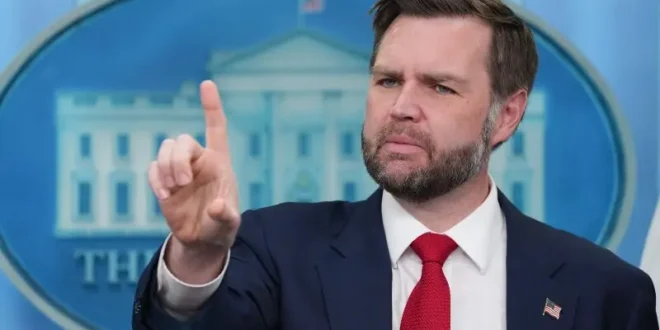
In an unusually direct address, US Vice President JD Vance admonished Israeli critics of the US-Iran MoU, urging them to “wake up and smell the reality of the situation.” His remarks, made during a White House press briefing, came amidst escalating friction between US President Donald Trump and Israeli Prime Minister Benjamin Netanyahu over the deal’s implications. Vance emphasized the US’s indispensable role as Israel’s “only powerful ally,” suggesting that continued public opposition jeopardizes this crucial relationship.
The MoU, signed electronically by the US and Iran and by President Trump at Versailles, outlines a preliminary framework for ending conflict, reopening the vital Strait of Hormuz, and initiating a 60-day window for detailed negotiations. Vance, who has emerged as the public face of this complex diplomatic initiative, stressed the conditional nature of the agreement. He clarified that Iran’s access to benefits like sanctions relief, potential oil sales, and a substantial reconstruction fund, hinges entirely on its “performance” and strict compliance with yet-to-be-finalized terms. The US has already taken initial steps, allowing over a dozen ships to pass through its naval blockade of Iran, demonstrating its commitment to the early phases of the agreement.
Despite controversies surrounding the absence of a firm mechanism for destroying Iran’s nuclear program within the initial MoU, Vance reiterated that “words don’t matter… we’re about verification.” He announced plans for technical talks in Switzerland to hammer out the specifics of a long-term deal.
Vice President JD Vance issues a stern warning to Israeli lawmakers during a White House press briefing.
Background: A Region on Edge
The US-Iran MoU emerges against a backdrop of decades of deep-seated animosity, punctuated by economic sanctions, proxy conflicts, and persistent concerns over Iran’s nuclear ambitions. For Israel, Iran’s nuclear program and its support for regional militant groups represent an existential threat, leading to a long-standing hawkish stance often at odds with international diplomatic efforts.
Historically, US-Israel relations have been characterized by unwavering strategic alliance, yet disagreements over Iran policy have frequently surfaced. Israeli Prime Minister Benjamin Netanyahu, in particular, has been a vocal opponent of any deal he perceives as insufficient in neutralizing Iran’s nuclear capabilities, leading to past clashes with various US administrations. This current public rebuke from Vance signifies a new low in diplomatic discourse between the two allies, reflecting the Trump administration’s determination to pursue its diplomatic path with Tehran.
The reopening of the Strait of Hormuz, a critical maritime chokepoint through which a significant portion of the world’s oil supply passes, is a cornerstone of this deal. Its closure or disruption has historically led to global economic shocks and heightened regional tensions. The US’s push for its reopening indicates a strategic priority on global energy stability and de-escalation of military posturing.
For the Trump administration, this MoU represents a significant foreign policy gamble. With Vance, a known war skeptic and potential 2028 presidential hopeful, at the forefront, it signals a pragmatic shift towards diplomatic resolution over military entanglement. The success or failure of this initiative will undoubtedly shape Vance’s political future and redefine America’s engagement in the Middle East.
Vice President Vance highlights the importance of verification and compliance in the US-Iran deal.
Impact on Pakistan: A Glimmer of Economic Relief and Regional Stability
For Pakistan, a nation strategically located bordering Iran and heavily reliant on imported energy, the US-Iran MoU carries significant implications:
- Economic Boon from Lower Oil Prices: The immediate reopening of the Strait of Hormuz and the potential return of Iranian oil to global markets are expected to stabilize, and potentially lower, international oil prices. As a net oil importer, Pakistan stands to gain immensely from reduced energy costs, alleviating pressure on its import bill and inflation.
- Revitalization of Trade and Connectivity: A comprehensive lifting of sanctions and normalization of banking channels could unlock substantial trade opportunities with Iran. Long-stalled projects, such as the Iran-Pakistan (IP) gas pipeline, could finally see fruition, providing Pakistan with a much-needed energy source. Enhanced regional connectivity, particularly through Iran, could also benefit projects like CPEC by opening new routes to Central Asia and beyond.
- Enhanced Regional Stability: De-escalation between the US and Iran, and by extension, within the broader Gulf region, directly contributes to regional peace. Pakistan, sharing a border with Iran and maintaining complex diplomatic ties with both Tehran and Riyadh, has a vested interest in a stable Middle East. Reduced tensions could ease the geopolitical balancing act Pakistan often faces, allowing for a more focused approach on domestic development and bilateral relations.
- Shifting Geopolitical Landscape: A more stable Iran, integrated into the global economy, could alter regional power dynamics, potentially opening avenues for Pakistan to play a more active role in regional dialogue and economic corridors.
Analysis: A Calculated Gamble in a Volatile Region
VP Vance’s sharp rebuke to Israeli critics is more than just a diplomatic incident; it signifies a pivotal moment in US foreign policy. It underscores the Trump administration’s resolve to pursue a diplomatic solution with Iran, even if it means publicly challenging a close ally like Israel. The “only powerful ally” statement serves as a stark reminder of Israel’s strategic dependence on the US, subtly pressuring Jerusalem to temper its opposition.
Vance, a self-proclaimed war skeptic, staking his political future on this deal, represents a significant shift. If successful, it could burnish his image as a peacemaker and pragmatic leader ahead of a potential 2028 presidential bid. However, President Trump’s playful remark about blaming Vance if the deal fails highlights the inherent risks and the political tightrope he is walking.
The emphasis on “performance” and “verification” is crucial. This addresses core concerns that the MoU might be too lenient or lack concrete enforcement. The upcoming 60-day period for technical talks in Switzerland will be critical in translating the “gentleman’s agreement” into legally binding commitments, especially regarding the controversial elements like Iran’s nuclear program and the specific terms of sanctions relief and the reconstruction fund. The US has clearly stated that benefits are contingent on Iran’s adherence to these yet-to-be-defined, verifiable steps.
This diplomatic push also has broader geopolitical implications. It suggests a potential realignment in the Middle East, challenging existing alliances and potentially fostering a new regional security architecture. Other regional powers, including Saudi Arabia and the UAE, will be closely watching how this detente unfolds and its impact on their own security concerns and strategic interests.
Ultimately, the success of this MoU hinges on several critical factors: Iran’s willingness and ability to comply strictly with the agreed-upon terms, the development of robust verification mechanisms, and the US’s capacity to manage dissent from traditional allies like Israel and domestic political opponents. While the immediate prospects for reduced tensions and economic benefits, particularly for nations like Pakistan, are promising, the path to a lasting peace in the volatile Middle East remains fraught with challenges.