Dost Pakistan Journeys Tours and safaris in the North & South Pakistsn
Related Articles


A United Muslim Front: Analyzing the Joint Condemnation of Israel’s E1 Settlement Plan
The News: A United Muslim Front Against Israeli Settlements
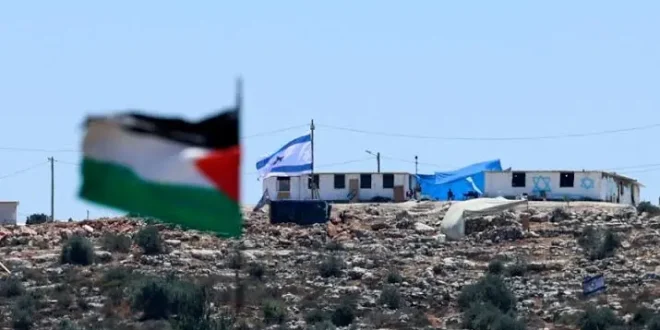
In a significant display of diplomatic unity, Pakistan, alongside seven other prominent Muslim states – Egypt, Turkiye, Indonesia, Jordan, Qatar, Saudi Arabia, and the United Arab Emirates – has issued a strong joint statement condemning Israel’s “continued illegal settlement policies in the occupied Palestinian territory.” The declaration, conveyed by Pakistan’s Foreign Office, specifically targeted the contentious ‘E1’ settlement plan situated east of occupied East Jerusalem, labelling it a dangerous escalation.
The foreign ministers of these nations collectively rejected the expansionist activities, including the acts of violence perpetrated by Israeli settlers with the alleged support of Israeli authorities. They stressed that such actions not only violate international law and relevant United Nations resolutions but also pose a grave threat to regional and international peace and security. Reiterating their unwavering commitment to the internationally recognised two-state solution, with East Jerusalem as the capital of an independent Palestinian state based on 1967 lines, the joint statement called for immediate action to halt the E1 plan and implement accountability measures, including potential sanctions, against those responsible for illegal settlement activities.
Contextualizing the Condemnation: A History of Disputed Territories
The recent joint condemnation by eight influential Muslim nations is not an isolated event but rather a reaffirmation of long-standing international consensus and a response to persistent challenges to peace in the Middle East. Understanding the core issues—the two-state solution, international law, and the specific threat posed by the ‘E1’ plan—is crucial for grasping the gravity of this diplomatic intervention.
The Two-State Solution and International Law
The two-state solution envisions an independent and sovereign Palestinian state existing peacefully alongside Israel. This framework has been the cornerstone of international efforts to resolve the Israeli-Palestinian conflict for decades, supported by numerous UN Security Council resolutions. Central to this solution is the principle of establishing a Palestinian state within the 1967 borders, with East Jerusalem as its capital. Under international law, particularly the Fourth Geneva Convention, Israeli settlements in the occupied Palestinian territories (the West Bank, East Jerusalem, and Gaza Strip) are considered illegal. This illegality stems from the prohibition against an occupying power transferring its own population into occupied territory. The international community, with few exceptions, views these settlements as a major obstacle to peace, undermining the territorial contiguity and economic viability essential for a future Palestinian state.
The ‘E1’ Settlement Plan: A Critical Juncture
The ‘E1’ (East 1) settlement plan refers to an Israeli project to build thousands of housing units in an area east of Jerusalem, connecting the large Israeli settlement of Ma’ale Adumim to the city. Geographically, E1 is strategically located to effectively sever the territorial link between East Jerusalem and the northern West Bank. Should this plan proceed, it would create a continuous bloc of Israeli settlements, making it extraordinarily difficult—if not impossible—to establish a geographically contiguous and viable Palestinian state with East Jerusalem as its capital. For decades, the international community has warned that the ‘E1’ plan would be a “nail in the coffin” for the two-state solution, rendering the vision of a truly independent Palestinian state unachievable. The joint condemnation specifically targets this plan, underscoring its pivotal and destructive impact on future peace prospects.
Pakistan’s Enduring Stance and Regional Implications
For Pakistan, unwavering support for the Palestinian cause is a foundational principle of its foreign policy, deeply rooted in religious solidarity, moral conviction, and a commitment to international law. Pakistan has consistently advocated for the rights of the Palestinian people, including their right to self-determination and the establishment of an independent state with East Jerusalem as its capital. This joint statement, therefore, is a natural extension of Pakistan’s historical position and strengthens its voice on a matter of profound national and international importance.
The significance of this collective condemnation extends beyond individual national stances. It brings together a diverse group of Muslim nations, including Gulf states like Saudi Arabia and the UAE, which have been navigating complex diplomatic landscapes, some even normalising relations with Israel under the Abraham Accords. Despite these varied bilateral engagements, the unity displayed on the issue of illegal settlements, particularly the ‘E1’ plan, underscores that the Palestinian cause remains a potent unifying force within the Muslim world. It signals that even amidst broader geopolitical realignments, there are red lines—such as the erosion of the two-state solution through settlement expansion—that can galvanise a united front, lending greater diplomatic weight to calls for accountability and adherence to international law.
Analysis: Diplomacy, Deadlock, and the Future of Peace
The joint statement by Pakistan and seven other Muslim nations represents a powerful, albeit familiar, diplomatic gesture. While such condemnations are crucial for maintaining the international legal framework and moral imperative for peace, their effectiveness in altering Israeli policy remains a persistent challenge.
A Shifting Regional Dynamic?
The inclusion of nations like Saudi Arabia and the UAE in this joint statement is particularly noteworthy. As key regional players with increasing influence and, in some cases, direct diplomatic channels with Israel, their united stance signals that progress on Israeli-Palestinian issues, particularly halting settlement expansion, remains a prerequisite for broader regional stability and potentially for any further normalisation efforts. This collective voice could theoretically apply more significant leverage than individual condemnations, especially if it translates into coordinated diplomatic initiatives within international forums.
Challenges to Accountability and Implementation
Despite the strong language, achieving “accountability” through “appropriate international measures and sanctions” is notoriously difficult. The geopolitical landscape often sees the United States, a staunch ally of Israel, utilising its veto power in the UN Security Council, thereby limiting the council’s ability to impose binding resolutions or sanctions. Without sustained, coordinated pressure from major world powers, condemnations, while important for signaling international disapproval, often struggle to translate into tangible policy changes on the ground. The current Israeli government has shown a steadfast commitment to settlement expansion, making any reversal seem unlikely without significant external impetus.
The Path Forward: Sustained International Pressure
Ultimately, the joint statement serves as a critical reminder to the international community that the two-state solution, however distant it may seem, remains the only viable path to a just and comprehensive peace. The continued expansion of settlements, particularly projects like ‘E1’, systematically dismantles the very possibility of such a solution. For this diplomatic unity to yield meaningful results, it must evolve beyond statements into concrete, coordinated actions that transcend geopolitical divisions. This includes sustained lobbying within the UN, exploring alternative diplomatic avenues, and potentially economic pressures from influential nations. The stakes are high: the erosion of the two-state solution not only threatens the rights of Palestinians but also risks further destabilising an already volatile region, perpetuating a cycle of conflict that impacts global peace and security.