Dost Pakistan Journeys Tours and safaris in the North & South Pakistsn
Related Articles

“`html
Tragedy at the UN: Tibetan Self-Immolation and the Global Silence on Human Rights
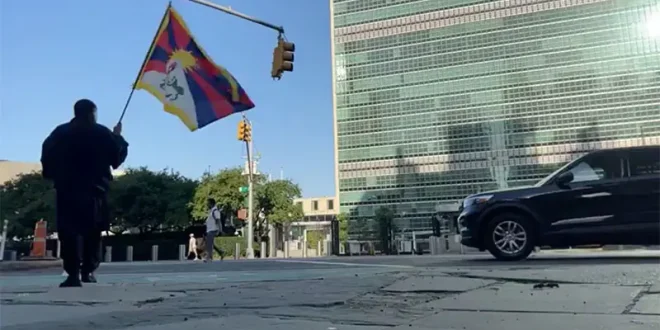
In a profound and heart-wrenching act of protest, **Lobga Rangzen**, a Tibetan activist, died after self-immolating near the United Nations headquarters in New York. The incident, which occurred late Thursday evening, saw emergency services respond to a severely burned individual who was later pronounced dead at Bellevue Hospital. Identified by exiled Tibetan media and activist groups, Rangzen’s desperate act was a powerful appeal for **Tibetan independence and unity**, sending shockwaves through the Tibetan diaspora and highlighting a persistent, tragic struggle.
The News: A Cry for Freedom on Foreign Soil
The streets of New York City became the stage for a deeply moving political statement when police responded to an emergency call, discovering a man engulfed in flames. While authorities initially withheld his identity and motive, Tibetan advocacy organizations swiftly confirmed the victim as Lobga Rangzen, an Uber driver known within the local Tibetan community. His final, desperate plea, broadcast live, underscored his unwavering commitment to his homeland’s freedom.
The tragedy prompted expressions of sorrow from the UN Secretary-General’s spokesperson and the International Campaign for Tibet, who extended condolences to Rangzen’s family. This incident tragically adds to a grim statistic: over **150 self-immolations by Tibetans** have been recorded between 2009 and 2022, with Rangzen being among the ten who have carried out such acts while living in exile, underscoring the enduring anguish felt far from their ancestral land.
Background: A Legacy of Resistance and Despair
Lobga Rangzen’s self-immolation is not an isolated event but a continuation of a deeply rooted and tragic form of protest within the **Tibetan independence movement**. Since China’s annexation of Tibet in 1950 and the subsequent flight of the 14th Dalai Lama in 1959, Tibetans have lived under what many describe as oppressive rule, marked by restrictions on religious freedom, cultural erosion, and political repression. The Chinese government, however, maintains that its rule has brought modernization and development to the region.
Self-immolation, while an extreme act, has emerged as a desperate symbol of defiance. It is often chosen not as an act of violence against others, but as a final, irreversible plea to draw international attention to their suffering and to galvanize support for **Tibetan human rights**. These acts are typically seen as non-violent forms of protest, aimed at shaming oppressors and awakening the conscience of the world, particularly given the lack of other avenues for effective protest within Tibet and the limited impact of diplomatic efforts globally.
The fact that Rangzen’s act occurred near the **UN Headquarters** is highly symbolic. The UN, founded on principles of human rights and self-determination, represents the international community’s conscience. By choosing this location, Rangzen implicitly called upon the world body to uphold its ideals and intervene in a conflict that many feel has been largely ignored or downplayed due to China’s immense geopolitical and economic influence.
Impact on Pakistan: Navigating Geopolitical Complexities
The tragic self-immolation of Lobga Rangzen, while geographically distant, implicitly touches upon the delicate balance of international relations and human rights advocacy, particularly for nations like **Pakistan**. Pakistan and China share an “all-weather strategic cooperative partnership,” deeply rooted in economic, military, and diplomatic cooperation. As a staunch ally, Pakistan consistently adheres to the **”One China” policy**, which unequivocally recognizes Tibet as an integral part of the People’s Republic of China.
Given this strong bilateral relationship, it is highly improbable that Pakistan’s official channels will issue any statement or condemnation regarding China’s policies in Tibet or Rangzen’s protest. Pakistan’s foreign policy prioritizes its strategic alliance with Beijing, often resulting in official silence on issues deemed “internal affairs” of China, including human rights concerns in Xinjiang, Hong Kong, or Tibet. This stance reflects a pragmatic approach where geopolitical imperatives often outweigh public advocacy on human rights issues that might strain crucial alliances.
For Pakistan, such events underscore the inherent tension between upholding universal human rights principles and the practical exigencies of maintaining strong alliances. While the Pakistani government will likely remain silent, the incident serves as a subtle reminder of the broader global complexities in addressing **human rights violations** when powerful nations are involved. It highlights a common dilemma faced by many states: how to balance their stated commitment to human rights with their economic and strategic interests, often leading to selective engagement or outright silence on certain international issues.
Analysis: The Enduring Plea and Global Apathy
Lobga Rangzen’s ultimate sacrifice forces a stark re-evaluation of the effectiveness and tragic cost of extreme protest. While such acts undoubtedly capture momentary global attention, their ability to translate into sustained **international pressure** or concrete policy changes from China remains largely limited. Beijing consistently dismisses such protests as politically motivated or the actions of separatists, rarely altering its stance on Tibetan autonomy.
The incident near the UN HQ serves as a powerful, albeit desperate, critique of the international community’s perceived inaction. It highlights the significant limitations of the UN when confronted with a permanent Security Council member like China. The UN’s expression of “sadness” and “condolences,” while appropriate, does not signal any intention for substantive intervention, leaving many to question the efficacy of international bodies in protecting the rights of marginalized populations against powerful sovereign states.
For the **Tibetan independence movement**, these self-immolations represent both a profound symbol of resistance and an agonizing challenge. While they demonstrate an unwavering commitment to freedom, relying on such extreme personal sacrifice is unsustainable and often leaves the movement grappling with the immense grief and strategic implications. These acts, though individual expressions of despair, cumulatively underscore the deep-seated grievances and the enduring hope that one day, their cry for **freedom and self-determination** will be truly heard and acted upon by the world.
Ultimately, Lobga Rangzen’s tragic death is a grim reminder that despite significant global awareness campaigns, the struggle for **Tibetan human rights** continues largely unaddressed on the international stage. It prompts a critical reflection on global priorities: how much human suffering must occur, and how many lives must be sacrificed, before the world truly mobilizes to uphold the universal principles it professes?
Published in Dawn, July 4th, 2026 (Original News Source)
“`