 Dost Pakistan Journeys Tours and safaris in the North & South Pakistsn
US Military’s Stretched Capacity: A Geopolitical Wake-Up Call from the Middle East
The News: A Strain on Superpower Resources
A stark warning from General Alexus Grynkewich, commander of US European Command, has brought a critical vulnerability into sharp focus: the United States may be running short of the naval assets necessary to simultaneously defend Israel from Iranian missile attacks and safeguard its broader interests in the Middle East. Private communications to Pentagon officials, as reported by outlets like The Washington Post, reveal that American naval forces are becoming perilously thin amidst ongoing regional hostilities. Specifically, without an additional US Navy destroyer, commanders face the unenviable choice of prioritizing the protection of American personnel and assets over crucial missile-defense operations for Israel.
This internal assessment is significant because it comes directly from a senior officer responsible for managing US military commitments, reflecting a growing concern within the Pentagon that America’s expansive global obligations are outstripping its available resources. The issue is compounded by the rapid consumption of advanced missile interceptors. Reports indicate that US forces have expended a substantial portion of their inventory – including nearly half of their THAAD interceptors and a significant percentage of other advanced missiles like SM-3, SM-6, Patriot, and Tomahawk cruise missiles – during recent intense engagements. This rate of consumption is far outpacing the capacity of the defense industrial base to replenish them, challenging the long-held assumption that the US can effectively fight on multiple fronts simultaneously.
Background: America’s Global Reach and Its Limits
For decades, US military strategy has been predicated on maintaining global dominance and the ability to project power across multiple theaters. This doctrine, sometimes referred to as the “two-war strategy,” envisioned the capacity to engage in significant conflicts in different parts of the world concurrently while maintaining robust deterrence. This ambition underpins America’s vast network of alliances and security commitments, from NATO in Europe to critical partnerships in the Indo-Pacific aimed at deterring China, and a persistent presence in the Middle East to ensure regional stability and secure vital energy routes.
The Technical & Industrial Bottleneck
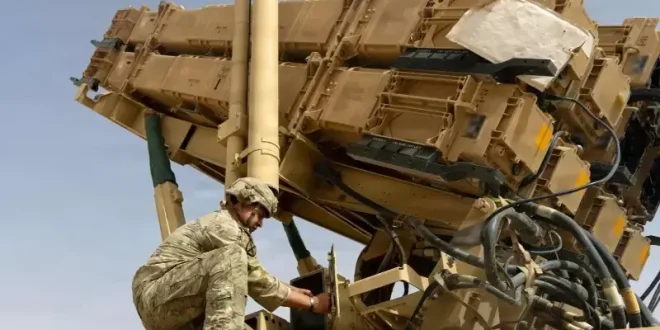
Central to Israel’s defense against ballistic missiles, and indeed US power projection, are advanced naval assets like Aegis-equipped destroyers. These sophisticated ships carry an array of interceptors such as the SM-3 and SM-6, capable of tracking and neutralizing incoming ballistic missiles at various altitudes. Complementing these are land-based systems like THAAD (Terminal High Altitude Area Defense) and Patriot batteries, which provide crucial layers of defense against diverse missile threats. While incredibly effective, these systems represent the pinnacle of modern defense technology – they are immensely complex, extraordinarily expensive, and require years, not months, to manufacture in sufficient quantities. The current conflict dynamic in the Middle East, characterized by high-intensity missile exchanges, is demonstrating that even the most advanced military in the world faces severe logistical and industrial constraints when these premium assets are consumed at an unprecedented pace.
The warnings from General Grynkewich underscore a critical vulnerability: the mismatch between the demands of modern warfare and the capacity of the defense industrial base. The supply chain for these high-tech weapons is long and intricate, involving specialized components and highly skilled labor. Ramping up production quickly is a monumental challenge, leaving the US in a difficult position as it seeks to maintain its global commitments while rapidly depleting its stockpiles.
Impact on Pakistan: Navigating Regional Instability
Pakistan, as a strategically vital nation bordering Iran and Afghanistan, and situated amidst the broader Middle East, is intrinsically linked to the geopolitical shifts highlighted by this US military dilemma. Any perceived weakening or overextension of US military power in the region carries significant implications for Pakistan’s security and foreign policy calculus.
Regional Security & US Engagement
Firstly, a constrained US capacity to maintain regional stability in the Middle East could have ripple effects on Pakistan’s immediate neighborhood. Increased instability or prolonged conflict in the Gulf could disrupt critical trade routes, impact energy markets (which Pakistan heavily relies on for its oil imports), and potentially fuel broader regional tensions that spill over its borders. While US-Pakistan security cooperation has evolved, a US military stretched thin could also impact future security assistance, intelligence sharing, or joint counter-terrorism efforts that contribute to Pakistan’s own internal security.
Economic Repercussions & Strategic Diversification
Economically, prolonged conflict and uncertainty in the Middle East are detrimental to investment and economic growth across the region, potentially impacting Pakistan’s economic recovery efforts. Furthermore, if the US is perceived as less able to guarantee regional security, it might compel Pakistan to further diversify its defense partnerships and diplomatic alignments. This could lead to a deeper embrace of strategic partners like China, or a more pronounced policy of non-alignment, as Pakistan seeks to independently safeguard its national interests in a potentially more volatile geopolitical landscape. The situation demands that Pakistan keenly observe these developments and adapt its foreign and defense policies to protect its strategic autonomy and ensure its security in an evolving, multipolar world.
Analysis: A Defining Moment for US Global Strategy
General Grynkewich’s candid warning is more than just a logistical concern; it represents a significant challenge to the fundamental assumptions underpinning US global strategy. The “Grynkewich Dilemma” forces a profound re-evaluation of America’s ability to operate as the world’s sole superpower in an era of renewed great-power competition and persistent regional conflicts.
The Grynkewich Dilemma: A Test of Credibility
This situation tests not only the physical limits of US military hardware but also the credibility of its security guarantees to allies. Nations like Israel, reliant on US support for high-end missile defense, will be watching closely. If the US is seen as unable to sustain simultaneous high-intensity operations, it could erode trust and encourage allies to question the reliability of American commitments. This could inadvertently push allies to develop more self-sufficient defense capabilities or seek alternative security partnerships, fundamentally altering existing geopolitical alignments.
Industrial Capacity and the Future of Warfare
The rapid consumption of advanced munitions in modern warfare, as highlighted by the depletion of THAAD and other interceptors, signals a critical gap in the US defense industrial base. The ability to produce sophisticated weapons faster than adversaries can consume or destroy them is becoming a defining factor in military power. This revelation demands immediate and substantial investment in increasing manufacturing capacity, shortening supply chains, and exploring innovative production methods to ensure future readiness. Failure to address this could mean that even a technologically superior military could be logistically outmaneuvered in a prolonged conflict.
Strategic Choices in a Multipolar World
Ultimately, the Pentagon faces an unavoidable strategic re-evaluation. The vastness of US military power is not infinite, and its resources are not limitless. Policymakers must confront difficult choices: should the US reduce its global commitments to focus on core strategic priorities, such as deterring China in the Indo-Pacific? Should it significantly increase its defense budget and industrial output to meet all current obligations? Or should it rely more heavily on allies to share the burden of collective defense, empowering them with more advanced capabilities and greater autonomy? The Middle East crisis is thus revealing a broader truth: the era of uncontested American military omnipresence may be drawing to a close, ushering in a more complex, multipolar world where strategic prioritization and industrial resilience will be paramount for any nation seeking to maintain its influence and security.
