Dost Pakistan Journeys Tours and safaris in the North & South Pakistsn
Related Articles


Pakistan Condemns Israeli Airstrikes on Syria: A Shifting Geopolitical Landscape
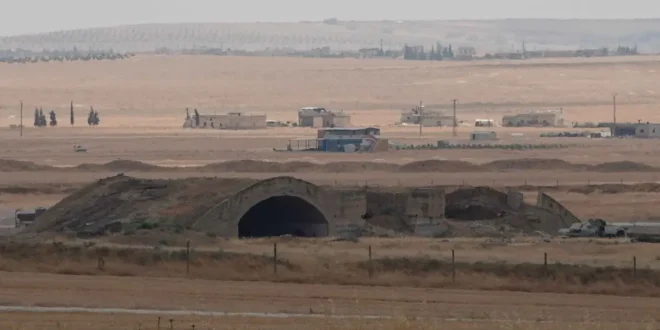
Pakistan has forcefully condemned an Israeli airstrike on Syria’s Abu al-Duhur air base near Aleppo, describing it as an “unprovoked” act and a “flagrant violation of international law.” This incident, which reportedly targeted the runway and storage facilities, has ignited regional diplomatic tensions and underscored the volatile security environment in a recently transformed Syria.
The News: A Defiance Amidst New Alliances
The Foreign Office of Pakistan issued a strong statement, expressing “unwavering solidarity” with the Syrian people and reiterating full support for Syria’s sovereignty and territorial integrity. The condemnation highlighted the potential for such actions to “further undermine regional peace and stability,” urging the international community to hold Israel accountable for its “destabilising actions.”
The strikes, confirmed by Syria’s state-run Ekhbariya television and a U.S. envoy, were reported to have caused no casualties. Intriguingly, the incident occurred against the backdrop of significant shifts in Syrian governance: the provided information states that former president Bashar al-Assad was ousted in 2024, and Syria is now led by a “new government allied with Turkiye.”
This new alignment adds a critical layer to Israel’s justification. Prime Minister Benjamin Netanyahu’s office, breaking an initial silence, claimed the strike was a response to Syria breaching a “status quo in security matters” by permitting Turkish troops to deploy at the airbase. Israel had reportedly warned Syria against such a deployment, viewing it as a threat to its security. However, the Turkish government, through Anadolu state news agency, vehemently rejected these claims as “frivolous allegations” aimed at legitimising unlawful attacks on Syria’s sovereignty.
The U.S. envoy for Syria, Tom Barrack, also weighed in, calling the attacks “an unnecessary escalation that does not advance regional stability” and “extraordinary defiance by Israel of the United States,” which has been supporting Syria’s new government allied with Turkey. Syrian Foreign Minister Assad al-Shibani called for an end to the attacks, warning Israel that it now confronts not only Damascus but also Syria’s allies, clearly referencing Turkey.
Background: A Region in Flux
The context for these strikes is deeply rooted in the complex geopolitics of the Middle East. Israel has a long-standing policy of striking targets in Syria, primarily to prevent the entrenchment of hostile forces, particularly those linked to Iran and its proxies, and to disrupt advanced weapons transfers. These actions have often been framed as necessary for Israel’s national security, even as they draw international condemnation for violating Syrian sovereignty.
However, the provided detail that Assad was ousted in 2024 and Syria is now under a “new government allied with Turkiye” represents a profound shift from the previously understood Syrian conflict dynamics. Historically, the Syrian civil war, now reportedly in its 14th year (extending beyond the traditional 2011 start), saw numerous factions, including Turkish-backed groups, vying for control. The Abu al-Duhur base itself, located about 70 km east of the Turkish border, has changed hands multiple times, highlighting its strategic importance in Syria’s northwest.
The emergence of a Syrian government allied with Turkey fundamentally reconfigures regional power balances. Turkey’s role in Syria has been significant, often supporting opposition factions against Assad’s regime. An alliance with a *new* Syrian government transforms Turkey from an external actor supporting proxies to an allied partner with direct influence over Syria’s national security. This new alignment directly impacts Israel’s strategic calculations, as its traditional targets and justifications now fall within a different geopolitical framework.
The U.S. stance, as articulated by envoy Tom Barrack, also reflects this new paradigm. Supporting the new Syria-Turkey axis places Washington in a position where Israeli military actions directly challenge American diplomatic efforts and regional objectives, creating friction between two key U.S. allies.
Impact on Pakistan: Upholding Principles and Regional Peace
For Pakistan, the condemnation of Israel’s airstrike on Syria is consistent with its established foreign policy principles. Pakistan has historically championed the cause of Muslim nations and consistently advocated for adherence to international law, sovereign territorial integrity, and peaceful resolution of conflicts. The “unprovoked” nature of the attack and its status as a “flagrant violation of international law” resonate strongly with Pakistan’s diplomatic stance.
Pakistan’s expression of “unwavering solidarity with the brotherly people of Syria” underscores its commitment to the Muslim Ummah and its concern for the stability of fellow Islamic states. While the direct geographical impact of the Syrian conflict on Pakistan is limited, the broader implications for regional peace and security in the Middle East are significant. Instability in this critical region can have ripple effects on global energy markets, trade routes, and international security frameworks, all of which are of concern to Pakistan.
Furthermore, Pakistan’s call for the international community to hold Israel accountable for its “destabilising actions” reinforces its broader position on issues involving Israel, particularly in the context of the Israeli-Palestinian conflict. It serves as a consistent voice urging compliance with international norms and justice on the global stage, aligning with its efforts to protect human rights and sovereignty wherever they are challenged.
Analysis: Navigating a New Syrian Reality
The recent Israeli airstrikes in Syria, particularly in the context of a post-Assad Syria allied with Turkey, mark a critical juncture in the region’s already complex geopolitical landscape. This event is not merely another incident in the long-running Israel-Syria conflict; it signifies Israel’s firm assertion of its security prerogatives even as the regional power dynamics have undergone a monumental transformation.
Israel’s Unwavering Strategic Calculus
Despite the ousting of Bashar al-Assad and the establishment of a new Syrian government allied with Turkey—a major regional power—Israel’s fundamental security concerns appear unchanged. The justification offered by Prime Minister Netanyahu’s office, focusing on the deployment of Turkish troops at the Abu al-Duhur base, indicates Israel’s clear “red line” against the presence of potentially hostile military forces near its border, regardless of who governs Syria. This signals that Israel views the new Syrian-Turkish alliance as a potential strategic threat rather than a stabilizing force, or at least a new axis it must contend with. This strike tests the boundaries of this new alliance and Israel’s willingness to act unilaterally to protect its perceived interests.
The Shifting Sands of Syrian Geopolitics
The alliance between Syria’s new government and Turkey fundamentally alters the strategic chessboard. Turkey, previously a significant external player, is now an integral partner within Syria’s governance. This means Israeli actions against Syrian military assets can now be interpreted as indirect challenges to Turkey’s regional influence and security interests. Turkey’s swift and strong condemnation of Israel’s claims underscores this new reality, suggesting a potential for more direct and robust Turkish responses to future Israeli actions in Syria. This could lead to a significant escalation if not carefully managed.
U.S. Position: A Balancing Act
The U.S. envoy Tom Barrack’s statement, criticizing Israel’s “extraordinary defiance of the United States,” highlights a growing divergence in regional strategies. If the U.S. is indeed supporting the new Syrian-Turkish alliance, then Israeli strikes against this new configuration complicate American diplomatic efforts and expose cracks in the traditional U.S.-Israel relationship regarding Syria. This suggests that the U.S. under a Donald Trump-aligned administration (as Barrack is described as a business friend of Trump) may prioritize a new form of regional stability anchored by the Syria-Turkey alliance, potentially at odds with Israel’s immediate security operations. This creates an intricate diplomatic challenge for Washington, caught between two key allies with conflicting interests.
Pakistan’s Enduring Principles
Pakistan’s firm stance serves as a reminder of its consistent foreign policy ethos: upholding international law, respecting sovereignty, and advocating for justice for Muslim nations. While geographically distant, Pakistan’s voice adds to the international chorus demanding accountability and de-escalation, reinforcing the broader principle that unilateral military actions violating sovereign territory are unacceptable, regardless of the perceived justification. This also allows Pakistan to articulate a principled stance on Middle Eastern security that resonates with its larger foreign policy objectives, including its position on the Palestinian issue.
Potential for Further Escalation
The incident carries significant risks for further regional escalation. The new Syrian government, backed by Turkey, is unlikely to tolerate repeated infringements on its sovereignty without a strong response. Israel, on the other hand, has demonstrated its resolve to maintain its strategic advantage. The convergence of these factors, coupled with the apparent misalignment between U.S. and Israeli approaches to the “new Syria,” creates a highly volatile environment. Future incidents could test the durability of the new Syrian-Turkish alliance, challenge U.S. diplomatic influence, and potentially draw in other regional and international actors, leading to unpredictable outcomes in an already turbulent Middle East.