Dost Pakistan Journeys Tours and safaris in the North & South Pakistsn
Related Articles



“`html
El Nino’s Return: A Dual Threat in a Warming World
The climate world is abuzz following the official declaration by the US National Oceanic and Atmospheric Administration (NOAA) that the natural weather phenomenon, El Nino, has commenced. This announcement marks the beginning of a period expected to bring significant and potentially unprecedented shifts in global weather patterns, exacerbated by the backdrop of a planet already grappling with human-induced climate change.
What Happened?
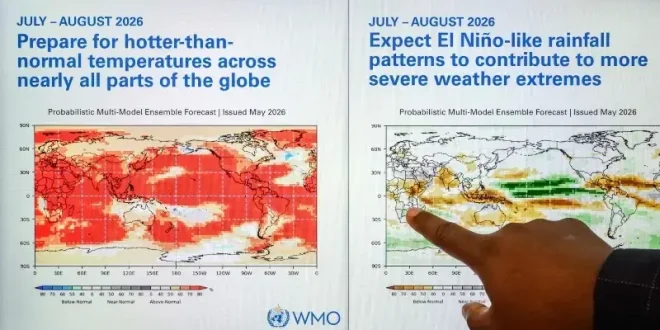
On Thursday, NOAA confirmed the onset of El Nino, noting that conditions, characterized by above-average sea surface temperatures in the central and eastern equatorial Pacific Ocean, have developed over the past month. Scientists are closely monitoring the situation, with projections indicating a substantial likelihood – a 63 percent chance – of a “very strong” El Nino event between November and January. Such an intensification could rank among the most powerful El Nino events recorded since 1950, signaling a period of considerable climatic upheaval worldwide.
Background: Understanding El Nino
El Nino is not a new phenomenon; it’s a naturally occurring climatic pattern that forms part of the broader El Nino-Southern Oscillation (ENSO) cycle. Typically re-emerging every two to seven years and lasting for about nine to twelve months, El Nino is characterized by the warming of ocean surface temperatures in the equatorial Pacific. This warming triggers a cascade of atmospheric responses, altering wind patterns, rainfall distribution, and ocean currents across the globe. While a natural cycle, its effects are far-reaching, influencing everything from monsoon strength in Asia to hurricane activity in the Atlantic. Its presence is often associated with more erratic and extreme weather, a concern that takes on heightened significance in an era of rapid global warming.
The critical distinction this time around is its interaction with an already heating planet. Scientists express serious concerns that this El Nino will act as an accelerant, pouring “fuel on the fire” of global warming primarily driven by the burning of fossil fuels. This synergy could push global temperatures into uncharted territory, leading to more frequent and intense heatwaves, droughts, and floods than typically seen with an El Nino event alone.
Why It Matters: Global Ramifications and Urgency
The implications of a strong El Nino are profound and global. Historical patterns suggest a range of severe impacts: vast swathes of the Amazon, Indonesia, and Australia could face debilitating droughts, jeopardizing agriculture, water resources, and increasing wildfire risks. India’s crucial monsoon season might see significant disruptions, affecting food security for millions. Across tropical regions, rainfall patterns are expected to shift erratically, leading to both excessive flooding in some areas and severe water scarcity in others.
Beyond ecological damage, the socio-economic consequences are dire. Mohamed Adow, Director of Power Shift Africa, articulated this stark reality, describing El Nino as a “deadly siren to be feared,” warning of “failed rains, dying crops, rising food prices, and families pushed to the edge.” The warming trend associated with El Nino tends to peak late in the year, but the release of oceanic heat into the atmosphere often means the most significant global temperature spikes are observed in the following year. This lag effect implies that 2024 could witness record-breaking global heat.
United Nations chief Antonio Guterres has echoed these warnings, urging the world to treat this incoming weather pattern as an “urgent climate warning.” He emphasized that the “only effective response is climate action equal to the crisis,” advocating for an immediate end to fossil fuel addiction, an acceleration towards renewable energy, enhanced protection for the most vulnerable communities, and universal early warning systems.
Potential Impact on Pakistan
While the initial NOAA advisory does not specifically detail impacts on Pakistan, a strong El Nino event has historically shown the capacity to influence weather patterns across South Asia, including Pakistan. The country, already highly vulnerable to climate change impacts, could face several challenges:
- Monsoon Variability: El Nino typically affects the Indian Monsoon, which in turn influences Pakistan’s summer rains. While every El Nino is unique, it could lead to either weaker-than-average monsoon rainfall in some areas, exacerbating drought conditions, or highly concentrated, intense rainfall events in others, increasing flood risks.
- Extreme Heat: Given the global warming context, Pakistan, which has recently experienced unprecedented heatwaves, could see an amplification of these extremes. El Nino’s warming influence could contribute to prolonged periods of higher temperatures, straining public health, energy grids, and agricultural sectors.
- Agricultural Stress: Changes in rainfall patterns and increased temperatures pose significant threats to Pakistan’s agriculture, a cornerstone of its economy. Rain-fed crops could suffer from insufficient or untimely rains, while water-intensive crops might face irrigation challenges.
- Water Resource Management: Altered precipitation patterns would add complexity to water resource management, impacting hydropower generation and agricultural water availability, especially for a country heavily reliant on glacier melt and monsoon rains.
These potential impacts underscore the need for Pakistan to bolster its climate resilience strategies, focusing on adaptive agricultural practices, early warning systems for extreme weather, and robust disaster preparedness.
Analysis: A Call for Unprecedented Action
The declaration of El Nino’s return serves as a powerful reminder of the intricate and volatile nature of Earth’s climate systems. It highlights the dangerous synergy between natural climate variability and the relentless march of human-induced global warming. This is not merely a cyclical weather event; it is a critical test of global resolve and preparedness. The predicted strength of this El Nino, coupled with existing climate vulnerabilities, creates a scenario ripe for widespread disruption, from humanitarian crises stemming from food insecurity to economic instability.
The call from global leaders and climate experts for accelerated climate action is not just rhetorical; it’s an urgent necessity. Phasing out fossil fuels, investing heavily in renewable energy, and fortifying the resilience of vulnerable communities are no longer distant goals but immediate imperatives. The El Nino phenomenon, in this warming world, acts as a potent alarm bell, urging governments, industries, and individuals to move beyond commitments to tangible, transformative action. The coming months will not only define the trajectory of this powerful weather pattern but also test humanity’s capacity to respond collectively to the escalating climate crisis.
“`