 Dost Pakistan Journeys Tours and safaris in the North & South Pakistsn
Related Articles

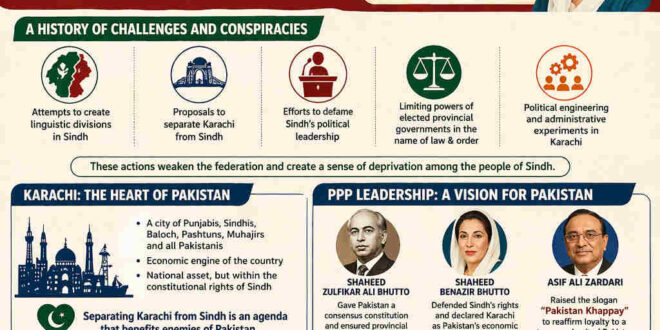
Pakistan’s history shows a recurring pattern: whenever democracy begins to strengthen and the federation moves toward inclusiveness, forces emerge that attempt to create divisions among provinces. Sindh, in particular, has often been at the center of such narratives. These challenges are not new—they have appeared in different forms since the early years after independence.
Despite this, Sindh has remained a symbol of national unity. As one of the most economically significant provinces, it has consistently contributed to the strength and stability of Pakistan. Yet, paradoxically, it has also frequently been the target of political and ideological controversies.
The Role of Sindh in Pakistan’s Federation
Sindh holds a unique place in Pakistan’s history. It was the first province whose assembly passed a resolution in favor of Pakistan before independence. This alone reflects the deep-rooted commitment of its people to the idea of the country.
Over the decades, Sindh has played a central role in supporting the federation. Its ports, industries, and agricultural output contribute significantly to the national economy, making it a backbone of Pakistan’s economic structure.
Political Leadership and Federal Vision
The political identity of Sindh has been closely associated with the Pakistan Peoples Party (PPP). The party has historically emphasized strengthening the federation and ensuring equal rights for all provinces.
Shaheed Zulfikar Ali Bhutto introduced a consensus constitution that laid the foundation for provincial rights within a unified Pakistan. His vision was simple yet powerful: a strong Pakistan can only exist when all provinces feel secure, respected, and equal.
This vision was carried forward by Shaheed Benazir Bhutto, who clearly stated that any conspiracy against Sindh is, in reality, a conspiracy against Pakistan. She strongly opposed any attempt to separate Karachi from Sindh, emphasizing that such moves would weaken national unity.
Karachi: A City for All Pakistan
Karachi is not just the capital of Sindh—it is the economic heart of Pakistan. People from all provinces live and work here, making it a truly national city. Punjabis, Sindhis, Baloch, Pashtuns, and Muhajirs all contribute to its vibrant character.
However, acknowledging Karachi’s national importance does not mean ignoring Sindh’s constitutional rights. Proposals to separate Karachi from Sindh have often been viewed as harmful to the federal structure and beneficial only to divisive narratives.
Administrative and Political Challenges
Over the years, Karachi has often been treated as an experimental ground for political and administrative changes. At different times, measures were introduced in the name of law and order that limited the authority of elected provincial governments.
While restoring peace has always been necessary, concerns have also been raised about political engineering during such operations. These actions have sometimes created a sense of deprivation among the people of Sindh.
The Role of Media and Perception
Another dimension of the issue lies in media narratives. At times, organized campaigns have portrayed Sindh’s governance in a negative light, focusing heavily on problems while overlooking progress and positive developments.
This not only affects the image of Sindh but also impacts Pakistan’s overall reputation. Balanced reporting is essential to ensure that realities are presented fairly.
Provincial Harmony and National Stability
Understanding the challenges faced by Sindh requires a broader look at the forces that create divisions among provinces. Issues such as water distribution, resource allocation, and administrative control are often politicized, leading to mistrust.
Pakistan’s strength lies in its federal structure. If any province is weakened, the entire country is affected. The stability of Sindh, like that of Punjab, Balochistan, and Khyber Pakhtunkhwa, is directly linked to the stability of Pakistan.
The Message of Unity
The leadership of PPP, including Asif Ali Zardari, has consistently emphasized unity through the slogan “Pakistan Khappay” (We want Pakistan). This message reinforces the idea that Sindh’s politics are not against the federation but are aimed at strengthening it.
The philosophy remains clear: the power lies with the people, and the people of Sindh are an integral part of Pakistan. Their identity and loyalty to the country are inseparable.
Sindh is a land of history, culture, and spirituality. It represents tolerance, diversity, and a deep-rooted connection with Pakistan. Attempts to create divisions or question its loyalty are not only misleading but also harmful to national unity.
Moving forward, the need of the hour is to strengthen democracy, respect provincial autonomy, and promote trust among all federating units. Only then can Pakistan move toward a stable and prosperous future.
Pakistan Zindabad — Sindh Paindabad. Sindh the land of Sufis
