Dost Pakistan Journeys Tours and safaris in the North & South Pakistsn
Related Articles


“`html
BUDGET 2026-27: NA Panel Questions Climate Levy Amidst Broader Fiscal Challenges
The News: Scrutiny on Budget 2026-27 Proposals
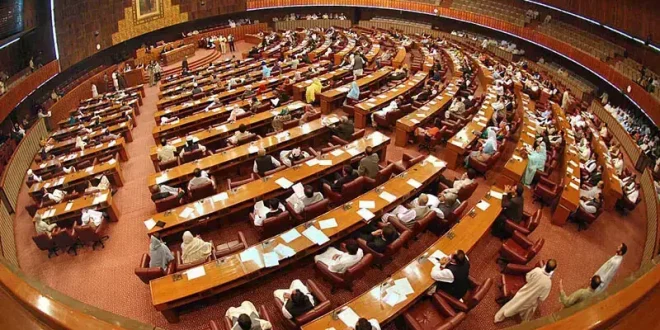
Pakistan’s National Assembly Standing Committee on Finance and Revenue recently concluded critical deliberations on the proposed National Tariff Policy 2025-30 and elements of the upcoming Budget 2026-27. Chaired by MNA Naveed Qamar, the panel raised significant questions regarding the newly introduced climate support levy, expressing dismay over the collection of funds without clear project frameworks. Lawmakers underscored the imperative for transparent utilization of climate finance, especially given Pakistan’s commitments under the IMF’s climate resilience framework.
Beyond environmental levies, the committee intensely scrutinized the recovery of petroleum levies, demanding a more stringent enforcement mechanism against defaulting Oil Marketing Companies (OMCs) to safeguard public funds. Further fiscal and environmental policy debates saw the committee reject proposals to reduce customs duties on scrap and hazardous waste imports, citing environmental risks and a contradiction of Pakistan’s climate pledges. Amidst these high-stakes discussions, the committee also approved an increase in Islamabad’s vehicle token tax, a move poised to directly impact middle-class car owners.
Background: Pakistan’s Confluence of Fiscal, Environmental, and Social Pressures
The concerns raised by the NA panel are not isolated but reflect a broader struggle Pakistan faces in managing its economy, environment, and social equity. On the climate front, Pakistan is consistently ranked among the most vulnerable nations to climate change, grappling with devastating floods, heatwaves, and erratic weather patterns. This vulnerability has pushed the country to seek international financial assistance, including significant commitments from the International Monetary Fund (IMF) through mechanisms like the Resilience and Sustainability Facility (RSF), specifically designed to aid climate resilience efforts.
The concept of a ‘climate levy’ or carbon pricing aligns with global efforts to internalize the cost of carbon emissions and fund green initiatives. However, its effectiveness hinges on transparent collection and purposeful deployment, a challenge historically faced by developing economies struggling with governance and accountability. The critical remarks by committee members, including Naveed Qamar’s assertion that funds are being “consumed without projects,” harks back to Pakistan’s fluctuating reputation in global climate leadership, as noted by Hina Rabbani Khar.
Fiscal stability remains another perennial challenge. The petroleum levy is a significant revenue stream for the government, and any default by OMCs directly impacts the national exchequer. Pakistan’s tax-to-GDP ratio has historically been low, plagued by issues of compliance, evasion, and a narrow tax base. Strengthening enforcement mechanisms, as demanded by the committee for petroleum levies, is crucial for improving fiscal discipline and ensuring equitable burden sharing.
The debate on scrap and waste imports highlights an environmental dilemma. While industries may claim a need for these materials for fuel or manufacturing, Pakistan already grapples with monumental domestic waste management issues, exemplified by cities like Karachi producing thousands of tonnes daily. Importing potentially hazardous waste, such as shredded tires, directly contradicts the nation’s stated climate goals and efforts towards a circular economy, raising public health and environmental concerns.
Lastly, the increase in Islamabad’s token tax, while justified by authorities as a necessary revenue adjustment after years of stagnation, touches upon the sensitive issue of burdening the middle class. In an economy marked by inflation and rising costs of living, tax hikes on everyday necessities like vehicle ownership can exacerbate financial strain for a large segment of the population, leading to public discontent.
Impact on Pakistan: Credibility, Fiscal Health, and Citizen Welfare
The outcomes of these deliberations carry substantial implications for Pakistan’s domestic stability and international standing.
- International Credibility & Climate Action: The parliamentary panel’s vocal criticism regarding the climate levy’s utilization poses a direct threat to Pakistan’s credibility with international lenders and climate partners, particularly the IMF. If climate funds are perceived as being mismanaged or unutilized, it jeopardizes future climate financing and risks tarnishing the nation’s image on a global stage where genuine climate action is paramount. More critically, without concrete projects, Pakistan’s inherent vulnerability to climate change will remain unaddressed, leading to further economic and human costs.
- Fiscal Health & Rule of Law: Stricter enforcement of petroleum levy recovery is vital for bolstering government revenues. Delays and defaults by OMCs erode the government’s fiscal capacity and send a negative signal about the rule of law within the business sector. Successful implementation of robust enforcement mechanisms could significantly enhance revenue collection, contributing to overall macroeconomic stability and fairness across the industry.
- Environmental & Public Health Risks: The rejection of reduced duties on hazardous waste imports is a crucial environmental win. Had the proposal passed, it could have transformed Pakistan into a dumping ground for global waste, exacerbating existing domestic waste management crises, increasing pollution, and posing severe health risks to its citizens. It also undermines the potential for developing local waste-to-energy and recycling industries.
- Burden on the Middle Class: The approved increase in Islamabad’s token tax, while a source of revenue for the capital territory, places an additional financial burden on middle-class vehicle owners. At a time of economic uncertainty and high inflation, such measures can disproportionately affect this segment, who rely on personal transport for daily commutes. This could lead to public dissatisfaction and questions about the equity of the taxation system.
Analysis: The Tug-of-War Between Policy, Practice, and Public Trust
The recent parliamentary proceedings illuminate a critical disconnect within Pakistan’s governance: the gap between policy intent, international commitments, and on-the-ground implementation. The committee’s concerns about the climate levy are particularly telling. While establishing such a levy demonstrates a commitment to climate action on paper and aligns with IMF frameworks, the failure to identify or initiate concrete projects quickly exposes a lack of planning and transparency. This “lip service” approach, as Naveed Qamar aptly put it, not only wastes precious financial resources but also squanders an opportunity to genuinely build climate resilience in a nation desperately needing it.
The call for stronger enforcement against defaulting OMCs for petroleum levies points to a perennial challenge in Pakistan: tax compliance and accountability across all sectors. The discretionary powers and lax oversight that have historically allowed such defaults undermine fiscal discipline and breed a culture of non-compliance. The proposed elimination of instalment facilities and immediate supply suspensions represents a bold, albeit necessary, step towards strengthening the institutional framework for revenue collection.
Moreover, the debate around waste imports underscores the complex interplay between industrial demands, environmental protection, and national policy. While some industries might argue for the economic benefits of importing certain wastes as raw materials, the broader environmental and health costs, coupled with Pakistan’s own staggering domestic waste problem, present a compelling argument against such policies. The committee’s stance reinforces the need for a holistic, sustainable approach to resource management that prioritizes national well-being over short-term industrial gains.
Finally, the token tax hike in Islamabad exemplifies the government’s constant struggle to balance revenue generation with public welfare. While updating tax rates to reflect inflation and provincial norms is understandable, the impact on the middle class cannot be overlooked. Such incremental burdens, when combined with other inflationary pressures, can lead to significant financial stress and erode public trust in fiscal policy decisions. This highlights the need for a more progressive and equitable taxation system that spreads the financial burden more broadly and fairly.
In essence, the NA panel’s scrutiny reflects a crucial moment for Pakistan. It highlights the urgent need for robust governance, transparent accountability mechanisms, and a coherent strategy that integrates fiscal health, environmental sustainability, and social equity. Without addressing these fundamental challenges, Pakistan risks compromising its international standing, weakening its fiscal foundation, and further burdening its citizens.
“`