Dost Pakistan Journeys Tours and safaris in the North & South Pakistsn
Related Articles


Pakistan’s Maritime Guardians: Analyzing the Professionalism Behind Every Sea Rescue
The Latest Maritime Rescue: A Testament to Pakistan’s Vigilance
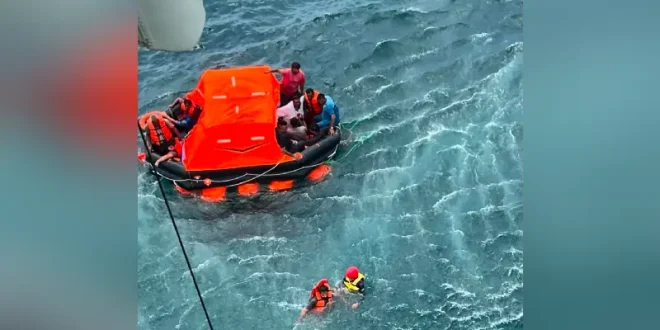
In a recent display of exemplary professionalism and swift action, the Pakistan Navy (PN) and the Pakistan Maritime Security Agency (PMSA) successfully rescued 20 crew members from a sinking cargo dhow off the coast of Ormara. The vessel, grappling with severe flooding, sent out a distress call that was promptly received by the Joint Maritime Information Coordination Centre (JMICC). Responding with urgency, PNS Hunain, supported by aerial assets, was immediately diverted to the scene. All 20 Pakistani nationals aboard were safely recovered and provided necessary medical attention, underscoring Pakistan’s unwavering commitment to ensuring safety of life at sea. This operation follows a series of similar humanitarian missions, including the assistance provided to an Indian offshore tug in May and the rescue of 18 crew members, including foreign nationals, from a merchant vessel in April, further solidifying Pakistan’s role as a responsible maritime actor.
Background: Understanding the Strategic Maritime Landscape
The Arabian Sea, bordering Pakistan’s extensive coastline, is not just a vital artery for global trade but also a dynamic and often challenging maritime environment. Ormara, situated on the Makran coast, lies along strategic sea lanes. Vessels traversing these waters, ranging from modern container ships to traditional cargo dhows, face various risks including unpredictable weather, mechanical failures, and even human error. Cargo dhows, typically wooden vessels often engaged in regional trade, can be particularly vulnerable, sometimes lacking advanced safety equipment or modern navigation systems, making them susceptible to distress in adverse conditions.
In this vast expanse, the roles of the Pakistan Navy and the Pakistan Maritime Security Agency extend far beyond conventional defense. They are the primary guardians of Pakistan’s Exclusive Economic Zone (EEZ), responsible for maritime security, law enforcement, environmental protection, and crucially, search and rescue (SAR) operations. The Joint Maritime Information Coordination Centre (JMICC) acts as the nerve center, monitoring maritime traffic, receiving distress calls, and coordinating multi-agency responses. This integrated approach is critical for effective SAR, where time is often the most vital factor.
Impact on Pakistan: Beyond the Immediate Rescue
The successful rescue operation, and others like it, carries significant implications for Pakistan on multiple fronts:
- Enhanced International Image: Such humanitarian acts bolster Pakistan’s reputation as a responsible and compassionate maritime nation. Demonstrating an effective SAR capability portrays Pakistan as a reliable partner in ensuring regional maritime safety, contributing positively to its global standing.
- Regional Stability and Trust: By consistently responding to distress calls, regardless of the vessel’s origin – as seen with the assistance to an Indian tug – Pakistan fosters an environment of trust and cooperation in a region often fraught with geopolitical complexities. This contributes to overall regional stability, promoting safer seas for all.
- Economic Safeguarding: A secure and safe maritime domain is indispensable for Pakistan’s economic prosperity. With the development of Gwadar Port and the broader China-Pakistan Economic Corridor (CPEC) framework, the uninterrupted flow of trade through Pakistan’s waters is paramount. Reliable SAR capabilities reduce risks to shipping, which can translate into lower insurance premiums and greater investor confidence.
- Professionalism and Capacity Validation: Each successful operation validates the rigorous training, modern equipment, and seamless inter-agency coordination of the Pakistan Navy and PMSA. It showcases their operational readiness and commitment to international maritime conventions, highlighting their strategic investments in maritime capabilities.
- Humanitarian Imperative: At its core, every rescue operation upholds the universal principle of saving lives at sea, a fundamental humanitarian duty that transcends national boundaries and political differences.
Analysis: Pakistan’s Evolving Role as a Maritime Guardian
The recent rescue near Ormara is more than just an isolated incident; it’s a window into Pakistan’s evolving and increasingly crucial role as a maritime guardian. The “swift and coordinated emergency response” is not a matter of luck but a testament to a well-oiled machinery of preparedness. This involves:
- Proactive Infrastructure: The existence and efficiency of the JMICC, coupled with strategically deployed assets like PNS Hunain and aerial support, are fundamental. These elements enable rapid detection, assessment, and response to emergencies across a vast maritime territory.
- Multi-Dimensional Coordination: The synergy between the Pakistan Navy and PMSA, integrating surface vessels with aerial surveillance, exemplifies best practices in maritime SAR. This multi-dimensional approach maximizes the chances of success in complex, time-sensitive situations.
- Addressing Persistent Challenges: While Pakistan excels in its response, the recurring nature of distress calls from cargo dhows highlights ongoing challenges. Many such vessels may lack modern safety standards, necessitating continuous vigilance and potentially advocating for improved safety regulations for regional shipping. Furthermore, the sheer size of Pakistan’s EEZ demands sustained resource allocation for patrolling and rapid deployment.
- Soft Power Projection: In a geostrategically significant region like the Arabian Sea, Pakistan’s consistent humanitarian efforts project its soft power. It demonstrates that beyond military might, the nation is committed to being a force for good, capable of contributing to global maritime safety and security.
- A Call for Regional Collaboration: While Pakistan’s efforts are commendable, maritime safety is a shared responsibility. The vastness of the sea means no single nation can manage all eventualities alone. This highlights the ongoing need for enhanced regional and international cooperation in maritime information sharing, joint training exercises, and capacity building among littoral states to collectively enhance safety for all seafarers.
In conclusion, the successful rescue of 20 lives off Ormara reaffirms the Pakistan Navy and PMSA’s unwavering dedication to their mission. It serves as a powerful reminder of the professionalism, strategic preparedness, and humanitarian spirit that define Pakistan’s commitment to being a responsible and effective maritime guardian in a critical global maritime corridor. These actions not only save lives but also enhance Pakistan’s standing, contribute to regional stability, and safeguard its vital economic interests at sea.