Dost Pakistan Journeys Tours and safaris in the North & South Pakistsn
Related Articles


“`html
AJK’s Fourth Schedule Crackdown: An Analysis of Escalating Tensions and Widespread Disruption
The political and social landscape of Azad Jammu and Kashmir (AJK) is currently gripped by significant unrest, as the government escalates its response to widespread protests. The decision to place scores of activists on the Fourth Schedule of the Anti-Terrorism Act (ATA) marks a critical juncture, highlighting deep-seated grievances and posing formidable challenges for regional stability.
The Current Crisis: A Summary of Events
For over eleven days, a pervasive strike has paralyzed daily life across large swathes of AJK, particularly in the Poonch and Muzaffarabad divisions. This prolonged disruption is a direct result of ongoing protests spearheaded by the Joint Awami Action Committee (JAAC), a pro-people activist group. The situation reached a new level of intensity with the AJK Home Department’s announcement that 147 JAAC activists and supporters have been formally listed on the Fourth Schedule of the Anti-Terrorism Act, 1997. These individuals, hailing from various districts including Poonch, Sudhnoti, Kotli, Bagh, Mirpur, Bhimber, Neelum, Haveli, and Muzaffarabad, face stringent legal consequences, with officials hinting at potential property attachments and further additions to the list based on intelligence reports.
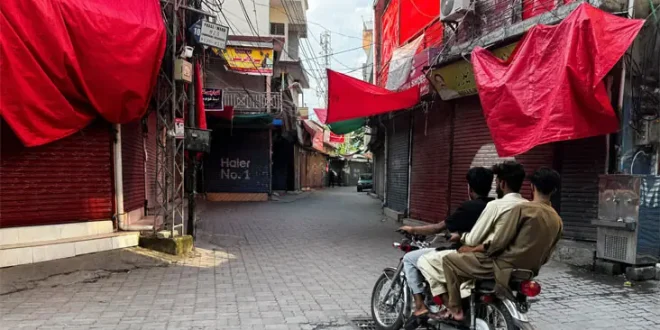
The protests, characterized by a persistent sit-in in Rawalakot, have seen a determined mobilization of citizens despite government efforts to quell the movement through non-coercive tactics, such as disrupting food supplies and compiling lists of government employees allegedly supporting the demonstrations. While parts of Mirpur division have seen partial observance, the capital Muzaffarabad has experienced significant closures, with essential services like internet, banking, and fuel severely impacted. This has led to immense hardship for residents, small traders, and students, prompting urgent calls for dialogue to resolve the escalating crisis.
Background: Unpacking the Context
What is Azad Jammu and Kashmir (AJK)?
Azad Jammu and Kashmir is a self-governing administrative territory within Pakistan, forming the western part of the larger Kashmir region. Governed by its own elected assembly and prime minister, AJK holds a unique constitutional status. It plays a pivotal role in Pakistan’s broader narrative on the Kashmir dispute, making its internal stability crucial for national and international perceptions.
The Joint Awami Action Committee (JAAC) and its Grievances
While the specific demands of the JAAC are not explicitly detailed in the immediate news, such widespread and prolonged protests in AJK typically stem from a range of socio-economic grievances and governance issues. Historically, these can include concerns over electricity tariffs, subsidized flour provision, resource allocation, and broader demands for improved public services and political autonomy. The longevity and intensity of the current strike suggest a deep-seated frustration among the populace regarding these underlying issues.
Understanding the Fourth Schedule of the Anti-Terrorism Act (ATA), 1997
The Fourth Schedule is a controversial but powerful tool under Pakistan’s Anti-Terrorism Act (ATA), 1997. It is designed to monitor individuals suspected of involvement in terrorism, sectarianism, or other acts deemed a threat to national security. Individuals placed on this list face severe restrictions, including:
- Strict Surveillance: Close monitoring by law enforcement agencies.
- Travel Restrictions: Prohibitions on inter-district and international travel without prior permission.
- Reporting Requirements: Obligation to report to local police stations regularly.
- Financial Scrutiny: Freezing of bank accounts and potential attachment of properties.
- Prohibition on Activities: Banned from participating in political or social activities.
The application of the Fourth Schedule to activists, even if not directly involved in violence, signifies the government’s perception of their activities as a threat to public order or state authority, particularly when protests turn into prolonged disruptions. Critics, however, often argue that its broad application can stifle legitimate dissent and fundamental rights.
Impact on Pakistan
The escalating situation in AJK has significant ramifications for Pakistan, extending beyond the administrative boundaries of the territory itself.
- Economic Strain: The prolonged strike has crippled economic activity in AJK, impacting local businesses, daily wage earners, and the movement of goods. This disruption not only affects AJK’s economy but also has spillover effects on Pakistan’s national economy, particularly concerning trade and remittances. The inability of Kashmiri students studying in Pakistani cities to receive funds from their families highlights this direct economic link.
- Political Stability and International Perception: AJK’s status is internationally sensitive due to the unresolved Kashmir dispute. Protracted instability and the use of anti-terrorism laws against protestors could attract unwelcome international scrutiny, potentially undermining Pakistan’s diplomatic efforts regarding Kashmir. It could also fuel narratives of governance failure or human rights concerns in the region.
- Social Cohesion and Radicalization Risks: Persistent public grievances, coupled with heavy-handed state responses, can erode social trust and potentially create fertile ground for radicalization. The suffering endured by ordinary citizens due to shortages of essentials and suspended services can lead to deeper resentment and alienation, making future reconciliation more challenging.
- Security Burden: Maintaining law and order amidst widespread protests places a considerable strain on security forces and administrative resources. A protracted crisis in AJK diverts attention and resources that could otherwise be utilized for other national security priorities.
Analysis: A Tipping Point?
The AJK government’s strategy appears to be a multi-pronged approach combining legal pressure with subtle coercive measures. Placing activists on the Fourth Schedule is a clear signal of intent to depoliticize and criminalize the protest movement, aiming to dismantle its leadership and deter further participation. However, this approach carries inherent risks.
- Escalation vs. De-escalation: While intended to restore order, such stringent measures can often backfire, hardening the resolve of protestors and drawing wider public sympathy. The fact that the strike has persisted for over eleven days, despite severe hardships, suggests a deep-rooted commitment among the populace, indicating that legal action alone may not be a sustainable solution.
- The Human Cost: The economic paralysis, coupled with the suspension of vital services like internet and banking, is inflicting immense suffering on ordinary citizens. Stories of small traders losing their livelihoods, patients unable to refuel vehicles for hospital visits, and students facing financial crises paint a grim picture of the humanitarian impact. This human cost underscores the urgency of a peaceful resolution.
- Dialogue as the Only Way Forward: The current stalemate highlights a critical failure in communication and negotiation. While authorities aim to end the sit-in without force, their current tactics are prolonging the agony. The public’s plea for authorities and protest leaders to engage in dialogue and address “reasonable and legitimate” demands is a powerful indictment of the current deadlock.
- Governance Challenge: The crisis presents a significant governance challenge for the AJK administration and, by extension, for Islamabad. It tests the capacity of the state to manage dissent, uphold citizen rights, and address socio-economic grievances effectively within a democratic framework. A failure to navigate this delicately could have long-term implications for trust in government institutions.
The situation in AJK demands a strategic shift from confrontation to conciliation. While maintaining law and order is paramount, criminalizing broad-based public movements, particularly those rooted in socio-economic demands, often proves counterproductive. A sustainable resolution will likely involve a multi-faceted approach that prioritizes transparent dialogue, a genuine effort to understand and address the root causes of public discontent, and a commitment to upholding fundamental rights, even amidst protests. The future stability of this sensitive region hinges on the ability of its leaders to de-escalate tensions and forge a path towards mutual understanding and lasting peace.
“`