Dost Pakistan Journeys Tours and safaris in the North & South Pakistsn
Related Articles
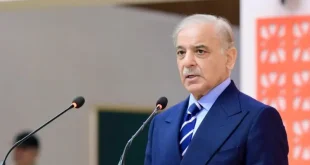
Naqvi’s ‘Irrelevant Speech’ Complicates Provinces Debate, Says Sanaullah: An In-depth Analysis
The News: A Provincial Rift Emerges from an Unlikely Forum
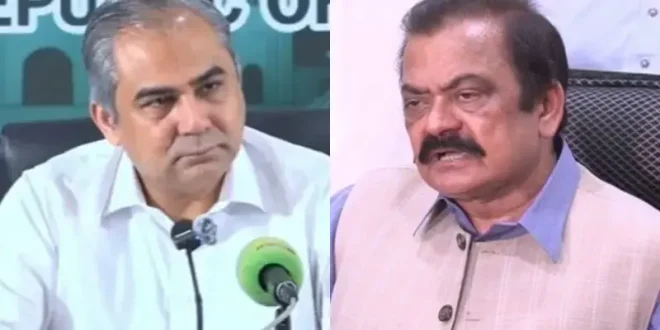
In a pointed critique, Pakistan Muslim League-Nawaz (PML-N) Senator and Prime Minister’s political adviser, Rana Sanaullah, has accused caretaker Interior Minister Mohsin Naqvi of “complicating” the sensitive national debate on creating new provinces. Sanaullah’s contention centers on Naqvi’s decision to initiate such a discussion at the Pakistan Economic Summit in Islamabad in July, deeming it an “irrelevant forum” for a matter of profound constitutional and political significance. This public exchange has escalated into a direct verbal confrontation, with Sanaullah asserting his right to comment on a colleague’s work while Naqvi issued a veiled threat, underscoring rising political tensions ahead of the general elections.
Background: The Thorny Path to New Provinces and Inter-Party Dynamics
The call for new administrative units or provinces is not new in Pakistan. It is a recurring demand often fueled by considerations of administrative efficiency, equitable resource distribution, and addressing regional identity or ethnic grievances, particularly in areas like South Punjab or Hazara. However, such a move requires significant constitutional amendments and broad national consensus, making it a highly sensitive and politically charged topic.
Mohsin Naqvi, as the caretaker Interior Minister, is constitutionally tasked with overseeing the smooth transition to a new elected government, primarily by facilitating elections. His unexpected foray into a contentious political and constitutional debate at an economic forum, which typically focuses on fiscal policies, investment, and trade, immediately raised eyebrows. His remarks, urging the creation of new provinces to “reset” the governance system, swiftly ignited a “political storm,” signaling a potential overreach of his caretaker mandate.
Rana Sanaullah, a seasoned politician and a key figure within the PML-N, brings a wealth of experience, including a tenure as Interior Minister. His party has historically supported the idea of a separate South Punjab province but understands the intricate political maneuvering required for such a national restructuring. Sanaullah’s criticism stems not from an opposition to the concept of new provinces itself, but from the perceived strategic misstep in how the debate was launched, risking immediate politicization rather than fostering a constructive dialogue.
Adding another layer to this dynamic is the broader political climate, characterized by a pervasive narrative of a “collapsed system.” Sanaullah, notably, has aligned with Pakistan Peoples Party (PPP) Chairman Bilawal Bhutto-Zardari’s nuanced stance that the system did not fail organically but was “made to collapse” by a combination of politicians, the establishment, judiciary, and bureaucracy. This shared perspective hints at a potential convergence of views between major political parties regarding the root causes of Pakistan’s governance challenges.
Furthermore, Sanaullah’s pointed remarks about Naqvi’s alleged proximity to President Asif Ali Zardari – even asserting that Zardari considers Naqvi “my son” – introduce a layer of personal and political patronage. This perceived connection raises questions about Naqvi’s neutrality as a caretaker official and whether his actions are influenced by broader political agendas, potentially complicating consensus-building efforts.
Impact on Pakistan: Implications for Governance and Stability
The public spat between Sanaullah and Naqvi, particularly concerning a debate as pivotal as provincial restructuring, carries significant implications for Pakistan:
- Politicization of a Critical Issue: The call for new provinces, which necessitates careful deliberation, national consensus, and constitutional amendments, has been thrust into the arena of public controversy rather than a structured parliamentary debate. This risks turning a vital governance discussion into an electoral slogan or a tool for political point-scoring, hindering any meaningful progress.
- Distraction from Core Challenges: Pakistan is grappling with severe economic challenges. Diverting national attention and political energy towards a divisive debate, especially one introduced improperly, detracts from the urgent need for economic stabilization and policy implementation.
- Undermining Parliamentary Process: Major constitutional reforms like creating new provinces require the parliament as the legitimate forum for discussion and consensus-building. By initiating such a debate at a non-political event, Naqvi’s approach bypasses democratic institutions and risks setting a precedent that undermines the sanctity of parliamentary processes.
- Increased Inter-Party Friction: The public confrontation, particularly Sanaullah’s critique of Naqvi for not bringing the PPP on board despite his alleged closeness to Zardari, exacerbates existing political tensions. Such friction ahead of elections could complicate post-election coalition formations and the overall stability of the political landscape.
- Erosion of Public Trust: When key political figures engage in public bickering over critical national issues rather than demonstrating a unified approach to problem-solving, it can erode public trust in political leadership and the democratic process itself.
Analysis: Strategic Maneuvering and the Battle for Narrative
The exchange between Sanaullah and Naqvi is more than just a personal feud; it represents a clash of political strategies and narratives:
Naqvi’s Motivation: A Strategic Gambit or Misstep?
Naqvi’s decision to champion new provinces at an economic summit raises questions about his underlying motives. Was it a genuine, albeit poorly executed, attempt to highlight a critical governance issue that he believes needs immediate attention? Or was it a calculated move to inject a potentially divisive topic into the political discourse, perhaps to gauge public and political reaction, or to strategically divert attention from other pressing matters? His call to “reset the system” suggests a radical vision for governance, which might resonate with certain segments but clashes with the neutrality expected of his caretaker role. It could also be interpreted as a proxy move, testing the waters for powerful entities interested in reconfiguring Pakistan’s administrative map.
Sanaullah’s Stance: Defending Process and Shaping Discourse
Sanaullah’s critique is not an outright rejection of new provinces but a firm insistence on the correct procedure and forum. By emphasizing the need for parliamentary debate and consensus, he strategically positions the PML-N as a party that respects institutional processes and seeks national unity on sensitive matters. His argument that Naqvi “complicated” the issue by choosing the “wrong method” allows him to criticize a powerful caretaker minister while maintaining a statesmanlike posture. His alignment with Bilawal Bhutto-Zardari on the “system made to collapse” narrative is particularly significant. This shared language suggests a broader political understanding or a common front against perceived external interventions in democratic processes, subtly pointing fingers at institutional stakeholders beyond just politicians. The use of “worthy interior minister” with an added emphasis on the English meaning of “worthy” is a classic political jab – a veneer of respect masking a sharp, sarcastic critique aimed at diminishing Naqvi’s stature.
The Imperative of Consensus for Constitutional Change
Pakistan’s history has shown that major constitutional amendments, particularly those altering the federal structure, are fraught with peril if not backed by broad political consensus. Sanaullah’s repeated stress on engaging all political parties, especially the PPP, underscores this fundamental requirement. His criticism that Naqvi failed to take President Zardari on board, despite their alleged closeness, highlights a perceived hypocrisy and a fundamental failure in Naqvi’s approach to building political bridges for a national cause.
Inter-Party Dynamics and the Road Ahead
The entire episode reveals the intricate and often volatile nature of Pakistani politics, even during a caretaker setup. The subtle jabs, the public declarations, and the differing interpretations of national challenges (“system collapsed” vs. “made to collapse”) are all strategic moves in the ongoing battle for political narrative ahead of national elections. How this particular disagreement unfolds will likely influence not only the debate on new provinces but also the broader political alignments and rhetoric in the coming months, potentially setting the stage for more contentious political battles in a post-election scenario.