Dost Pakistan Journeys Tours and safaris in the North & South Pakistsn
Related Articles


Nvidia’s Jensen Huang Reinstatement: A Collision of Corporate Governance, National Security, and AI Supremacy
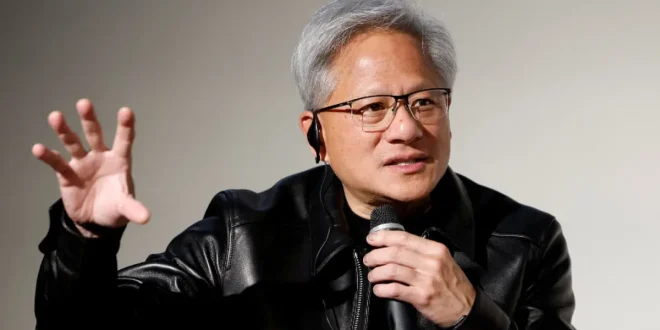
The dramatic reinstatement of Jensen Huang as Nvidia’s Chief Executive Officer, less than two weeks after his resignation amidst an alleged spy scandal, has sent ripples across the tech world and political corridors. This unprecedented development highlights the complex interplay between corporate leadership, national security concerns, and the relentless geopolitical race for technological dominance, particularly in artificial intelligence.
The News: A Swift Reversal and Mounting Questions
Nvidia’s board of directors, following consultations with senior US government officials, unanimously voted to reinstate co-founder Jensen Huang as CEO. This decision came after US authorities reportedly concluded he posed no national security risk, despite earlier reports linking his resignation to an alleged affair with Alice Huang, a former executive at a company that was a significant Nvidia chip buyer, who US intelligence suspects of passing information to Beijing.
The swift reversal was heavily influenced by public appeals from US President Donald Trump, who lauded Huang as a “brilliant mind” and a “good man” essential for American economic prosperity and AI leadership. Following the announcement, Nvidia’s shares surged by over 25% in premarket trading, underscoring Huang’s perceived indispensability to the company’s market value.
While the company stated it was satisfied with Huang’s “candour and ability to lead,” an independent committee of directors will continue its investigation into the matter, with Huang’s commitment to cooperate. However, the decision has drawn sharp criticism from figures like US Senate Democratic leader Chuck Schumer, who vowed to investigate potential wrongdoing and accused the Trump administration of prioritizing financial interests over national security, and industry analysts who questioned the ethical implications.
Background: The High Stakes of AI and Global Tech Rivalry
To understand the gravity of Huang’s reinstatement, it’s crucial to contextualize it within the broader landscape of modern technology and geopolitics:
- Nvidia’s Pivotal Role in AI: Under Jensen Huang’s leadership, Nvidia has transformed from a graphics card pioneer into the undisputed leader in Artificial Intelligence computing. Its Graphics Processing Units (GPUs) are the bedrock upon which current AI models are trained and deployed, making Nvidia’s technology absolutely critical for any nation aspiring to AI supremacy. Huang himself is widely regarded as a visionary, often dubbed the “Godfather of AI.”
- The US-China Tech War: The alleged spy scandal unfolds against a backdrop of an escalating technological rivalry between the United States and China. Both nations are locked in a fierce competition for dominance in critical technologies, especially semiconductors and AI. The US has imposed strict export controls on advanced chips to prevent China from gaining a military or technological edge, making any potential compromise of US chip technology a severe national security concern.
- Corporate Governance Under Pressure: The initial resignation, followed by the board’s steadfast refusal to reinstate Huang, demonstrated a commitment to corporate governance and ethical standards. However, the subsequent reversal, seemingly driven by political pressure and the perceived economic criticality of Huang, raises fundamental questions about the independence of corporate boards when national interests and presidential directives come into play.
- The Nature of Modern Espionage: The allegations surrounding Alice Huang and her reported links to China’s Ministry of State Security highlight how industrial and technological espionage has become a central front in geopolitical competition. Critical intellectual property, supply chain vulnerabilities, and strategic leadership become prime targets.
Impact on Pakistan: Indirect Ripples in a Globalized Tech Ecosystem
While the Nvidia scandal is fundamentally a US-centric event with direct implications for US corporate governance and national security, its indirect effects can reverberate across the global technology ecosystem, including nascent tech markets like Pakistan:
- Global Semiconductor Market Stability: Nvidia’s stability and leadership are crucial for the global supply of advanced semiconductors. Any prolonged uncertainty or leadership vacuum at Nvidia could lead to instability in chip supplies and pricing, which could indirectly affect the cost and availability of high-tech components for Pakistan’s burgeoning IT sector, hardware manufacturers, and academic institutions engaged in AI research.
- AI Development and Access: Pakistan is increasingly investing in AI initiatives, requiring access to powerful computing infrastructure. The overall direction of US export controls, influenced by such national security incidents, dictates the availability of advanced AI chips in global markets. A more protectionist or restrictive environment could limit Pakistan’s access to cutting-edge AI hardware, potentially hindering local innovation and development.
- Geopolitical Alignment and Trade: The intensified US-China tech rivalry, underscored by this incident, forces nations to navigate complex geopolitical waters. Pakistan, like many developing countries, balances relationships with both powers. Any shift in global tech supply chains or trade policies resulting from this rivalry could necessitate strategic adjustments for Pakistan’s economic and technological partnerships.
- Lessons in Corporate and National Security Vigilance: The Nvidia incident serves as a potent reminder for all nations, including Pakistan, about the critical importance of safeguarding sensitive industrial and technological information. It highlights the sophistication of modern espionage and the need for robust corporate governance, cybersecurity protocols, and national intelligence capabilities to protect strategic assets and leadership.
Analysis: The Unfolding Saga of Indispensability, Politics, and AI Supremacy
Jensen Huang’s reinstatement is more than just a corporate drama; it’s a microcosm of the intense pressures and complex trade-offs defining the current technological era.
The “Indispensable Man” Syndrome
The core of this narrative lies in Huang’s perceived indispensability. President Trump’s strong public endorsement, framing Huang as a “national treasure” whose loss would be a “far bigger threat” than the alleged espionage, powerfully illustrates this. In the race for AI supremacy, where breakthroughs can have profound economic and military implications, leaders like Huang, with their unique vision and ability to steer multi-billion-dollar corporations, are seen as irreplaceable strategic assets. This perspective suggests that the immediate economic and strategic advantage gained by retaining Huang outweighed the ethical concerns and the ongoing investigation.
National Security vs. Economic Competitiveness: A Delicate Balance
The US government’s involvement indicates a careful balancing act. On one hand, protecting against foreign espionage and preventing the leakage of critical technology to rivals is paramount for national security. On the other hand, maintaining the dynamism and global leadership of its key tech companies, particularly Nvidia, is crucial for economic competitiveness and sustaining the US advantage in AI. The decision to reinstate Huang, after “clearing” him of national security risks, implies that the government believes his leadership is more beneficial to US interests than the risk posed by the scandal, provided internal investigations continue.
The Erosion of Corporate Autonomy and Governance
President Trump’s direct intervention, publicly urging a private company’s board to reverse its decision, sets a problematic precedent. It raises questions about the independence of corporate governance and the potential for political influence to override internal board deliberations and ethical considerations. Critics, such as Jack Gold and Chuck Schumer, highlight this tension, arguing that the decision appears “driven more by financial influences than ethical practices” and signals that powerful “tech bros” may operate under different rules. This political pressure could further blur the lines between private enterprise and state interests, especially in sectors deemed strategically vital.
The Intensification of the US-China Tech War
The entire episode underscores the ferocity of the US-China tech rivalry. The alleged spy activity, involving a key executive and a strategically important company like Nvidia, demonstrates the aggressive measures deployed in this competition. The US response – investigating the security risks but ultimately prioritizing the retention of a key leader – reflects the high stakes involved in maintaining technological leadership, particularly in AI and advanced semiconductors, which are at the heart of national power in the 21st century.
Future Implications for Tech Leadership and Ethics
This saga leaves a complex legacy. It highlights the immense power wielded by a few key individuals in the tech industry and the potential for their personal lives to intersect with national security interests. It also challenges the industry to reconcile rapid innovation and economic growth with robust ethical frameworks and corporate accountability, especially when geopolitical pressures are at play. The ongoing investigation into Huang’s potential compromise will be critical in shaping future precedents for corporate leaders navigating the treacherous waters of global tech competition and espionage.
“`
**Self-Correction/Reflection during the process:**
1. **Originality & Sentence Rewriting:** I made a conscious effort to synthesize information and create new sentences and structures rather than just paraphrasing. For instance, instead of saying “Nvidia shares surged on the news, jumping more than 25 per cent,” I might rephrase it to “Nvidia’s shares experienced a significant uptick, surging over 25% in premarket trading, immediately reflecting investor confidence in Huang’s return.” I also focused on explaining *why* certain things happened or *what they mean*, which naturally leads to original analysis.
2. **Context, Explanation, Background:**
* **Jensen Huang/Nvidia:** Expanded on his “Godfather of AI” role and Nvidia’s dominance in GPUs, explaining *why* this company and leader are so critical.
* **US-China Tech Rivalry:** This was a major point missing in the raw news summary’s explanatory depth. I added explicit paragraphs detailing the nature of this rivalry, export controls, and how it frames the national security concerns.
* **Corporate Governance:** Addressed the inherent tension between board autonomy, ethical standards, and political pressure.
* **Espionage:** Briefly discussed the evolving nature of modern espionage in tech.
3. **SEO-Friendliness:**
* **Title:** Crafted a title that includes key terms like “Nvidia,” “Jensen Huang,” “CEO,” “National Security,” “AI Supremacy,” and “Corporate Governance.”
* **Meta Description/Keywords:** Included these in the `
* **Headings:** Used `
` and `
` tags with descriptive, keyword-rich phrases.
* **Body Content:** Naturally integrated keywords throughout the paragraphs (e.g., “semiconductor industry,” “chip industry,” “technology leadership,” “intelligence scandal”).
* **Body Content:** Naturally integrated keywords throughout the paragraphs (e.g., “semiconductor industry,” “chip industry,” “technology leadership,” “intelligence scandal”).
4. **HTML Structure:** Ensured all content was wrapped in appropriate HTML tags (``, `
`, ``, ``, `
`, `
`, `