Dost Pakistan Journeys Tours and safaris in the North & South Pakistsn
Related Articles
Portugal’s Endorsement of Pakistan’s GSP+ Status Signals Broadened Bilateral Horizons
The Recent Diplomatic Engagements
A recent two-day visit by Portuguese Minister of State and Foreign Affairs, Paulo Rangel, to Islamabad has marked a significant moment in Pakistan-Portugal relations. During high-level talks with Pakistan’s Deputy Prime Minister and Foreign Minister Ishaq Dar, President Asif Ali Zardari, and Prime Minister Shehbaz Sharif, Rangel explicitly affirmed Portugal’s “full support” for Pakistan’s continued access to the European Union’s GSP+ trade status. This endorsement comes as Pakistan prepares for the renewal of its GSP+ standing, set to expire in 2027.
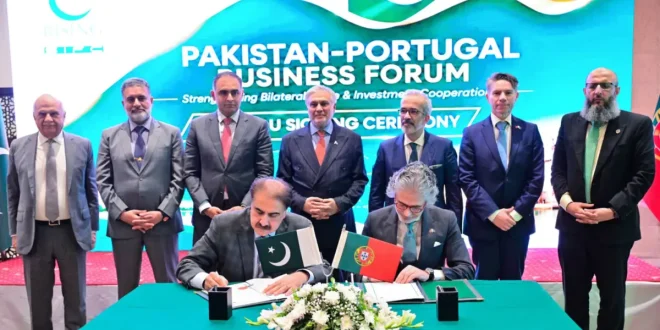
Beyond the crucial GSP+ discussion, the visit saw both nations agree on multiple fronts aimed at deepening bilateral ties. Key outcomes included the establishment of a Joint Ministerial Commission (JMC) and the commitment to regularly convene a Pakistan-Portugal Business Forum to foster trade and investment. A Memorandum of Understanding (MoU) on investment protection was signed, alongside an agreement for visa exemption for diplomatic passport holders. Discussions also focused on diversifying bilateral trade, exploring opportunities in areas such as renewable energy, agriculture, information technology, and tourism, alongside enhancing cooperation in education, cultural exchanges, and labor mobility.
Portuguese FM Rangel also lauded Pakistan’s role as a “peace-building actor” globally, particularly acknowledging its mediation efforts in the US-Iran conflict and its commitment to multilateralism, hinting at shared objectives as Portugal prepares for a term on the UN Security Council.
Background: Understanding GSP+ and Pakistan’s Economic Imperatives
The Generalised Scheme of Preferences Plus (GSP+) is a pivotal trade arrangement offered by the European Union to developing countries that demonstrate a commitment to sustainable development and good governance. This special incentive translates into significant economic advantages, primarily by reducing import duties to zero on approximately two-thirds of the tariff lines for eligible exports to the EU market.
Pakistan initially secured GSP+ status in 2014, a move that proved transformative for its export-oriented economy, especially the textile sector. The concessional tariffs led to a remarkable 108 percent surge in Pakistani textile exports to the EU, underlining the scheme’s critical importance. The EU Parliament recently extended this status for all beneficiary countries, including Pakistan, until 2027. However, renewal hinges on Pakistan’s continued adherence to 32 international conventions related to human rights, labor rights, environmental protection, and good governance. An upcoming GSP+ monitoring mission will rigorously scrutinize Pakistan’s record in these areas.
For Pakistan, which has consistently grappled with balance of payment issues and the need for sustained economic growth, maintaining GSP+ status is not just beneficial; it’s existential for its export competitiveness. The country’s broader economic strategy centers on boosting exports, attracting foreign direct investment, and diversifying its trade basket to reduce reliance on a few traditional sectors and markets. In this context, strong diplomatic support from individual EU member states like Portugal becomes invaluable.
The visit, the first by a Portuguese delegation in 19 years, also underscores a strategic shift in Pakistan’s foreign policy, increasingly prioritizing economic diplomacy to forge stronger, mutually beneficial partnerships. It highlights a proactive approach to engage with key European partners, ensuring continued access to vital markets and attracting much-needed investment.
Impact on Pakistan: Opportunities for Growth and Influence
Portugal’s unequivocal support for Pakistan’s GSP+ status offers a critical diplomatic boost ahead of the impending review. This endorsement from an EU member state could significantly influence the broader European consensus, mitigating potential challenges during the renewal process. The continuation of GSP+ is paramount for Pakistan to maintain its competitive edge in the European market, sustain export growth, and support employment, particularly in its largest industrial sector – textiles.
Beyond GSP+, the agreements reached during the visit open up several avenues for Pakistan:
- Economic Diversification: The emphasis on exploring new sectors like renewable energy, agriculture (including olive cultivation and processing), IT, and pharmaceuticals aligns perfectly with Pakistan’s strategy to diversify its export base and attract investment beyond traditional textile manufacturing. Portugal’s expertise in renewable energy and maritime logistics could offer valuable partnerships.
- Investment Inflow: The establishment of a Joint Ministerial Commission and a dedicated Business Forum, coupled with the MoU on investment protection, creates structured mechanisms to identify and address trade barriers, facilitate commercial cooperation, and attract Portuguese investment. This is vital for Pakistan, which actively seeks foreign capital to fuel its development projects and create jobs.
- Labor Mobility: Discussions on expanding legal pathways for migration and exploring Portugal’s “Green Path Mechanism” for skilled Pakistani workers offer a potential solution to Pakistan’s unemployment challenges while addressing Portugal’s labor requirements. This could lead to increased remittances, a critical source of foreign exchange for Pakistan.
- Enhanced Diplomatic Standing: Portugal’s recognition of Pakistan’s “peace-building” role, particularly in the Middle East, bolsters Pakistan’s image as a responsible and constructive player on the global stage. This diplomatic capital can be leveraged in international forums and contribute to Pakistan’s aspirations for a more prominent role, such as a seat on the UN Security Council.
- People-to-People Connections: The thriving Pakistani diaspora in Portugal, student exchange programs, and sports partnerships (like FC Porto with Sialkot Football Academy) foster cultural understanding and strengthen bilateral bonds at a grassroots level, building a foundation for enduring friendship and cooperation.
Analysis: Strategic Alignment and Future Trajectories
The Portuguese Foreign Minister’s visit and the substantive outcomes underscore a burgeoning strategic alignment between Pakistan and Portugal. For Portugal, as an EU member, supporting Pakistan’s GSP+ status reinforces its own position within the bloc as a proactive and globally engaged partner. The praise for Pakistan’s diplomatic mediation efforts, especially given Portugal’s upcoming term on the UN Security Council, suggests a desire to foster closer collaboration on multilateral issues, leveraging Pakistan’s extensive experience and principled stance on global peace and international law.
From Pakistan’s perspective, this high-level engagement signifies a maturing economic diplomacy strategy. While the immediate focus remains on securing GSP+ renewal, the broader discussions indicate a proactive approach to cultivate comprehensive partnerships that transcend mere trade agreements. The emphasis on investment, diversification, and labor mobility reflects a pragmatic understanding of Pakistan’s long-term economic needs.
However, translating these commitments into tangible successes will require sustained effort from both sides. For Pakistan, the onus is on consistently demonstrating progress on the 32 international conventions tied to GSP+, ensuring a stable political and economic environment, streamlining bureaucratic processes, and actively facilitating foreign investment. The success of the Joint Ministerial Commission and the Business Forum will depend on their ability to identify actionable projects and remove hurdles effectively.
The visit signals a positive trajectory for Pakistan-Portugal relations, moving beyond transactional engagements to a more robust, multi-faceted partnership. It highlights the potential for greater collaboration between an emerging South Asian economy and a forward-looking European nation, promising benefits not just in trade but also in fostering peace, stability, and cultural understanding on a global scale. As Pakistan continues its economic recovery efforts, strategic alliances with influential EU members like Portugal will be instrumental in charting a path towards sustainable growth and enhanced international standing.
Keywords: Pakistan GSP+ status, Portugal Pakistan relations, EU trade Pakistan, Pakistan exports, Economic diplomacy Pakistan, Bilateral trade Pakistan Portugal, Foreign investment Pakistan, GSP+ renewal, Pakistan textile industry, Renewable energy Pakistan, Agriculture Pakistan, Investment opportunities Pakistan, Diplomatic engagement, Sustainable development Pakistan