Dost Pakistan Journeys Tours and safaris in the North & South Pakistsn
Related Articles



“`html
Nvidia’s Jensen Huang: The Phoenix CEO Amidst Geopolitical Firestorm
The Unprecedented Return: Jensen Huang Back at Nvidia’s Helm
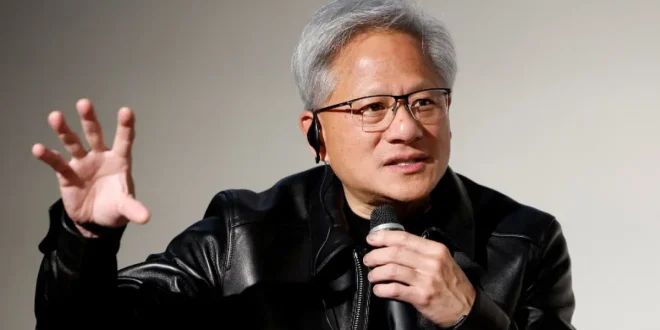
In a dramatic turn of events, Nvidia, the undisputed leader in artificial intelligence (AI) chip manufacturing, has reinstated its visionary co-founder, Jensen Huang, as Chief Executive Officer. This decision comes barely two weeks after Huang’s resignation, prompted by an alleged affair with Alice Huang (no relation), a former executive at Megaspeed, a key Nvidia client. Concerns escalated when US intelligence services reportedly linked Alice Huang to Chinese espionage activities, raising serious national security questions.
Nvidia’s board cited consultations with senior US government officials who, according to the company, cleared Huang of any national security risk. This swift reversal, which saw Nvidia’s shares surge by over 25% in premarket trading, was notably preceded by public appeals from US President Donald Trump, who lauded Huang as a “genius” and “national treasure” whose leadership was critical for American economic success. While the internal investigation into the allegations continues, Huang has committed to full cooperation, resuming his role immediately. Colette Kress, who served as interim CEO, returns to her position as CFO, and Harvey Jones remains as the board chair, a role he assumed during the crisis.
However, the saga is far from over. Reports from the New York Times detail Alice Huang’s alleged contact with China’s Ministry of State Security during the period of her affair with Jensen Huang and Megaspeed’s substantial chip purchases. Furthermore, her business partner, Kang Wei, also linked to Chinese intelligence, is slated for questioning by US lawmakers. This backdrop has prompted strong criticism from figures like Jack Gold of J. Gold Associates, who called the reinstatement a “big mistake” driven by financial interests over ethics. US Senate Democratic leader Chuck Schumer has also vowed to launch an investigation, accusing the Trump administration of potentially compromising national security for financial gain.
Contextualizing the Crisis: Nvidia at the Crossroads of Global Power
To understand the gravity of Huang’s brief departure and rapid return, one must grasp Nvidia’s pivotal role in the global technological landscape. Nvidia isn’t just a chip company; it’s the engine room of the AI revolution. Its Graphics Processing Units (GPUs) are the computational backbone for everything from advanced data centers and generative AI models to autonomous vehicles and scientific research. Without Nvidia’s cutting-edge hardware, the current pace of AI development would be significantly hampered, making its leadership indispensable not just for Silicon Valley, but for national technological competitiveness.
This episode unfolds against a backdrop of escalating US-China tech rivalry, where semiconductor supremacy is a key battleground. The US government has implemented stringent export controls on advanced AI chips to China, aiming to curb Beijing’s technological advancement, particularly in military applications. Any hint of technology leakage or compromised leadership at a company as critical as Nvidia inevitably triggers intense national security scrutiny. The narrative of industrial espionage, particularly involving China, is not new, fostering an environment of heightened suspicion around foreign interactions involving sensitive technologies.
Jensen Huang himself is a legendary figure in tech. As co-founder, he has steered Nvidia for decades, transforming it from a graphics card pioneer to an AI powerhouse. His personal vision and leadership are deeply intertwined with the company’s identity and market success. The notion of an “indispensable leader” is a powerful one in corporate America, often pitting traditional corporate governance principles against the perceived necessity of retaining a visionary founder, especially when billions in market value and national technological advantage are at stake. This delicate balance was severely tested during this crisis, ultimately leaning towards his perceived indispensability, at least for now.
Ripple Effects: Understanding the Ramifications for Pakistan
While Pakistan is not a direct participant in the high-stakes semiconductor manufacturing or AI chip development, the Nvidia saga carries subtle yet significant indirect implications for its burgeoning technology sector and broader economy:
- Global AI Development Trajectory: Nvidia’s stability and continued innovation directly influence the global pace of AI advancement. For Pakistan, which is keen to adopt and leverage AI technologies across various sectors (healthcare, agriculture, finance), a stable and innovative Nvidia ensures the sustained availability and evolution of the underlying computational infrastructure. Any significant disruption at Nvidia could have ripple effects on the accessibility and cost of AI solutions globally.
- Investment Climate and Tech Confidence: Major corporate governance crises in leading global tech firms can, albeit indirectly, impact overall investor confidence in the tech sector. While specific investments into Pakistan’s tech startups might not be immediately affected, the broader narrative around tech leadership, ethics, and national security in the industry could subtly influence foreign investment perceptions in emerging markets that rely on tech partnerships.
- Cybersecurity and National Security Discourse: The alleged spy scandal highlights the critical importance of supply chain integrity and vetting of high-level executives in sensitive industries. For Pakistan, this incident could serve as a case study, prompting increased vigilance and discussions around securing critical digital infrastructure, safeguarding data, and scrutinizing foreign collaborations, especially in sensitive technology areas.
- Access to AI Talent and Resources: A healthy, innovative Nvidia ecosystem contributes to a global pool of AI talent and resources. Pakistani researchers, developers, and entrepreneurs, while often relying on cloud-based AI infrastructure, still benefit from the vibrant and competitive global AI landscape fostered by companies like Nvidia.
In essence, the Nvidia situation underscores the interconnectedness of the global tech ecosystem. While the immediate tremors are felt in Washington and Silicon Valley, the long-term health and ethical standards of key players like Nvidia resonate across the developing world, including Pakistan, as nations strive to harness the power of AI for their own progress.
Beyond the Headlines: Navigating Ethics, Economics, and Espionage
The reinstatement of Jensen Huang presents a fascinating and complex study at the intersection of corporate power, national security, and geopolitical maneuvering. The speed of his return, just two weeks after a scandal involving alleged Chinese espionage, raises profound questions about the true nature of his “clearance” and the underlying priorities driving this decision.
One cannot overlook the narrative of the “indispensable leader.” The market’s ecstatic reaction to Huang’s return, coupled with President Trump’s fervent advocacy, clearly signals a belief that Nvidia’s trajectory is inextricably linked to its founder’s vision. In a rapidly evolving field like AI, where competitive advantage is fleeting, the continuity of leadership from a proven innovator often trumps concerns about personal conduct or even potential security vulnerabilities, particularly when those vulnerabilities are deemed unproven or manageable by relevant government agencies. This reflects a pragmatic, albeit controversial, prioritization of economic and technological supremacy over perceived ethical or security risks.
The role of political intervention is also striking. President Trump’s vocal support undeniably added significant pressure on Nvidia’s board, illustrating the blurred lines between corporate governance and national political interests in strategically vital industries. His public dismissal of the spy allegations against Alice Huang, while simultaneously praising Jensen Huang, has drawn sharp criticism and fuels the perception that political expediency might have influenced the national security assessment. This, in turn, risks undermining public trust in the integrity of such processes.
Furthermore, the continuing internal investigation at Nvidia, coupled with the detailed New York Times report on Alice Huang’s alleged links to Chinese intelligence and the upcoming congressional questioning of Kang Wei, suggest that the “no national security risk” declaration might be premature or incomplete. The specific nature of the allegations – an affair with a suspected spy connected to a major client making billions in purchases amidst a heated tech war – goes far beyond a typical corporate ethics violation. It touches upon sensitive geopolitical fault lines and the very integrity of critical technology supply chains.
Democratic Senator Chuck Schumer’s vow to investigate further highlights the lingering political fallout and the likelihood that this story will continue to unravel. His accusations of prioritizing financial gain over national security encapsulate the deep ideological divide on how to manage such crises. This ongoing scrutiny means that while Jensen Huang is back at the helm, the cloud of suspicion and the demands for greater transparency will persist, potentially influencing future corporate governance standards and the vetting of leadership in critical technology sectors.
Ultimately, Huang’s reinstatement is a testament to the immense value placed on individual leadership in the modern tech economy, particularly when that leadership is perceived as central to national technological advantage. However, it also serves as a stark reminder of the complex ethical dilemmas, geopolitical pressures, and national security considerations that now permeate the highest echelons of global industry, where the lines between personal conduct, corporate responsibility, and state interests are increasingly blurred.
“`