Dost Pakistan Journeys Tours and safaris in the North & South Pakistsn
Related Articles
Pakistan-Norway Dialogue: Forging Deeper Ties Amidst Regional Flux
The recent two-day visit of Norwegian Foreign Minister Espen Barth Eide to Pakistan marks a significant juncture in the bilateral relations between the two nations. Coming after a decade-long hiatus for such a high-level visit, it underscored a renewed commitment to broadening cooperation across a spectrum of critical areas, from defence and economic partnership to climate change and international diplomacy. Beyond mere diplomatic pleasantries, the discussions revealed a strategic alignment on global peace and a pragmatic approach to addressing shared challenges.
The News: A Renewed Commitment
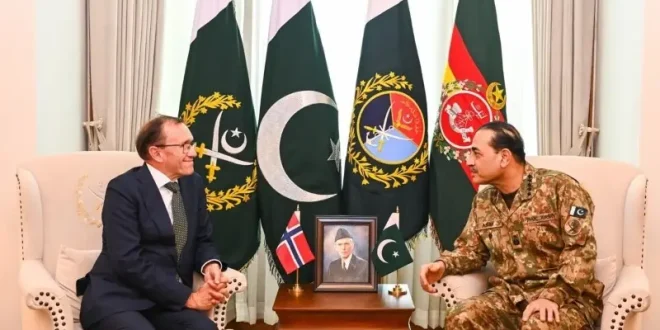
During his visit, Foreign Minister Eide engaged in extensive discussions with Pakistan’s Deputy Prime Minister and Foreign Minister Ishaq Dar, as well as with Chief of Defence Forces and Chief of Army Staff Field Marshal Asim Munir. The core message emanating from these meetings was a mutual resolve to strengthen bilateral ties and expand cooperation. Key areas identified for enhanced engagement included defence and security, trade and investment, education, climate change, information technology, and maritime affairs.
A notable highlight was Norway’s explicit appreciation for Pakistan’s mediatory role in the ongoing “US-Iran conflict,” with Eide commending Islamabad’s efforts as a “service to the world.” He particularly acknowledged Pakistan’s offer to host and facilitate talks between the involved parties. Furthermore, Eide lauded the Pakistan Armed Forces for their professional contributions to regional peace and stability, signaling a potential for deeper collaboration in defence matters.
Both nations also emphasized the importance of international law and the principle of free passage in vital sea lanes, especially in the context of the Strait of Hormuz – a crucial point for Norway, a prominent shipping nation. Discussions extended to regional concerns such as Kashmir and Afghanistan, and Eide expressed interest in Pakistan’s recently signed defence pact with Turkiye and Saudi Arabia.
Economically, both sides acknowledged that current trade volumes fall below their true potential, agreeing to implement measures to boost commercial ties. Pakistan highlighted investment opportunities, citing a joint venture between Norwegian company Yara International and Fauji Fertiliser as a positive precedent. The significant growth in Pakistan’s IT exports to Norway over the past two years was also celebrated. On climate change, the signing of an MoU under Article 6 of the Paris Agreement underscored a shared commitment to environmental action, a pressing concern for climate-vulnerable Pakistan.
Background: A Nordic Bridge to South Asia
To fully grasp the significance of this visit, it’s essential to understand the broader context of Pakistan-Norway relations and their respective foreign policy priorities. Norway, a relatively small European nation, has carved out a unique and influential role on the global stage. Renowned for its diplomatic prowess and commitment to international law, Norway has a long history of engagement in peace processes, notably the Oslo Accords. As a major shipping nation, global maritime security and stability are paramount to its economic interests. Furthermore, Norway hosts a sizeable and well-integrated Pakistani diaspora, which serves as a vital cultural and economic bridge between the two countries, often influencing policy and fostering people-to-people connections.
For Pakistan, a nation grappling with complex geopolitical dynamics and persistent economic challenges, diversifying its foreign policy partnerships is a strategic imperative. Located at the crossroads of South Asia, Central Asia, and the Middle East, Pakistan’s geostrategic position lends it significant regional influence. However, it also places Pakistan at the forefront of various conflicts and security challenges. In recent years, Pakistan has actively pursued a policy of “economic diplomacy,” seeking to leverage its strategic location for trade, investment, and regional connectivity, while also emphasizing its role as a responsible international actor committed to peace and conflict resolution. This engagement with a Western nation like Norway, known for its soft power and principled foreign policy, aligns perfectly with Pakistan’s aspirations for broader global engagement and the projection of a moderate, peace-seeking image.
The fact that this is the first visit by a Norwegian Foreign Minister in a decade, following other recent high-level contacts, signals a deliberate and renewed focus by both nations on elevating their relationship. It suggests a recognition of evolving global priorities and the mutual benefits that a strengthened partnership can offer.
Impact on Pakistan: Navigating a Complex Global Landscape
The outcomes of FM Eide’s visit carry significant implications for Pakistan across several dimensions:
- Enhanced Diplomatic Standing: Norway’s unequivocal praise for Pakistan’s mediation efforts in the US-Iran conflict provides a powerful endorsement of Pakistan’s diplomatic capabilities. In a volatile region, being recognized as a credible peacemaker and facilitator elevates Pakistan’s international stature and can open doors for similar roles in future conflicts. Norway’s readiness to assist these peace efforts further solidifies this position.
- Economic Diversification and Growth: The commitment to boosting trade and investment, coupled with concrete examples like the Yara International joint venture and the growth in IT exports, offers tangible pathways for Pakistan’s economic revitalization. Attracting Norwegian investment, especially in high-tech and energy sectors where Norway excels, can contribute to job creation, technology transfer, and overall economic stability. The emphasis on maritime cooperation, particularly in ship recycling, highlights a niche area where Pakistan can leverage its geographical advantage.
- Climate Resilience and Sustainable Development: With Pakistan being highly vulnerable to climate change impacts, the MoU under the Paris Agreement Article 6 is a critical step. It paves the way for collaborative projects, knowledge sharing, and potentially access to Norwegian expertise and climate finance, which are vital for building climate resilience and transitioning to a greener economy.
- Strengthened Defence and Security Dialogue: While details remain limited, the agreement to expand engagement in defence and security suggests opportunities for intelligence sharing, joint training, and coordination on regional security challenges. This can contribute to Pakistan’s efforts to enhance its defence capabilities and promote stability in its neighborhood.
- Leveraging Diaspora and People-to-People Ties: The recognition of the Pakistani diaspora’s role in Norway and discussions on legal pathways for skilled manpower are crucial. This can lead to increased remittances, cultural exchange, and a mutually beneficial flow of talent, addressing Pakistan’s employment challenges while contributing to Norway’s workforce needs.
- International Advocacy for Key Issues: The opportunity to brief a senior Norwegian diplomat on issues like Kashmir and the Indus Waters Treaty (and India’s alleged “weaponisation of water”) allows Pakistan to garner international attention and support for its perspectives on these critical regional disputes.
Analysis: Beyond Bilateral Handshakes – A Multifaceted Engagement
The Pakistan-Norway dialogue signals more than just a renewed friendship; it represents a strategic alignment rooted in shared principles and pragmatic interests. Both nations underscored their commitment to multilateralism, the UN Charter, respect for sovereignty, and peaceful dispute resolution – a foundation that allows for robust cooperation even amidst differing regional priorities.
Norway’s motivations are clear: as a maritime powerhouse, stability in global shipping lanes, particularly critical chokepoints like the Strait of Hormuz, is non-negotiable. Pakistan, with its strategic location and active diplomatic engagement in the Middle East, becomes a crucial partner in securing these interests. Furthermore, Norway’s reputation as a peace broker aligns with its interest in supporting Pakistan’s mediation efforts, which helps de-escalate regional tensions that could have global economic and security repercussions.
For Pakistan, this visit is a testament to its ongoing efforts to project itself as a responsible, proactive member of the international community. In a global environment marked by geopolitical shifts and economic uncertainties, forging strong, diversified partnerships is essential. Engaging with a principled nation like Norway offers Pakistan not only economic benefits but also diplomatic validation and a platform to articulate its concerns on global and regional issues. The nuanced praise from Eide regarding the “US-Israel attack on Iran” — as opposed to the more common “US-Iran conflict” — is particularly noteworthy. This specific phrasing by a Western diplomat implicitly acknowledges a broader perspective on the conflict’s origins and potentially validates Pakistan’s neutral and mediatory stance in a way that resonates with international law.
While the potential for collaboration is vast, converting these discussions and MoUs into tangible, sustainable projects will require sustained commitment and follow-through from both sides. The current “below potential” trade figures highlight the work ahead. However, the existing success stories, such as the IT sector growth and the Yara International investment, provide a strong precedent for future endeavors. The commitment to regular bilateral political consultations (BPC) is a positive sign that this momentum is intended to be maintained.
In essence, this visit has laid the groundwork for a multifaceted partnership, where Pakistan and Norway can collectively address issues ranging from regional conflicts and maritime security to economic development and the existential threat of climate change. It underscores a shared vision for a stable, rules-based international order, with both nations leveraging their unique strengths for mutual prosperity and global peace.