You are here: Home » 2012 » February (page 4)

Monthly Archives: February 2012

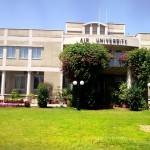
Air University Islamabad
Air University, Islamabad

Introduction: Air University was founded in the year 2002. It has been federally chartered as an autonomous degree awarding university. The main campus is in Islamabad, while another campus is situated in Multan. The university was set up by the Pakistan Air Force. It is affiliated and recognized by the HEC and PEC (Pakistan Engineering Council). The main fields of ...Read More »

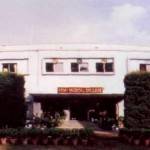
Army Medical College

AMC 3

History It was resolved by the Government of Pakistan to set up the Army Medical College in 1976 and classes for MBBS started in 1977. It was established as a residential institution. The college is affiliated with the National University of Sciences and Technology (NUST) since 1998 although in the beginning the affiliation was with Quaid-e-Azam University. The program for dental ...Read More »

Sawar Muhammad Hussain Shaheed

Sawar-Muhammad-Hussain

Sawar Muhammad Hussain Shaheed was born in Gujar Khan (District of Punjab Province of Pakistan) in Dhok Pir Bakhsh village (now renamed after him to commemorate) on June 18th, 1949. On September 3rd, 1966 at a very young age He joined one of the best armed forces of the world e.g. Pakistan Army as a Driver. Though he was a driver but had extreme passion for being ...Read More »

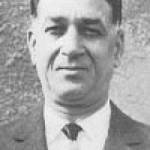
Abdul Hafeez Kardar

Abdul_Hafeez_Kardar_-_Portrait

A brief account on the life and career of Abdul Hafeez Kardar; the first man to lead the Pakistani cricket team to glory. From where he began and how he went on to getting his name immortalized in the team’s history. In 1925 Lahore, Punjab gave birth to an individual who became a part of the three legendary players who ...Read More »

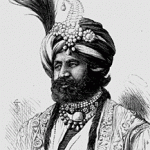
Raja Dahar (661-712 AD)

raja-dahar

Raja Dahar is the person standing on the verge of civilizations in the history of Indo-Pakistan. It was he who brought about a change of not only rule, but a monarch too. Being the despotic King of Sindh, he canopied the pirates of Sindh while being vindictive towards his subjects. Shooders/ Antyajas, (the lowest considered strata of Hindus) and the ...Read More »

The Successors of Mahmud Ghaznavi

ghazni2

The Ghaznavid Dynasty which lasted for 175 years on Indo-Pakistan, left irremovable imprints on the history as it provided a milestone of a separate Muslim state in the years to come.  Eleventh century saw the prime of the Muslim rule when Mahmud Ghaznavi dominated over northern areas of Pakistan defeating Jai Pal and Anand Pal, his son. Multan and Sindh, ...Read More »

Celebrities in the age of Ghaznavids

Ghaznavid_Soldiers01

Ghaznavids fostered a host of personalities from diverse domains who won everlasting fame for themselves and the Ghaznavids. Among such icons, people from art and literature, history, and mysticism are remarkable. The sun of Islam rose in the area due to the religious scholars and saints who came to India from Ghazna and other regions of the world. It would ...Read More »

Sultan Shahab-ud-din Ghauri

shahab_uddin_ghauri

Moiz-ud-Din Mohammad bin Sam (Shahab-ud-Din Ghauri) is rightly called the true founder of the Muslim empire in India as it was he who compressed the political muscle of the Rajputs and laid the foundations of a strong Muslim India. Ghaur is the name of a Turk tribe in the White Mountain Range in the north and east of Ghazna. In ...Read More »

Literary Stars of Mehmud Ghaznavi

mehmood-ghaznavi-somnath_mandir

Mehmud Ghaznavi, the founder of Ghaznavid rule in India nurtured a bunch of writers, poets, and chroniclers around him which showed his keen interest into knowledge and wisdom. They were not only the “Qasida go” (praising the king), but they also excelled in Hadith, Islamic Jurisprudence, history, mathematics, geography, physics, and chemistry. The boundaries of the fame of his scholars ...Read More »

Qutub-ud-din Aibak – Slave Dynasty (1206-1290 AD)

QutubUdDin_1

Mohammad of Ghaur died in 1206 AD leaving no heir but he was succeeded by a horde of capable generals who carried the heavy responsibilities of the empire left by him. These generals included Taj-ud-Din Yalduz, Mohammad bin Bakhtiyar Khilji, Nasir-ud-Din Qabacha, and Qutb-ud-Din Aibak who took the hold of the empires of Ghazni, Bengal, Multan, and Delhi respectively. Qutb-ud-Din ...Read More »

Scroll To Top