Dost Pakistan Journeys Tours and safaris in the North & South Pakistsn
Related Articles



Pakistan’s Unified Front: Shehbaz Sharif Declares ‘Mutual Decision’ to Eradicate Terrorism Amid Balochistan Attacks
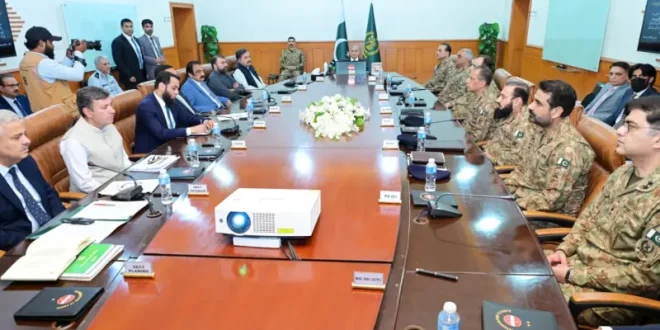
In the wake of a series of deadly terrorist attacks in Balochistan, Prime Minister Shehbaz Sharif has declared a “mutual and singular decision” by Pakistan’s civil and military leadership to definitively end terrorism. This strong message, delivered from Quetta alongside Chief of Defence Forces and Chief of the Army Staff Field Marshal Asim Munir, signals a renewed and unified national resolve to confront the escalating threat. But what does this declaration truly signify for Pakistan’s long-standing battle against militancy, and what are the complex layers beneath this resolute stance?
A Resolute Stance Against Terror in Balochistan
The Prime Minister’s unequivocal statement comes after a particularly brutal four-day period in Balochistan, which saw significant casualties among security personnel and civilians, and the neutralization of 54 terrorists in retaliatory operations. Addressing the Provincial Apex Committee meeting on the National Action Plan (NAP), PM Shehbaz vowed to continue the war “until the last fasaadi (vicious) terrorist in Pakistan is eliminated.”
Significantly, the premier, echoing recent military statements, squarely pointed fingers at external actors, specifically accusing India of providing financial and material support to “evil” elements operating from Afghanistan. He also referenced “khariji hands” and the “Fitna Al Khawarij” (FAK), a term used by the government to describe the banned Tehreek-i-Taliban Pakistan (TTP) and its affiliates. These groups, he contended, aim to undermine Pakistan’s global standing and internal stability.
Background: Pakistan’s Enduring Struggle and Balochistan’s Volatility
Balochistan: A Complex Geopolitical Chessboard
Balochistan, Pakistan’s largest province by area, is a region of immense strategic importance, rich in natural resources and home to the Gwadar Port, a cornerstone of the China-Pakistan Economic Corridor (CPEC). However, it has also been a hotbed of ethno-nationalist insurgencies and religiously motivated extremism for decades. The province faces a unique cocktail of challenges: deep-seated grievances over resource distribution, underdevelopment, and a volatile security situation exacerbated by cross-border movements and alleged external interference. These factors create fertile ground for various militant groups, including Baloch separatists and religiously-motivated terrorist organizations like the TTP, to operate and destabilize the region.
The Resurgence of TTP and the National Action Plan
The TTP, designated as a global terrorist organization, has experienced a dangerous resurgence following the Taliban’s takeover in Afghanistan in August 2021. Operating from alleged sanctuaries across the border, the TTP has intensified its attacks on Pakistani security forces and civilians, particularly in Khyber Pakhtunkhwa and Balochistan. This resurgence has placed immense pressure on Pakistan’s National Action Plan (NAP), formulated in 2014 after the horrific Peshawar Army Public School attack. The NAP was designed as a comprehensive strategy encompassing military operations, counter-extremism measures, and legal reforms. While it achieved initial successes, its implementation has faced challenges, particularly concerning sustained political will, judicial reforms, and effectively addressing the ideological roots of extremism.
Civil-Military Dynamics and External Accusations
Pakistan’s history is marked by a complex interplay between its civilian government and powerful military establishment, particularly on matters of national security. A “mutual and singular decision” on counter-terrorism is significant, indicating a unified strategic vision and a departure from any perceived past divergences. This unity is crucial for any effective national response. Concurrently, Pakistan’s long-standing accusations against India of fomenting instability, especially in Balochistan, and against Afghanistan for not curbing TTP activities on its soil, add a complex regional dimension to its internal security challenges. These accusations often escalate diplomatic tensions and complicate cross-border counter-terrorism cooperation.
Impact on Pakistan: Multifaceted Consequences
The escalating wave of terrorism, particularly in strategic regions like Balochistan, carries profound implications for Pakistan:
- Human Cost and Security Strain: The most tragic impact is the loss of innocent lives and security personnel, which places immense strain on law enforcement agencies and morale.
- Economic Setbacks: Instability directly impacts economic development, scares away foreign investment, and disrupts critical projects like CPEC, vital for Pakistan’s economic recovery.
- Regional Relations: Heightened cross-border attacks strain Pakistan’s already fragile relations with Afghanistan and exacerbate long-standing animosities with India, creating a more volatile regional environment.
- Erosion of Trust: Persistent insecurity can erode public trust in the state’s ability to protect its citizens and maintain law and order.
Analysis: Beyond the Rhetoric – A Critical Look at the Path Ahead
The “mutual and singular decision” articulated by Prime Minister Shehbaz Sharif is a powerful statement of intent. It underscores a crucial consensus between Pakistan’s civil and military leadership, suggesting a unified and robust response. However, the path to eradicating terrorism is fraught with challenges, requiring more than just military operations.
The Significance of Unified Leadership
This declaration of unity is perhaps the most critical takeaway. For too long, perceived or actual divergences in strategy or commitment between civilian and military wings on national security have hampered effective policy implementation. A truly “singular decision” provides the necessary political backing and operational clarity for security forces. It is essential that this unity translates into sustained, coherent action, with resources effectively allocated and intelligence sharing streamlined across all government tiers.
Addressing External Dimensions and Regional Instability
Pakistan’s accusations against India and the alleged role of elements in Afghanistan are not new. While these claims underscore the complex regional security matrix, the primary responsibility for internal security rests with Pakistan. Effectively sealing porous borders, enhancing intelligence-based operations, and engaging in robust diplomatic efforts with Afghanistan to ensure TTP is not allowed safe haven become paramount. The Afghan Taliban’s continued failure to address Pakistan’s concerns regarding the TTP’s presence poses a significant impediment to regional stability and an enduring challenge for Pakistan’s counter-terrorism strategy.
The Feasibility of “Elimination” and a Holistic Approach
The vow to “eliminate” terrorism is ambitious. While military force is a necessary component, history shows that purely kinetic approaches often fall short of achieving lasting peace. A truly effective strategy must be multi-pronged, encompassing:
- Sustained Military Pressure: Continuous intelligence-based operations against terrorist networks.
- Counter-Extremism and Deradicalization: Tackling the ideological roots of extremism through educational reforms, media narratives, and community engagement.
- Socio-Economic Development: Addressing grievances and lack of opportunities, particularly in marginalized areas like Balochistan, to deny terrorists fertile ground for recruitment.
- Judicial and Governance Reforms: Strengthening the criminal justice system to ensure timely prosecution of terrorists and improving governance to enhance public service delivery and trust.
For Balochistan specifically, addressing local grievances, fostering inclusive development, and ensuring political participation are as crucial as security operations. The “enemy,” as PM Shehbaz stated, seeks to create “difficulties” for the country, and these difficulties often stem from a blend of external support, internal vulnerabilities, and socio-economic discontent.
Conclusion
Prime Minister Shehbaz Sharif’s declaration marks a critical moment for Pakistan’s counter-terrorism efforts. The unified stance of the civil and military leadership offers a glimmer of hope for a more coherent and effective response to the escalating threat. However, the true test will lie in the sustained implementation of a comprehensive strategy that moves beyond mere military operations. Pakistan must tackle not only the immediate threat of terrorism but also its underlying causes, foster regional cooperation, and rebuild public trust through transparent governance and equitable development. Only then can the vision of Pakistan as a “cradle of progress and prosperity” truly materialize, overcoming the shadows of militancy and ensuring lasting peace.