Dost Pakistan Journeys Tours and safaris in the North & South Pakistsn
Related Articles
“`html
The Fault Lines of Federalism: Sanaullah vs. Naqvi on New Provinces
The News: A Political Fray Over Provincial Redrawing
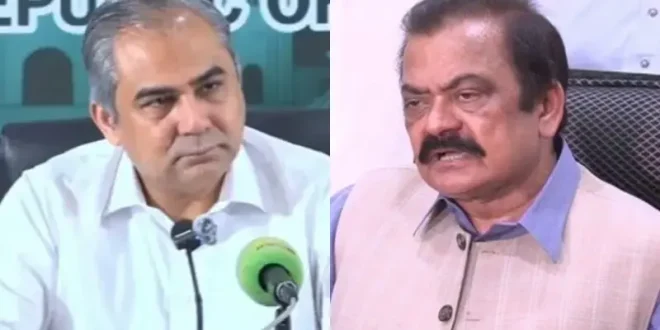
A heated political exchange has erupted in Pakistan, with PML-N Senator and Prime Minister’s political adviser, Rana Sanaullah, sharply criticizing Interior Minister Mohsin Naqvi. Sanaullah contends that Naqvi significantly “complicated” the sensitive debate surrounding the creation of new provinces in Pakistan by initiating it at an “irrelevant forum”—the Pakistan Economic Summit in Islamabad back in July. This public spat underscores deep divisions on a matter of fundamental constitutional reform.
Naqvi’s original proposition for new administrative units aimed at “resetting” the governance system had already ignited a political storm. Sanaullah reiterated his stance, emphasizing that the forum was ill-suited for such a pivotal discussion, which has now become “extremely controversial” even before reaching Parliament. The exchange escalated when Naqvi reportedly warned Sanaullah, implying severe repercussions if he were to comment on the former. Sanaullah, however, dismissed this, asserting his right to express opinions as a political worker and colleague, questioning Naqvi’s temperament and perceived threats.
Beyond the provincial debate, Sanaullah also chimed into the discussion about Pakistan’s “system collapse,” aligning with PPP Chairman Bilawal Bhutto-Zardari’s view that the system was “made to collapse,” rather than failing on its own. He attributed this to a collective failure involving politicians, the establishment, judiciary, and bureaucracy. Sanaullah further highlighted Naqvi’s alleged missteps in handling the issue, including not taking the Pakistan Peoples Party (PPP) on board, despite President Asif Ali Zardari reportedly considering Naqvi as a “son.”
Background: Pakistan’s Enduring Provincial Dilemma
The demand for new administrative units in Pakistan is not novel; it’s a recurring theme rooted in issues of governance, equitable resource distribution, and representation. Larger provinces like Punjab and Sindh often face demands for administrative fragmentation to better serve diverse populations and address regional disparities. For instance, there have long been calls for a South Punjab province to address the perceived neglect of its unique cultural and economic needs. Similarly, parts of Sindh have witnessed discussions around carving out new units.
Interior Minister Mohsin Naqvi, a former caretaker Chief Minister of Punjab, brought this issue to the forefront in July at an economic summit. His rationale was to “reset” the existing governance system, suggesting that smaller, more manageable provinces could lead to improved administration and potentially economic efficiency. However, launching such a constitutionally significant proposal at an economic forum, rather than through established political channels or inter-party dialogue, was immediately met with skepticism and criticism.
Rana Sanaullah, a prominent leader of the Pakistan Muslim League-Nawaz (PML-N) and former Interior Minister, represents a party that has historically shown openness to the idea of new provinces, particularly South Punjab. However, the PML-N’s consistent position has been that any such reform requires broad political consensus and a structured parliamentary approach. The current political landscape in Pakistan, characterized by a transitional caretaker government and upcoming general elections, makes any contentious debate even more fraught. The Pakistan Peoples Party (PPP), a key political player, particularly strong in Sindh, often views any attempt to alter provincial boundaries with caution, wary of moves that could undermine provincial autonomy or shift demographic balances. This makes their buy-in absolutely critical for any such constitutional amendment.
Impact on Pakistan: Further Political Polarization and Governance Hurdles
The public spat between Sanaullah and Naqvi, and the broader debate on new provinces, carries significant implications for Pakistan’s already fragile political stability and governance:
- Heightened Political Polarization: Introducing a divisive constitutional debate without prior groundwork further exacerbates existing political tensions. In a country grappling with economic instability and an impending general election, such controversies divert attention from urgent national priorities.
- Constitutional Complexities: Creating new provinces requires amending the Constitution, which demands a two-thirds majority in both houses of Parliament. Achieving such a consensus is a monumental task, especially given the current fractured political environment and the PPP’s strong reservations.
- Distraction from Core Issues: The focus shifts from pressing economic challenges and social reforms to political bickering. Naqvi’s initial justification for new units was economic, yet the debate has rapidly devolved into a political power play.
- Weakening Inter-Party Trust: The public disagreement, particularly Sanaullah’s criticism of Naqvi’s failure to engage the PPP, highlights a lack of crucial inter-party dialogue and trust, which is essential for stable governance and coalition building post-elections.
- Public Disillusionment: The ongoing public arguments among political figures on procedural matters, rather than substantive policy, risks deepening public cynicism towards political institutions and leadership.
Analysis: The Peril of Premature Political Proclamations
Rana Sanaullah’s assertion that Mohsin Naqvi complicated the new provinces debate by speaking at an “irrelevant forum” is strategically astute. An economic summit is designed for policy discussions, investment pitches, and economic analyses—not for launching a constitutional reform that fundamentally alters the federal structure of the nation. Such a proposal demands extensive political groundwork, stakeholder consultations, and parliamentary debate. By bypassing these crucial steps, Naqvi inadvertently turned a potentially constructive discussion into a contentious political issue from its very inception.
The “irrelevant forum” argument speaks to a broader challenge in Pakistan’s governance: the tendency for significant policy shifts or constitutional reforms to be announced without proper political consensus-building. Constitutional amendments, particularly those affecting provincial boundaries, touch upon deep-seated issues of identity, resource control, and political power. Therefore, they require the broadest possible agreement among all major political parties, particularly those representing the affected regions.
Sanaullah’s pointed criticism regarding Naqvi’s failure to engage the PPP, especially considering President Zardari’s reported affinity for Naqvi, reveals a significant political miscalculation. The PPP holds substantial influence in Sindh, and its historical stance on provincial autonomy means any discussion about redrawing provincial maps must involve them from the outset. Without the PPP’s buy-in, any proposal for new provinces, especially those affecting Sindh, is politically dead on arrival. This highlights the vital importance of back-channel diplomacy and coalition-building in Pakistan’s complex political landscape.
Furthermore, Sanaullah’s contribution to the “system collapse” narrative, aligning with Bilawal Bhutto-Zardari’s view that it was “made to collapse,” suggests a shared diagnosis among significant political players regarding the root causes of Pakistan’s institutional challenges. This collective blame apportioned to politicians, the establishment, judiciary, and bureaucracy hints at a growing recognition that systemic issues are not solely attributable to one entity but are a shared failure. This narrative, however, also provides a convenient platform for political maneuvering, allowing different factions to frame the problem in ways that suit their interests.
Ultimately, the Naqvi-Sanaullah exchange serves as a potent reminder of the delicate balance required in Pakistan’s federal system. The idea of creating new administrative units might have merit for improved governance and development, but its execution requires meticulous political strategy, widespread consensus, and adherence to established parliamentary processes. Launching such a debate prematurely, and in an ad hoc manner, only ensures its entanglement in controversy, diverting focus from genuine reform and further eroding trust in the political establishment.
“`