

The Second World War put the British government into predicament because of the victories of Japan over Singapore (February 15, 1942), Rangoon (March 8, 1942) and Andaman (March 23, 1942). The British government found itself endangered and felt the need of the Indian people urgently. But the aggravated different political parties especially the Muslim League and the Congress were at ...Read More »
You are here: Home » Author Archives: SAIMA ASHRAF (page 7)

Gandhi-Jinnah Talks 1944
On July 17, 1944, Gandhi wrote a letter to Jinnah and requested to meet him. Jinnah, with the approval of the Muslim League, agreed to meet Gandhi in Bombay. The Talks lasted from September 19, 1944 to September 24, 1944. Jinnah presented the stance of the Muslim League while Gandhi told him that he had called upon him in a ...Read More »
Wavell Plan 1945
The British government envisaged a plan to confer some more liberties to the Indians and the Lord Wavell, the Viceroy of India convened a meeting of all major political parties of India. On 25th of June 1945, the plan proposed: The government will reconstitute the Viceroy’s Executive Council consisting of wholly the Indians except that of Viceroy and the Commander-in-Chief. Dominion ...Read More »
June 3rd Plan 1947
The British government finally decided to divide the country into two separates states after all the efforts of keeping Hindus and Muslims together in a single state went in vain. Lord Ismay, the Chief of Staff of Lord Mountbatten, was asked to frame the partition plan of India. Though the plan was deliberately kept secret from the Indians yet Nehru ...Read More »
Indian War of Independence 1857
The “Mutiny” as it was called by the British was, in fact, the first War of Independence against the British government in 1857. Starting from Meerut on May 10, 1857 on the issue of the cartridges made up of fat with the meat of pigs (and which needed to take into mouth before operating it) it broke out in the ...Read More »
The Magna Carta of Indian Liberty (1858)
The East India Company faced a countless isolated revolts and a remarkable rebellion in 1857 which proved to be the most jerking for the Company. The Sepoy Mutiny as it was called by the East India Company was direct upshot of the guns given to the Indian soldiers recruited by the Company. The grease on these guns was made of ...Read More »
Indian Councils Act 1861
The unsuccessful war of independence 1857 left the Great Britain with many questions and it issued a proclamation in 1858 bringing about remarkable changes in the Government at local level. The Indian Councils Act 1861 added a position of the jurist to the Viceroy’s Executive Council. Also it introduced some reforms in the legislation. The main features of Act were ...Read More »

Scientific Society by Sir Syed Ahmad Khan 1864
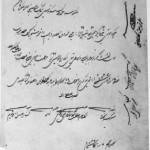
Document signed by Sir Syed certifying that the land granted by the Lt. Governor of the Province for constructing the building of the Scientific Society has been occupied by him (dated March 7, 1865). Ghazipur became the place of attention in Indo-Pak history when Sir Syed Ahmad Khan established a Scientific Society in it in 1864 with the purpose of translating ...Read More »

Dar ul Uloom Deoband 1866

The War of Independence 1857 left the Muslims on the mercy of the British who treated them ruthlessly considering them the wholly and solely responsible for the unsuccessful War. The doors of education were closed to the Muslims and the employments were given to the other communities leaving the Muslims. According to William Hunter, who had been sent by the ...Read More »

Urdu-Hindi Controversy 1867
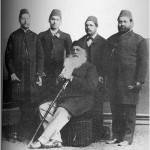
Urdu-Hindi controversy 1867 unfolded many unsaid stories for the Muslims of India who were expecting to live in amity with the Hindus and other communities in the long run. Even the Muslims with the moderate views were convinced at last that that Hindus and Muslims could not be friends with each other as they have different religions, rituals, culture and ...Read More »


