August 10, 2011
on Pagri – Turban
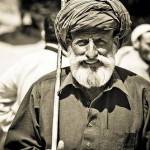
Pagri is is the term for a turban within sub-continent. The word Pagri is specifically refers to a headdress that is worn by men and needs to be manually tied. In many areas of Pakistan, especially in Punjab, Pagri is also called as Pag. Though, it is just a long plain unstitched cloth, but it is sign of respect and ...Read More »
July 28, 2011
on Huqqa
Hooqah which is also known as water pipe is frequently used since centuries and part of the sub-continent culture. In Pakistan, origins of hooqah are found from western provinces of Indo-Pak and Rajasthan and Gujarat particularly. Hooqah comes in single and multi-stemmed structures for smoking. The major components of hooqah are: Bowl: it is the head of hooqah which contains coal ...Read More »
July 8, 2011
on Dupatta – Our Identity
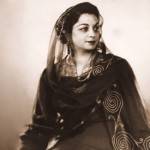
Dopatta is the part of the ladies’ dress in Pakistan and South Asian region where it is worn in different forms with different names.”Chaadar”, “chunri”, “chunni” are the alternates of dopatta. It is the common part of ladies’ outfit all over Pakistan. It is the symbol of female elegance and modesty. Though different styles of wearing dopatta are in vogue ...Read More »
July 7, 2011
on Heer Ranjha – A Folk Tale
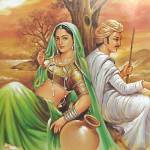
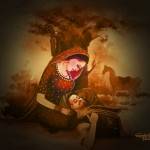
Heer was born in a rich “Sayyal” clan of Jhang, Punjab. Dheedo Ranjha was also a Jat from “Takaht Hazara” a village near Sarghoda city of Pakistan. Famous for playing flutes as compared to his three elder brothers who work in lands he was the favorite for his father among them. Once a quarrel occurred between him and his brothers ...Read More »
July 7, 2011
on Sassi Punnoo – Folk Lore
According to a legend ‘Sassi was the princess daughter of Adam Khan, who was the King of Bhambour (a place situated in sindh province of Pakistan towards 40 miles south of Karachi). Upon Sassi’s birth, astrologers were called upon by King Adam Khan to let him know about the Sassi’s fortune. The astrologers predicted her as bad omen for royal family. ...Read More »
July 7, 2011
on Sohni Mahiwal – A folk story
Sohni a beautiful daughter of a potter was born in Gujrat (currently city of Pakistan situated along the bank of river Chenab) during 18th century. When she grew she started to help her father in pottery making by drawing artistic designs on them for sale. One day she was met Izzat Baig a rich trader from Bukhara (Uzbekistan) who at the ...Read More »
July 7, 2011
on Mirza Sahibaan – A Folk Story
The tale of these two was set up in a kheiwa town of Jhang (Punjab). Sahibaan was not only a very beautiful girl but also the daughter of the chief of village. Mirza was also the son of a noble Wanjhal Khan of Danabad, a town of Faisalabad city of Pakistan was also residing in kheiwa for studying inside a ...Read More »
July 7, 2011
on Henna-Mehndi
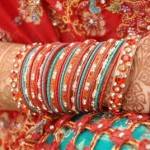
Henna-Mehndi is one of the cultural heritages of Pakistan which is associated with the hedonistic feelings of ladies. It leaves red or dark orange color on the skin after it dries. It is made of mignonette tree which has been used for centuries to dye skin, nails, hair, and wool. Now-a-days it is available in different colors but the traditional henna is ...Read More »
July 1, 2011
on Shalwar Kamiz – Our Dress
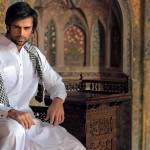
In literal terms a dress is a human body covering or clothing. But in metaphor dress serves more than mere clothing. It is not limited to provide covering and comfort to human body. Shalwar Kamiz – Our Dress It symbolizes the identity of a clan or nation too. It is a hint which can allow anyone to depict the nationality of ...Read More »
July 1, 2011
on Sherwani
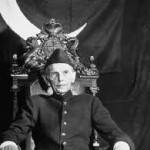
Another traditional dress and the one frequently worn by founder of Pakistan Quaid-e-Azam Muhammad Ali Jinnah is Sherwani. Sherwani: Origins It is coat like with long sleeves and front-middle buttoned all the way down to knees. It is akin to ‘Achkan’ with only difference is of heavier fabric and lining used in it. People wear it over ‘Kurta’ (another traditional ...Read More »