
A spiritual structure built in 17th century situated inside the Lahore Fort is known as Moti Masjid or can say Pearl mosques. It is small but a remarkable architecture of our country made up of white marble its notable construction was built in the ruling period of Shah Jahan the Mughal Emperor and this mosque was among his well-known extension to the Lahore Fort Complex. This noteworthy mosque is sited on the western side of the Lahore Fort and closer to Alamgiri Gate; it can be seen through the main entrance as well.
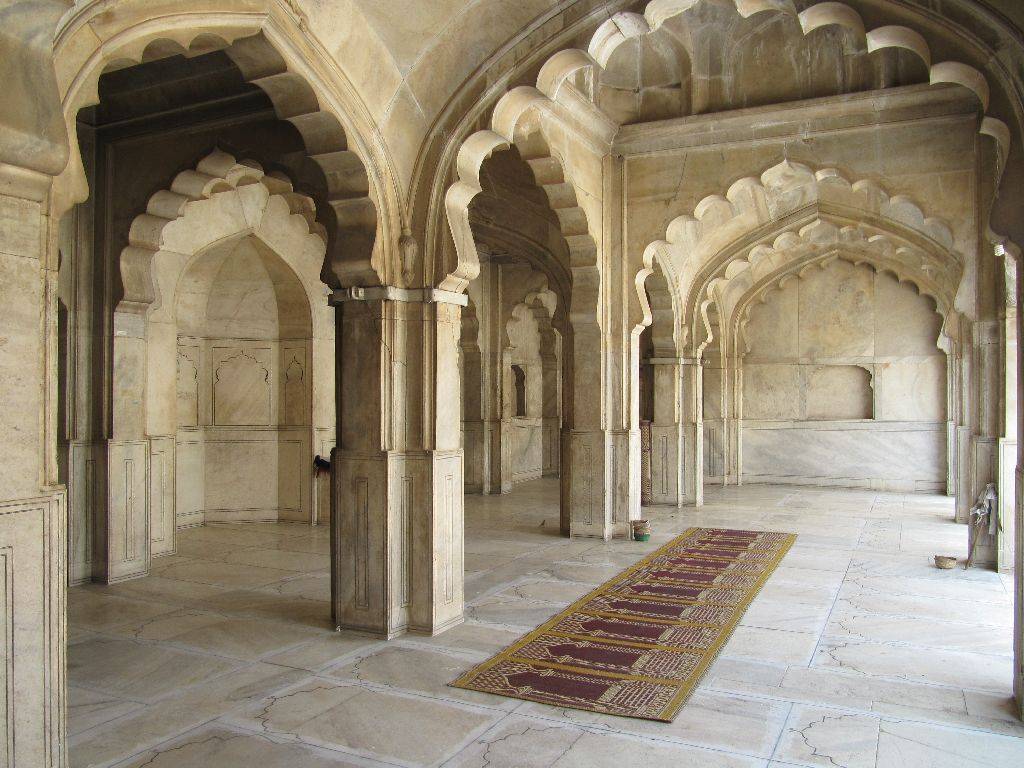
As the word “Moti” is an Urdu word which means “Pearls” in English, which allocates a superficial preciousness to the spiritual formation. The mosque was named by the Mughal Emperors after general names for precious stone. As they also named two other mosques as Mina Masjid and Nagina Masjid these both are found in Agra Fort which were also built by Shah Jahan in 1637.
Soon after the demise of the ruling period of Mughal Emperors, the mosque by force was rehabilitated into a Sikh temple and was then named as Moti Mandir by the Sikh ruler Ranjit Singh with the help of Sikh confederation. Afterward, the building was used for state treasury by Ranjit Singh, but in 1849 Punjab was took over by the British rulers, they concealed valuable gems enfolded in bits of rags which were placed in a velvet purse and these gems were scattered every where in the mosque along with other stock. The building was later invigorated to its previous condition, and the holy vestiges were preserved at the nearby Badshahi Mosque.
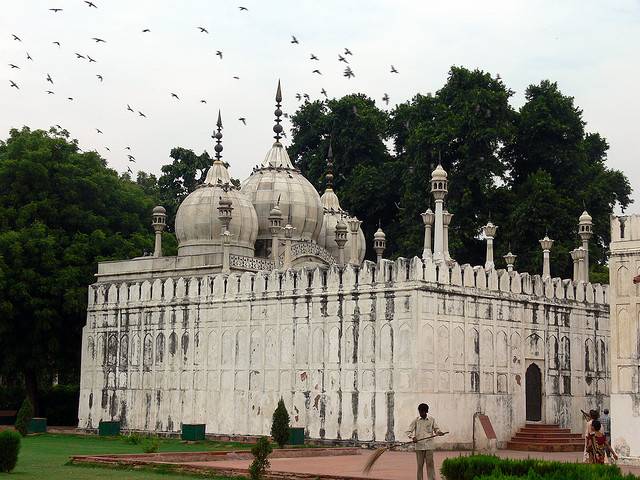
The design of the mosque is very antique. The entire mosque is made up of white marble and these marbles were brought from Makrana. The front elevation of the mosque is composed of cusped semicircle and occupies baluster feature with downy and superior curves. Moti Masjid consists of three superimposed domes, almost two passageways of five bays and a vaguely hoisted central pishtaq or a doorway with a rectangular framework. This five-arched portico differentiates it from other mosques of the similar class with three-arched facades. The interior of the mosque is simple and basic with the exemption of ceilings that have been ornamented and intended in four different orders as two are arcuate and other two are trabeated. This noteworthy mosque is a remarkable architecture of Mughals that one’s eye must capture.


