 Dost Pakistan Journeys Tours and safaris in the North & South Pakistsn
“`html
Pakistan’s Rising Diplomatic Stature: A Deep Dive into the Islamabad MoU and South Asian Peace
Recent statements from former U.S. President Donald Trump have spotlighted Pakistan’s burgeoning role on the global diplomatic stage, particularly concerning the landmark peace deal between the United States and Iran, dubbed the ‘Islamabad MoU’. These revelations, alongside claims of Pakistan’s pivotal role in de-escalating a nuclear standoff between India and Pakistan, paint a picture of Islamabad emerging as a critical bridge-builder in complex geopolitical landscapes.
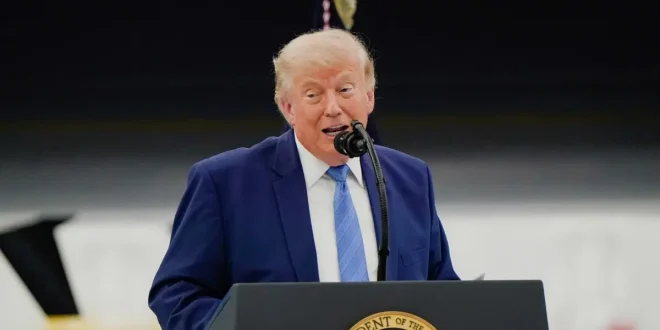
Donald Trump’s remarks on Pakistan’s role in the Iran deal.
The News: A Glimpse into Pakistan’s Diplomatic Ascent
In a candid interview with Axios, former U.S. President Donald Trump lavished praise on Pakistan’s leadership, specifically naming Prime Minister Shehbaz Sharif and Chief of Army Staff Field Marshal Asim Munir. Trump lauded Field Marshal Munir as “great,” a “highly respected general,” a “great fighter,” and even “my favourite,” indicating a strong personal rapport. More significantly, Trump credited Pakistan with instrumental assistance in securing a crucial Memorandum of Understanding (MoU) with Iran, stating, “They really helped us with this deal. They knew the Iranians, they knew the people and they were good.”
This “Islamabad MoU” marks a significant breakthrough, ending protracted hostilities between the U.S. and Iran and potentially reshaping Middle Eastern geopolitics. The agreement, electronically signed by Presidents Trump, Pezeshkian of Iran, and Prime Minister Shehbaz Sharif, highlights Pakistan’s central mediating role.
Beyond the Iran deal, Trump also made extraordinary claims about his intervention in a May 2025 military conflict between nuclear-armed India and Pakistan. He asserted that his efforts prevented a nuclear exchange, stating, “President Trump saved 50 million lives,” a figure he believes was an understatement. He also mentioned a naval blockade against Iran, asserting there were “no limits” to his power.
Background: A Shifting Geopolitical Landscape
To fully grasp the magnitude of these developments, it’s essential to contextualize the historical intricacies of the relationships involved. The U.S.-Iran rivalry has been a defining feature of Middle Eastern politics for decades, marked by sanctions, proxy conflicts, and the contentious JCPOA nuclear deal, from which the U.S. withdrew under the Trump administration. Any resolution between these two nations is a monumental diplomatic feat.
Similarly, India and Pakistan, two nuclear powers, share a deeply complex and often volatile history, characterized by territorial disputes, cross-border tensions, and intermittent military confrontations. Past conflicts, such as the 2019 Balakot incident, underscore the ever-present risk of escalation. International mediation in such flashpoints has always been challenging.
Pakistan’s traditional foreign policy has often walked a tightrope, balancing its strategic alliance with the U.S. with its historical ties to Iran and its immediate neighborhood. Historically, Pakistan has been viewed primarily through the lens of counter-terrorism efforts and its strategic location. However, these new reports suggest a significant expansion of its diplomatic portfolio, moving beyond traditional security concerns to proactive regional peacemaking.
Impact on Pakistan: Diplomatic Gains and Regional Influence
Should these claims be fully substantiated, the implications for Pakistan’s standing on the global stage are profound and overwhelmingly positive:
- Enhanced Diplomatic Credibility: Facilitating a peace deal between the U.S. and Iran, two global heavyweights, would catapult Pakistan into a league of significant diplomatic brokers. The ‘Islamabad MoU’ itself signals a direct acknowledgment of Pakistan’s central role.
- Strengthened U.S.-Pakistan Ties: Trump’s effusive praise for Pakistani leadership suggests a deepened, perhaps personal, bond. This could translate into stronger bilateral relations, potential economic assistance, and renewed strategic partnership, especially if a Trump presidency returns.
- Regional Peacemaker Status: If Pakistan indeed played a role in averting a nuclear war between India and Pakistan, as claimed by Trump, it would solidify its image as a responsible nuclear state committed to regional stability. This would also underscore the critical importance of continuous dialogue channels.
- Economic Opportunities: Peace in the Middle East, particularly improved U.S.-Iran relations, could unlock significant economic benefits for Pakistan. As a neighbor to Iran, Pakistan stands to gain from increased trade, energy cooperation, and regional stability that fosters economic growth and connectivity initiatives.
- Boost to National Morale: Such high-profile diplomatic successes, recognized by a former U.S. President, would undoubtedly boost national morale and confidence in Pakistan’s foreign policy direction and its leadership.
Analysis: Trump’s Rhetoric, Pakistan’s Strategy, and Geopolitical Shifts
Donald Trump’s statements, while characteristic of his often grandiose and self-aggrandizing style, offer intriguing insights into a potential future global order where transactional diplomacy and personal relationships play a dominant role. His declaration of “no limits” to his power, while hyperbole, underlines a foreign policy approach that prioritizes unilateral action and direct intervention.
The alleged “Islamabad MoU” represents a monumental diplomatic shift. If Pakistan successfully bridged the chasm between Washington and Tehran, it demonstrates exceptional diplomatic skill and strategic foresight. This move could redefine regional power dynamics, potentially reducing the appeal of proxy conflicts and opening avenues for broader regional cooperation. It also suggests that Pakistan has leveraged its unique historical and cultural connections with Iran to serve as an honest broker, a role few other nations could effectively play.
Furthermore, Trump’s assertion of mediating the India-Pakistan conflict, preventing a nuclear war and saving “50 million lives,” if true, positions the U.S. (and by extension, Trump) as an indispensable guarantor of South Asian stability. While the specific numbers and “eleven planes” detail would require independent verification, the mere claim underscores the fragility of peace in the region and the critical role of international mediation. For Pakistan, being seen as receptive to such mediation, alongside its active role in the Iran deal, strengthens its narrative as a nation contributing positively to global peace and security.
This new era of Pakistani diplomacy, marked by its proactive engagement in highly sensitive international disputes, reflects a strategic pivot. From being primarily a recipient of aid and a partner in security operations, Pakistan appears to be repositioning itself as a proactive diplomatic facilitator. This approach not only serves its national interests by fostering regional stability and enhancing its international standing but also redefines its role in a multipolar world.
The combination of strong leadership praised by a former U.S. President and concrete diplomatic achievements like the ‘Islamabad MoU’ signifies a crucial juncture for Pakistan. It highlights the potential for smaller or middle powers to exert significant influence through astute diplomacy and strategic positioning, even in the shadow of global superpowers. The coming years will reveal the full extent of this transformation and Pakistan’s sustained role as a key player in shaping regional and global peace.
“`
