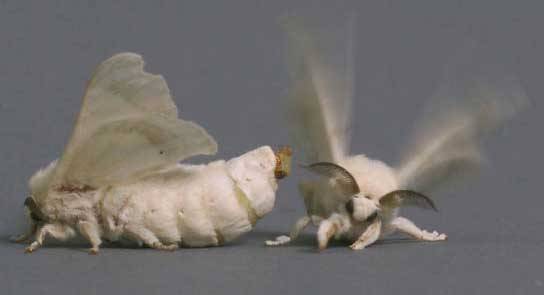
Silk fabric is basically a natural protein fiber; some varieties of Silk can be woven into textiles. The silk in mainly produced from an insect larva in order to form cocoons and protein fiber of silk is mainly collected from fibroin. From the cocoons of the larvae of the mulberry silkworm the best known silk variety is attained. Silk for textile manufacturing is produced generally from the silk of moth caterpillars. From Old English word “sioloc” the word silk has been derived. China, South Asia and Europe are aware of the variety of wild silk produced by caterpillars and even the other varieties produced from mulberry silkworm. Though, the production scale has always been slighter lesser than that of cultivated silks the reason for this is that domestic varieties differ in terms of texture and color and hence less identical and the other most prominent reason for this is that the pupa of the cocoons collected in the wild already emerges before being discovered.

Production of Silk was found as early as 3500 BC and the fabric was first urbanized in ancient China. Leizu (His-Ling-Shih, Lie-Tzu) has been credited for developing silk in China. In China the fabric was formally reserved for the Emperors of China or was just gifted to others but slowly and gradually this Chinese culture spreaded socially and geographically and to many areas of Asia.

Silk is considered as a luxury fabric and became popular in many areas because of its luster and texture. This widely known Silk fabric is produced year around in Thailand by two different types of silkworms which are known as Bombicidae and Saturniidae. In Thailand, women traditionally weave silk on hand looms and passes their skill on to their daughter as the art of weaving in Thailand is considered being a symbol of maturity and eligibility for marriage.

Silk in India has a long history, in Eastern India it is known as “Paat” and in Southern parts of India it is recognized as “Pattu” and in Hindi people are familiar with the name “Resham”. Sericin and fibroin are the two main properties of silk when extracted from silkworm. Serecin is the sticky material surrounding it where as fibroin is the structural centre of silk. This fabric is very comfortable to wear in warm weather as its low conductivity keeps warm air close to the skin.
Silk fabric is used in various clothing style such as blouses, shirts, ties, formal clothes, pajamas, robes, dress suit and even high fashion clothing is done fabulously through this fabric. For the production of Silk textiles China and Japan have gained highest importance in Asia. Pakistan has also developed Silk textile in Asia to fulfill their local requirements of natural silk by importing it through other regions. Italy, China, America and Japan are the important producers and exporters of natural silk while Germany, Russia, Brazil, Argentina, Britain, France and Australia are the importers.