Dost Pakistan Journeys Tours and safaris in the North & South Pakistsn
Related Articles
“`html
Pakistan-Portugal Diplomatic Breakthrough: A New Era for GSP+ and Economic Ties
The News: A Renewed Partnership Takes Centre Stage
A recent high-level visit by Portuguese Minister of State and Foreign Affairs, Paulo Rangel, to Islamabad has marked a significant moment in Pakistan-Portugal relations. During his two-day trip, Rangel unequivocally expressed Portugal’s “full support” for Pakistan’s bid to renew its European Union (EU) GSP+ status, a critical trade incentive set to expire in 2027. This diplomatic engagement saw extensive discussions with Pakistan’s Deputy Prime Minister and Foreign Minister Ishaq Dar, President Asif Ali Zardari, and Prime Minister Shehbaz Sharif, underscoring a mutual desire to deepen bilateral cooperation.
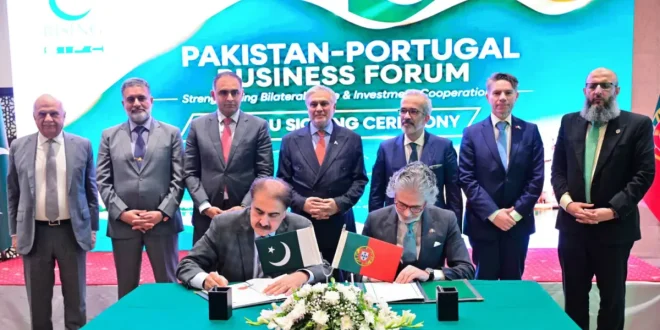
Beyond the pivotal GSP+ discussion, the visit laid the groundwork for enhanced economic and political collaboration. Key outcomes included proposals for a Joint Ministerial Commission (JMC), the establishment of a Pakistan-Portugal Business Forum, and the signing of an MoU on investment protection. These initiatives aim to boost trade, attract Portuguese investment into Pakistan’s diverse sectors like renewable energy, agriculture, IT, and textiles, and foster greater people-to-people connections through parliamentary exchanges, cultural programmes, and expanded labour mobility.
Notably, Rangel also lauded Pakistan’s critical role as a “peace-building actor at a global level,” specifically acknowledging its mediation efforts in the US-Iran conflict and its contributions to Middle East diplomacy. This recognition highlights a broader, strategic dimension to the rekindled relationship, moving beyond purely economic considerations.
Background: Understanding the Stakes of GSP+ and Bilateral History
The Generalised Scheme of Preferences Plus (GSP+) is a special trade arrangement offered by the European Union to vulnerable developing countries. Its core objective is to promote sustainable development and good governance by granting zero import duties on two-thirds of their export tariff lines. In return, beneficiary countries like Pakistan commit to ratifying and effectively implementing 32 international conventions covering human rights, labour rights, environmental protection, and good governance.
Pakistan initially received GSP+ status in 2014, a designation that proved transformative for its export-oriented industries, particularly textiles. The concessional tariffs led to a remarkable 108 per cent increase in Pakistani textile exports to the EU, significantly boosting the country’s foreign exchange earnings and employment. While the European Parliament extended the status for all beneficiaries, including Pakistan, until 2027, the impending renewal process necessitates a thorough review by an EU GSP+ monitoring mission, which will scrutinise Pakistan’s adherence to the aforementioned conventions.
This visit by the Portuguese delegation, the first in 19 years, signifies a deliberate effort to revitalize a dormant relationship. Portugal, as a prominent member of the European Union, holds a valuable voice within the bloc. Its explicit support for Pakistan’s GSP+ renewal is therefore more than symbolic; it offers crucial diplomatic leverage within EU decision-making processes. Furthermore, the acknowledgement of Pakistan’s geopolitical contributions, such as its mediation in regional conflicts and its commitment to multilateralism, signals a deeper appreciation of Pakistan’s strategic importance on the international stage.
Impact on Pakistan: Economic Lifeline and Diplomatic Vindication
For Pakistan, the renewed diplomatic push from Portugal carries multifaceted importance:
- Economic Stability and Growth: The potential renewal of GSP+ status is an economic imperative. It ensures that Pakistan’s exports, especially textiles, remain competitive in the crucial European market. Losing this preferential access would severely impact export volumes, employment, and the country’s already strained foreign exchange reserves. The proposed Joint Ministerial Commission and Business Forum offer concrete pathways to diversify Pakistan’s exports beyond traditional goods and attract much-needed foreign direct investment, particularly in emerging sectors like renewable energy and IT, which align with global trends.
- Enhanced Trade and Investment Avenues: The discussions highlighted opportunities in agriculture, processed foods, pharmaceuticals, engineering goods, and IT services. The MoU on investment protection signals a commitment to creating a more favourable environment for Portuguese investors, which could lead to technology transfer and job creation.
- Diplomatic Strengthening and Global Standing: Portugal’s endorsement within the EU strengthens Pakistan’s position on a broader European front. The praise for Pakistan’s “peace-building” efforts, particularly in a volatile region, provides a significant diplomatic boost, enhancing its image as a responsible and constructive international actor. This recognition is invaluable for Pakistan’s soft power diplomacy and its aspirations for greater global influence, including potentially in the UN Security Council.
- People-to-People Connections: The large and well-integrated Pakistani diaspora in Portugal, coupled with academic and cultural exchange proposals, builds a strong foundation for long-term bilateral ties. Initiatives like the FC Porto and Sialkot Football Academy partnership exemplify how cultural diplomacy can foster goodwill and understanding.
However, the continuation of GSP+ status is not guaranteed. Pakistan must demonstrate sustained and verifiable progress in upholding the 32 international conventions, an area that requires continuous effort and vigilance. The upcoming monitoring mission will be a critical test.
Analysis: A Strategic Re-engagement with Mutual Benefits
The Portuguese Foreign Minister’s visit to Pakistan transcends a mere diplomatic courtesy; it signals a strategic re-engagement driven by mutual interests. For Pakistan, it’s a critical moment to shore up international support for its economic lifelines and to project an image of stability and proactive diplomacy amidst domestic economic challenges. The explicit backing for GSP+ renewal from an EU member state is a significant win, providing momentum as Pakistan prepares for the crucial monitoring mission. It underscores Pakistan’s enduring relevance as a trading partner for the EU and highlights the tangible benefits both sides derive from this preferential scheme.
For Portugal and the broader EU, engaging Pakistan holds growing importance. Rangel’s recognition of Pakistan as an “important economic player” within the EU context, coupled with praise for its role in global peace and multilateralism, indicates a shift towards viewing Pakistan not just as a recipient of trade preferences but as a valuable strategic partner. As Portugal prepares to enter the UN Security Council, Pakistan’s strong adherence to multilateralism and its experience in complex regional diplomacy make it a valuable interlocutor. The desire to enhance economic ties, particularly in diversified sectors, also points to Europe’s broader strategy of seeking new markets and strengthening supply chains beyond traditional partners.
The comprehensive agenda, spanning trade, investment, culture, education, and security discussions, suggests a holistic approach to building a robust, forward-looking relationship. The long hiatus in high-level visits implies that this re-engagement is a deliberate and concerted effort, aiming to overcome past dormancy. However, the true measure of this visit’s success will lie in the sustained political will and concrete follow-through on the proposed mechanisms, such as the JMC and regular business forums. Pakistan’s continued commitment to the GSP+ conventions, alongside its efforts to improve the ease of doing business, will be paramount in translating these diplomatic overtures into tangible and lasting benefits for both nations.
In essence, the visit marks a promising new chapter, transforming a historically understated relationship into one poised for strategic growth, driven by shared economic objectives and a mutual recognition of geopolitical significance.
“`