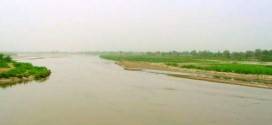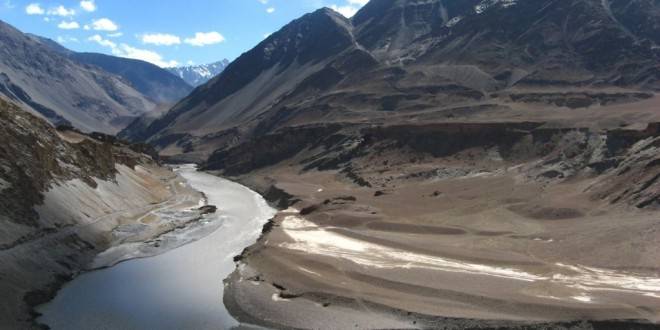
One of the longest rivers in the world is known as River Indus, which is flowing in China, Pakistan and India. Its length is about3,180 km. The source of water to this river is the melted glaciers and snow of the Himalayas, Hindu Kush and Karakoram.
Monsoon rains also becomes a source of water, but for a limited period of time. These rains sometimes become a cause of floods in rivers. It also receives the water of all five rivers of Punjab.
As we all know that Pakistan is an agricultural country and the water of Indus is a major supply for it. Water is supplied by canal system, which is about 150 years old. River Indus includes Jinnah, Guddu, Taunsa, Kothri and Sukkar barrage. The Thal canal from Jinnah barrage is a source of water to the desert areas of Thal.
The canals from Taunsa barrage irrigate Muzzafargarh, Rajanpur and Dera Ghazi Khan. Sindh and parts of Baluchistan province are irrigated by the canal from the Guddu barrage. Sukkar barrage is the largest barrage of Pakistan. Seven canals are flowing from this barrage. This river is also provides the sources of income to fishermen.
Because of the tension between India and Pakistan there was a treaty signed known as Indus Water treaty. According to this treaty, the three western rivers (Indus, Jhelum and Chenab) came under custody of Pakistan and the three eastern rivers Ravi, Bias and Sutlej used by India.
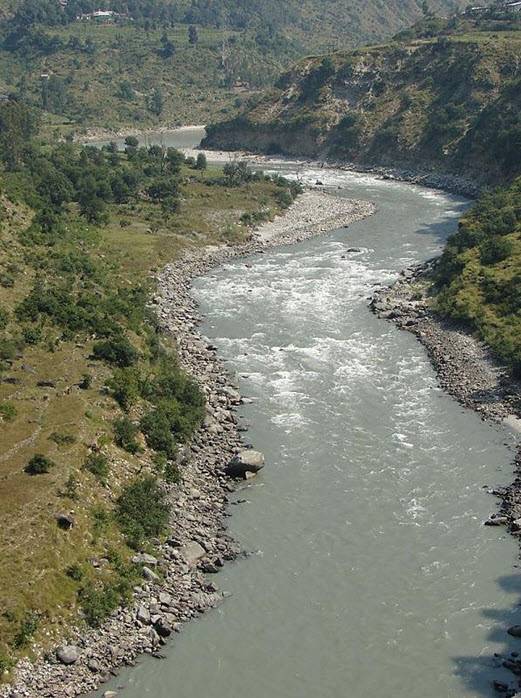
River Indus is also a source of hydro-electricity. In Pakistan, the greatest hydro-electricity production project installed at Indus is known as Tarbela Dam. It was constructed in 1974. Its generation capacity is 3478MV. This project was primarily constructed for irrigation purposes, but it also produces electricity.
Indus River is also famous for Indus Dolphin. Its weight is approximately 75-110Kg. They have very small eyes thus they can only differentiate between light and dark else they rely on echolocation, that’s why they are also known as Blind Dolphin. Nowadays they are the most endangered mammals and their population is decreasing.
River Indus flows throughout the Pakistan, spreading its water ultimately falls into Arabian Sea.