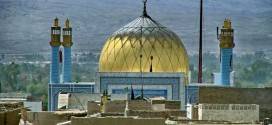
Situated in the heart of Lahore, Data Sahab Darbar is among the primogenital Muslim reliquaries in the whole of Pakistan and India. It acts as a house to the remnants of Abul Hassan Hajvery, a famous Sufi Saint. With the passage of time he has become to be usually known as Data Ganj Baksh, connotation; the treasure bestowing master. It is told that he used to live at the very same spot in the 11th century.
The tabernacle is positioned nigh the Bhaati gate; which is a part of the Lahore’s enclosed city. It has been built in the late eleventh century by Sultan Zakiruddin Ibrahim, a Ghaznavi king. It has been stretched out several times. For immeasurable time period, this shrine has been visited by many people belonging to many sects and religions in pursuit of benedictions, but from the time the subcontinent gave birth to the rival neighbors, most of the visitors are Muslims even though individuals of all beliefs are at ease here. Among the visitors, Pakistani Politician Mian Nawaz Sharif is a prominent figure.

On distinct occasions i.e. Urs, the premises is decorated vehemently. Lights of different shapes and sizes are erected everywhere in order to beautify the regular image of the shrine; dinner is cooked for thousands of individuals and is distributed among the poor very openly and we see some people dancing to musicians playing live Sufi music. The shrine remains open till late night allowing people to gather as much benedictions and blessings as they can. Faithful Muslims also donate huge amount of alms in order to keep the system around the shrine running and to gain more blessings.
Without a doubt, Data Sahab Darbar is a massive urban contemporary structure always filled with a wide and diverse array of people, who come from every part of Pakistan seeking certain goals or wishes. If you are a tourist, even if you are a non-Muslim your visit will remain incomplete without visiting this holy place which can also be accredited as an architectural keepsake of the old architectural style. In the recent past some security threats have been experienced as the Taliban era was at its peak, but now everything is normal and under control as security has been improved and concentrated around the shrine.